
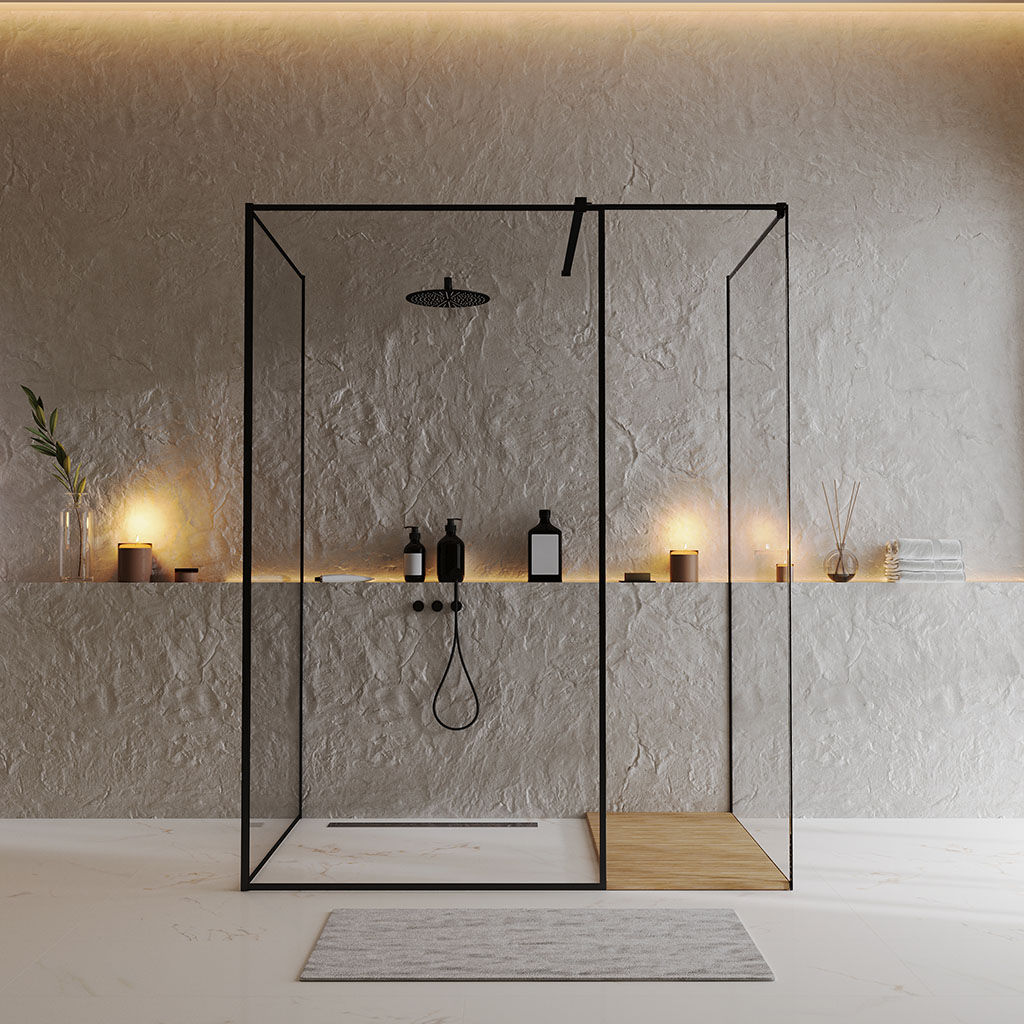
How to Choose the Right Custom Glass Shower Panel
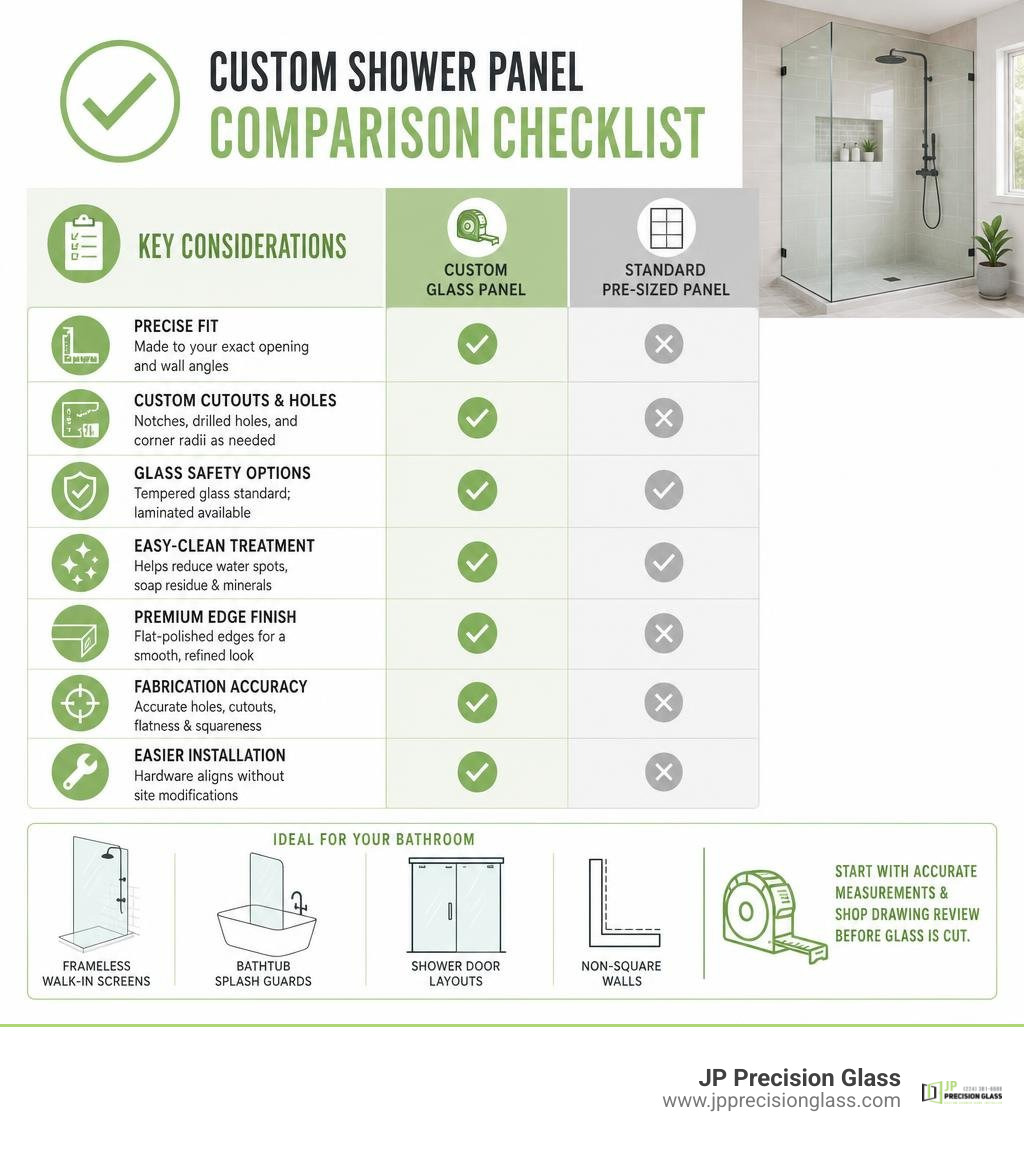
A custom glass shower panel is made to fit your bathroom’s exact opening, wall angles, hardware layout, and design goals. Compared with a standard pre-sized panel, it can include precise notches, drilled holes, corner radii, and edge finishes for a cleaner fit and easier installation.
When comparing options, focus on:
- Glass build: Tempered glass is a common safety choice; laminated glass can add another layer of breakage protection.
- Edge finish: Flat-polished edges offer a smooth, refined look that is easy to wipe clean.
- Easy-clean treatment: A protective surface treatment helps water, soap residue, and mineral deposits release more easily.
- Fabrication accuracy: Correct hole locations, cutouts, flatness, and squareness help hardware align without site modifications.
For a Chicago bathroom remodel, custom sizing is especially useful when walls are not perfectly square or when you want a frameless walk-in screen, bathtub splash guard, or tailored shower-door layout. The best result starts with careful measuring and shop-drawing review before glass is cut.
Common custom glass shower panel vocab:
Easy-Clean Technology vs. Standard Shower Glass
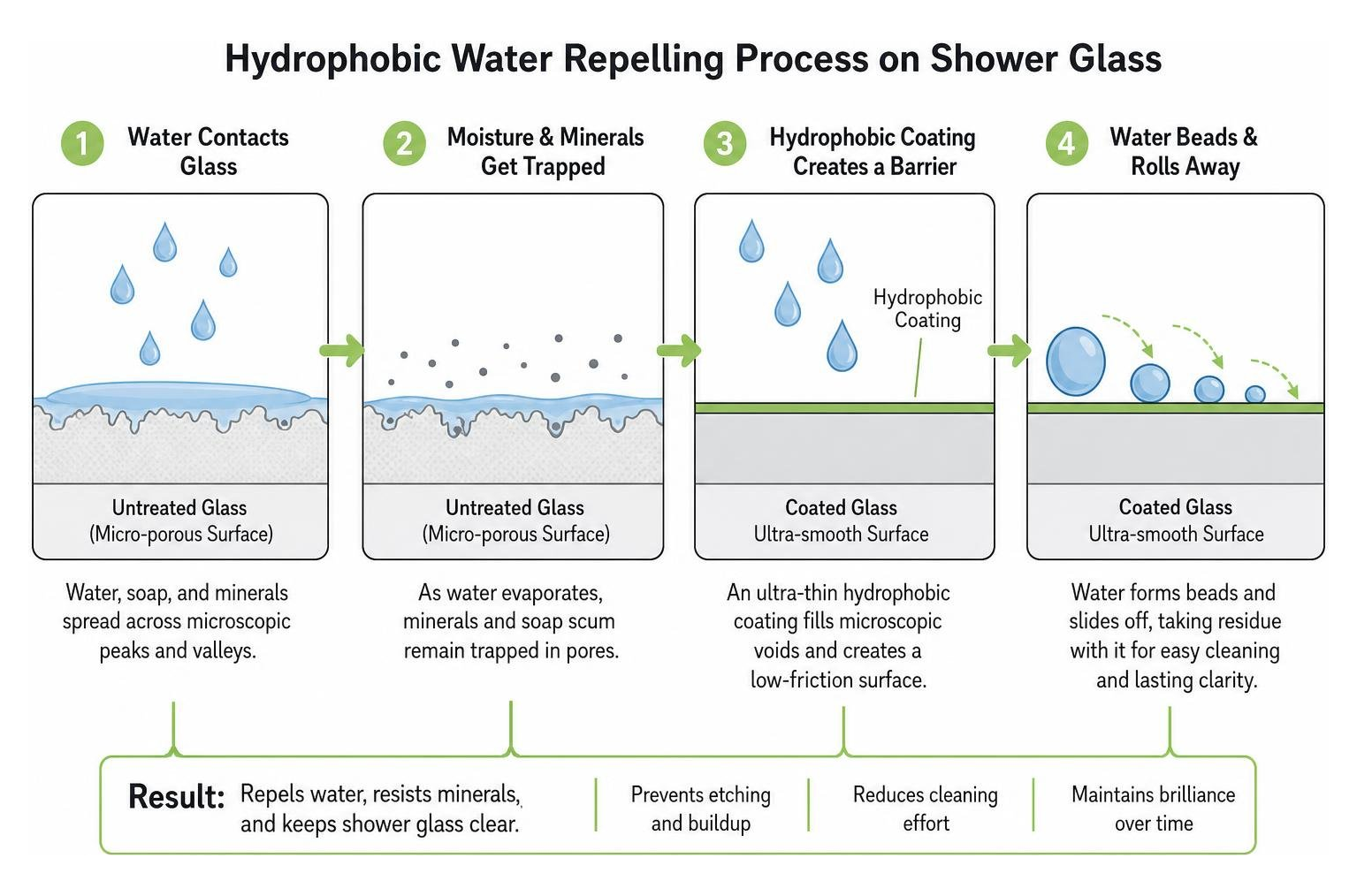
When evaluating custom shower glass, understanding the difference between standard float glass and easy-clean treated panels is essential for long-term satisfaction. Untreated glass may look flawless initially, but microscopic imperfections across its surface naturally trap moisture, hard water minerals, and soap scum over time. Without protection, routine showers lead to chemical etching, cloudiness, and persistent water spots that standard bathroom cleaners struggle to remove.
Investing in Custom Build Easy-Clean Option Shower Glass addresses this issue at the manufacturing stage. By bonding a protective barrier to the glass surface, water beads up and rolls away instead of clinging to pores. This preserves crystal-clear optics and dramatically cuts weekly cleaning efforts.
| Feature | Standard Untreated Shower Glass | Easy-Clean Coated Shower Panel |
|---|---|---|
| Surface Profile | Micro-porous and naturally rough | Ultra-smooth hydrophobic barrier |
| Water Contact Angle | Low (water spreads and sits flat) | High (water forms tight beads and sheds) |
| Mineral & Limescale Resistance | Vulnerable to etching and hard water buildup | Repels dissolved minerals and prevents bonding |
| Cleaning Effort | Requires frequent scrubbing with harsh chemicals | Quick wipe down with squeegee or microfiber cloth |
| Long-Term Clarity | Prone to hazing, staining, and permanent fogging | Retains brilliant transparency over years of use |
| Coating Application | None | Factory-applied or cured polymer/silica coating |
How Easy-Clean Hydrophobic Barriers Protect Glass
The science behind easy-clean treatments relies on hydrophobic nanotechnology. Glass is made primarily of silica, which possesses natural microscopic peaks and valleys. When hot water, soap lather, and body oils splash against untreated panels, they settle into these micro-fissures. As the water evaporates, it leaves behind calcium and magnesium crystals that bond directly to the silica lattice.
Modern shower glass innovations solve this challenge by applying an ultra-thin, optically clear hydrophobic shield across the glass face. This treatment fills every microscopic void, creating an exceptionally low-friction surface.
Water droplet contact angles increase significantly, causing moisture to pull together into droplets and slide downward, carrying soap residue away. Because minerals cannot find a mechanical anchor, routine maintenance shifts from intensive scrubbing to a swift rinse and squeegee pass. Factory-cured coatings provide durable, multi-year protection against daily wear and tear.
Custom Glass Shower Panel Engineering and Customization Options
Every bathroom features unique geometry, architectural quirks, and personal styling goals. Off-the-shelf prefabricated panels force installers to adapt the room to the glass, often resulting in wide silicone caulk joints, uneven sightlines, and compromised waterproofing. Bespoke engineering eliminates these compromises by fabricating panels tailored to the precise structural realities of your space.
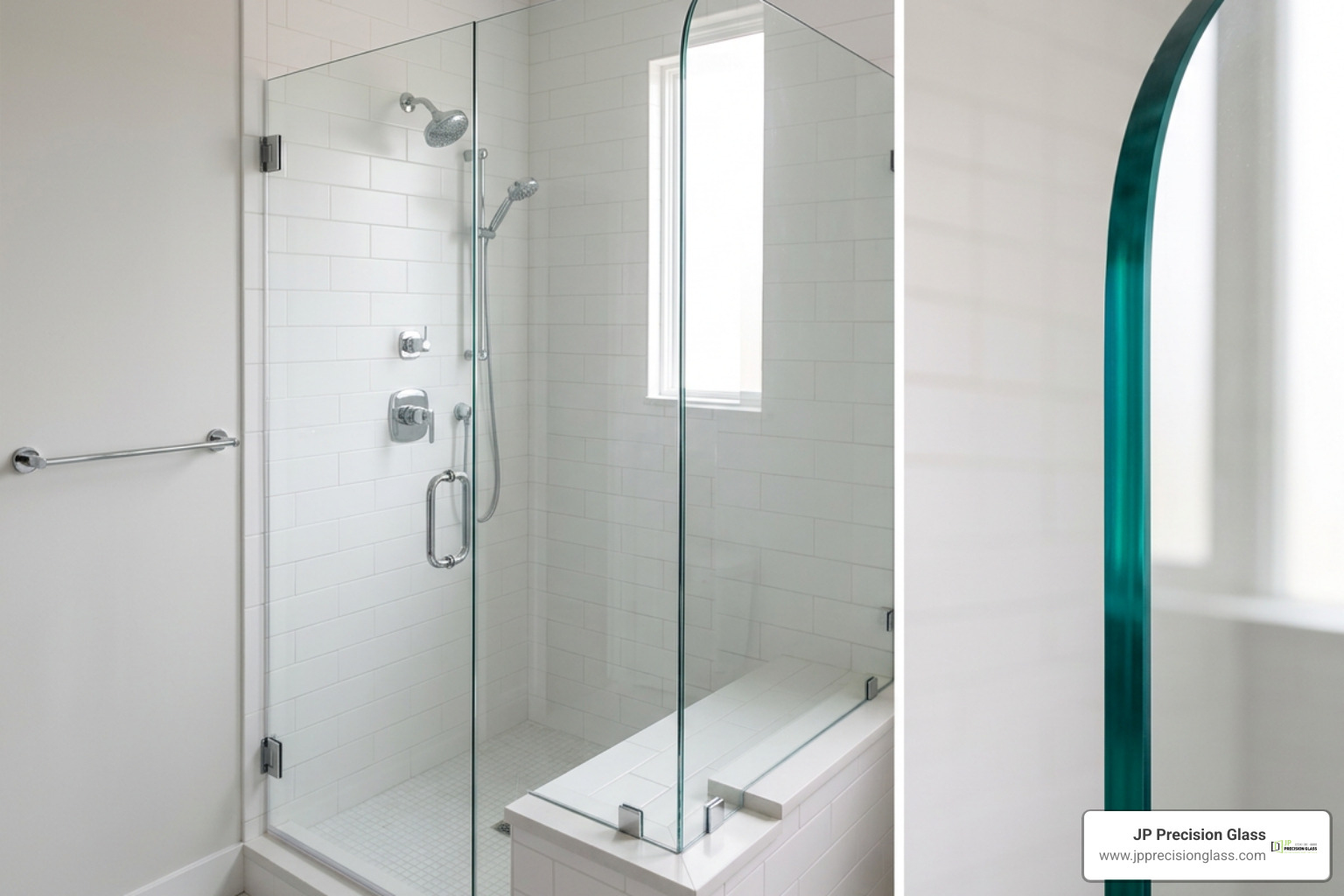
Customization begins with exact measurements, accounting for wall bow, out-of-plumb tile runs, and sloped shower curbs. Glass processing machinery can incorporate:
- Custom Corner Radii: Rounded top corners soften contemporary enclosures and reduce snag points in walk-in layouts.
- Precision Notches: Seamless cutouts around knee walls, pony walls, decorative tile benches, and overhanging tub ledges ensure tight, moisture-tight fits.
- Edge Profiles:
- Flat Polished Edges: The premier choice for frameless enclosures, featuring flat, ground faces with small, pristine 45-degree chamfered arris edges for safety and luxury appeal.
- Pencil Polished Edges: Smooth, rounded edge profiles that deliver an organic, soft touch along exposed walk-in screen margins.
- Seamed Safety Edges: Lightly sanded edges designed for hidden channels and framed perimeter profiles where aesthetics are concealed.
Selecting the Right Custom Glass Shower Panel Thickness and Build
Selecting panel thickness and glass structure impacts both architectural presence and safety. To evaluate glass builds for your home, review the ultimate guide to compare and buy shower glass panels to match glass types to enclosure designs.
- 3/8-Inch (10mm) Tempered Glass: The standard for high-end residential frameless glass. It offers structural stability, minimal deflection, and manageable weight for wall hinges and floor clamps.
- 1/2-Inch (12mm) Tempered Glass: A substantial option that provides superior structural rigidity. It delivers a solid feel, minimal flex over tall spans (exceeding 80 inches), and a high-end look.
- Laminated Safety Glass: Built by bonding two lites of glass around a tough, transparent interlayer (PVB or SentryGlas). If fractured, the interlayer holds the fragments intact within the opening. This makes laminated builds an exceptional choice for multi-story spaces, commercial fitness facilities, and luxury hospitality projects prioritizing impact safety.
Precision Fabrication for Your Custom Glass Shower Panel
Reliable performance depends entirely on precision fabrication. At JP Precision Glass, we utilize digital templating and CNC machinery to execute custom specifications with tight manufacturing tolerances. Discover our comprehensive range of glass shower panels to see how custom-tailored fabrication enhances residential installations.
Through CNC waterjet cutting and automated edge polishing, hardware cutouts—such as hinge notches, header cutouts, handle holes, and wall clamp reliefs—are milled into the raw glass prior to the thermal tempering furnace. Because fully tempered safety glass cannot be cut, drilled, or altered once heat-treated, achieving dimensional accuracy on the initial fabrication run is essential.
Key Applications in Modern Residential and Commercial Spaces
Custom glass panels elevate bathrooms across diverse architectural environments, balancing openness with practical water containment.
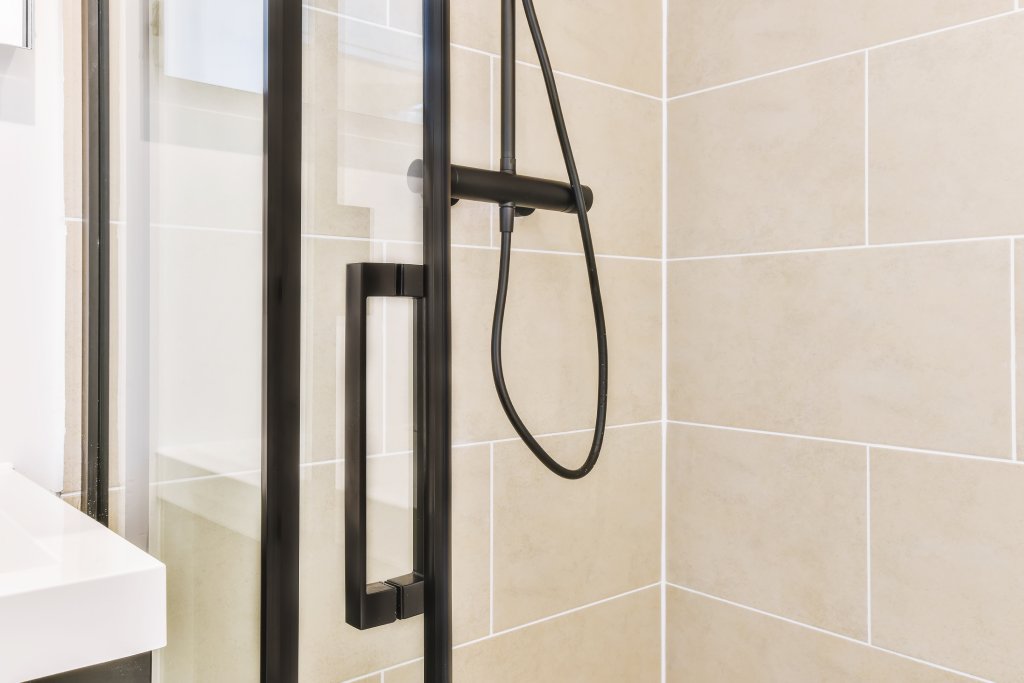
Homeowners looking to upgrade can transform your space with modern bathroom shower glass enclosures that turn standard layouts into open, spa-like retreats. Common applications include:
- Fixed Shower Screens: Stationary glass lites mounted via low-profile floor channels or minimalist clamps to separate wet and dry zones without moving parts.
- Bathtub Splash Shields: Custom glass guards installed directly onto tub decks to modernize traditional bath-shower combos while eliminating dated curtain rods.
- Boutique Hotels & Spas: Heavy-duty, easy-clean panels engineered to withstand rigorous cleaning cycles while maintaining an upscale guest aesthetic.
Walk-In Enclosures and Compact Bathrooms
Open-concept, curbless walk-in showers have become a staple of modern interior design. In compact bathrooms, bulky doors or wide swing paths can crowd fixtures like vanities and toilets. A tailored stationary screen creates an inviting, barrier-free entrance while preserving sightlines across the room.
Understanding panel proportions ensures proper splash containment. Learn why a 36 glass shower panel is the perfect fit for compact walk-in showers, providing reliable water deflection without overwhelming smaller floor plans.
Frameless Shower Doors and Architectural Layouts
For larger, multi-sided shower layouts, custom stationary panels integrate with operable doors, return panels, and transom vents. Homeowners upgrading from framed assemblies frequently choose our shower door replacement Chicago services to eliminate mold-trapping metal tracks and open up room lighting.
To explore the advantages of all-glass configurations, consider the benefits of frameless glass shower doors, which highlight how heavy glass panels create cohesive, open visual appeal.
For custom projects throughout the Chicagoland region, our team provides full layout design and installation. Explore custom frameless showers Chicago and custom shower door Chicago for specialized local service and design expertise. If you are comparing door formats, our comprehensive guide on glass shower doors: a comprehensive guide to types comparison breaks down sliding, hinged, and stationary configurations.
Manufacturing Quality Control and Site Installation Readiness
High-end shower glass requires strict quality control at every stage of production. Premium fabrication ensures that panels arrive on-site square, optically clear, and ready for mounting hardware without unexpected field adjustments.
Quality control protocols focus on:
- Optical Clarity & Low-Iron Formulation: Minimizing internal roller-wave distortion and utilizing ultra-clear low-iron glass formulations to eliminate natural greenish glass tints.
- Squareness & Flatness Inspection: Laser-checking diagonal dimensions to verify true 90-degree corners (or precise custom angles) and inspecting surfaces for bow, warp, or camber.
- Coating-Ready Machine Edges: Specially ground and polished perimeter edges that resist transit chipping, protect against handling abrasions, and provide a pristine base for structural silicone sealants.
Shop Drawings, CNC Tolerances, and Pre-Drilled Hardware Holes
Every custom installation relies on coordinated Computer-Aided Design (CAD) shop drawings. These drawings document every critical detail: glass height, width, thickness, radius corners, and exact Cartesian coordinates for through-glass fastener holes.
CNC-milled drill holes maintain tight tolerances, ensuring that heavy-duty wall clamps, stabilizer bars, and pivot hinges seat flush against the glass without pinch points or uneven stress distribution. This precision fit prevents glass binding and simplifies on-site hardware alignment.
Packaging, Bulk Supply Logistics, and Transit Protection
Transporting heavy architectural glass requires specialized crating and protection methods. Custom panels are separated with shock-absorbing interleaf cork pads to prevent face-to-face friction and surface micro-scratches. Edge and corner protectors guard the vulnerable perimeters against accidental impacts during transit.
For multi-unit developments and commercial projects, glass panels can be packed in custom export-grade timber crates, sequenced by floor level or room unit. This organized logistics approach minimizes jobsite handling, reduces the risk of accidental breakage, and streamlines installation workflows.
Frequently Asked Questions About Custom Shower Glass
What is the difference between tempered and laminated shower glass?
Tempered glass undergoes a thermal treatment where standard float glass is heated to roughly 1,150°F (620°C) and rapidly cooled with high-pressure air streams. This process creates high surface compression, making the panel four to five times stronger than standard annealed glass. When broken, tempered glass fractures into small, blunt-edged dice rather than sharp, jagged shards, meeting building safety codes for shower enclosures.
Laminated glass consists of two glass lites bonded together with a durable, transparent interlayer. While tempered glass remains the standard for residential shower doors and walk-in screens, laminated glass offers added structural containment. If an impact fractures a laminated panel, the adhesive interlayer holds the fragments in place, preventing loose fallout and keeping the wet area enclosed until replacement.
How do coating-ready edges improve the installation process?
Coating-ready machine edges are precision-ground and micro-polished during the primary CNC processing phase. By eliminating micro-fractures, rough tooling marks, and irregular perimeter burrs, coating-ready edges offer several practical benefits:
- Reduced Handling Damage: Smooth, arrised edges resist chipping when installers position panels into metal U-channels or align them against floor clamps.
- Improved Silicone Adhesion: Uniform, polished edge margins allow structural silicone and mildew-resistant sealants to adhere consistently, creating watertight perimeter seals.
- Refined Aesthetics: Exposed frameless edges catch and refract ambient bathroom light evenly, without the cloudy or wavy visual distortions seen on roughly buffed glass edges.
How do I ensure accurate measurements for out-of-square walls?
Bathrooms rarely feature perfectly square, plumb walls—especially in older homes or spaces with handcrafted tilework. Attempting to measure a custom opening with a basic tape measure often leads to uneven glass gaps and leaking joints.
To capture out-of-square conditions accurately:
- Use Laser Levels: Project vertical and horizontal laser reference lines to identify specific wall bows, leaning studs, and unlevel curb slopes.
- Measure at Multiple Heights: Take width measurements across the bottom curb, the midpoint (around 36 inches), and the planned top panel height (typically 72 to 84 inches).
- Utilize Digital Templating: Professional glass installers use digital point-to-point laser scanners or physical hard-template boards to record wall contours precisely. These coordinates are fed directly into CAD software, allowing CNC machines to cut the glass edge to mirror the wall’s natural angle.
Conclusion
A well-designed bathroom should combine everyday functionality with lasting visual appeal. Choosing a precision-engineered shower partition ensures your space benefits from tailored dimensions, easy-clean glass protection, and durable safety builds that hold up to years of daily use. Whether you are designing a minimalist walk-in wet room or replacing an outdated framed enclosure, custom glass fabrication delivers clean sightlines and dependable performance.
Ready to begin planning your bathroom remodel? Connect with our experienced team at JP Precision Glass to explore tailored custom shower door solutions built specifically for your space.