
Why Choosing the Right Bathroom Tub Shower Doors Makes or Breaks Your Remodel
Bathroom tub shower doors are one of the highest-impact upgrades you can make during a bathroom remodel — and one of the easiest to get wrong.
The right door transforms a dated tub-shower combo into something that looks custom and intentional. The wrong one leaves you with leaks, awkward sizing, or a door that fights your bathroom’s layout every single day.
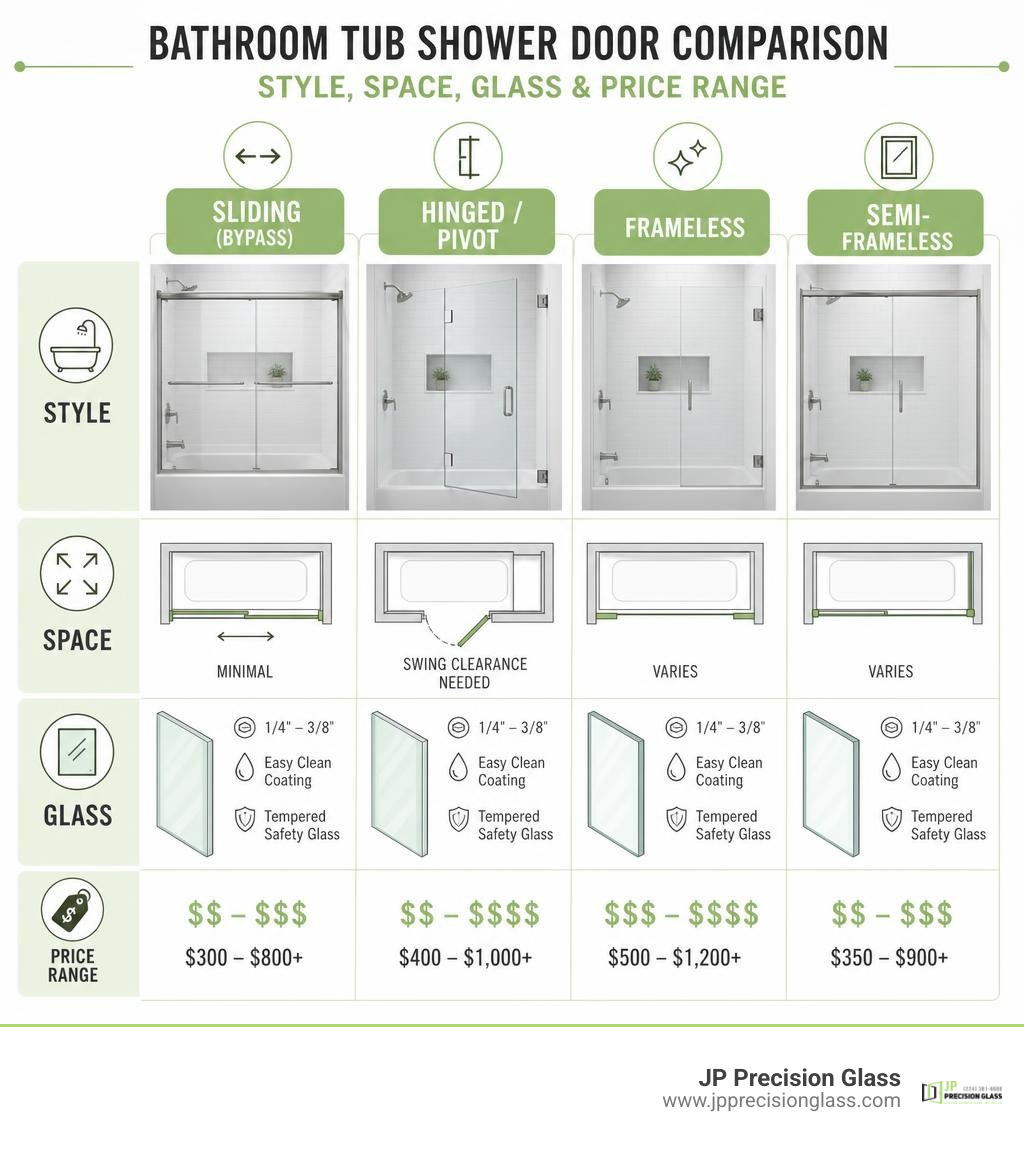
Here’s a quick breakdown of the main types to help you decide fast:
| Door Type | Best For | Space Needed | Price Range |
|---|---|---|---|
| Sliding (Bypass) | Small bathrooms, alcove tubs | Minimal | $300 – $800+ |
| Hinged/Pivot | Larger spaces, luxury look | Swing clearance needed | $400 – $1,000+ |
| Frameless | Modern aesthetic, easy cleaning | Varies | $500 – $1,200+ |
| Semi-Frameless | Balance of cost and style | Varies | $350 – $900+ |
Most Chicago homeowners remodeling a standard alcove bathtub will want to look at sliding or bypass doors first — they save space, they look clean, and they come in a wide range of sizes and finishes.
But there’s more to it than just picking a style. Glass thickness, coatings, hardware finish, and how well the door fits your exact opening all matter a lot — especially in older homes where walls aren’t perfectly plumb.
This guide walks you through everything you need to evaluate your options and choose with confidence.
Understanding the Types of Bathroom Tub Shower Doors
When you begin shopping for bathroom tub shower doors, you will quickly realize that the market is flooded with terminology. Frameless, semi-frameless, bypass, pivot, sliding—it can feel like you need a degree in structural engineering just to wash your hair in peace.
To help you cut through the noise, let’s break down the primary configurations and structural designs.

The fundamental difference between these doors lies in how they are supported and how they open.
| Feature | Sliding (Bypass) Doors | Hinged (Pivot) Doors |
|---|---|---|
| Opening Mechanism | Panels slide parallel to each other along a track or rail system. | Panels swing outward (or inward) on wall-mounted or glass-to-glass hinges. |
| Space Required | Zero clearance outside the tub; ideal for tight layouts. | Requires clear floor space equal to the width of the swinging panel. |
| Aesthetic | Modern, streamlined, often features exposed roller hardware. | Traditional, high-end, mimics a luxury walk-in shower entry. |
| Water Retention | Excellent, as overlapping panels keep water inside the basin. | Good, but water can drip onto the floor when the door is opened. |
| Access Area | Typically limits entry to 50% of the opening width. | Allows for nearly 100% full-width access to the tub. |
Beyond how they open, you must also choose a framing style:
- Frameless: These doors use heavy, thick glass (typically 3/8-inch or 1/2-inch) and minimal hardware. There is no metal framing around the edges of the glass, creating an ultra-clean, invisible look.
- Semi-Frameless: A highly popular middle ground. These doors feature framing around the main outer perimeter of the opening to ensure stability, but the moving glass panels themselves have polished, frame-free edges.
- Framed: The traditional style where every edge of every glass panel is encased in metal. While highly durable and budget-friendly, they have more tracks and crevices where soap scum can hide.
Sliding and Bypass Bathroom Tub Shower Doors
If you are working with a standard 60-inch alcove bathtub, a double sliding (or bypass) door is often the most practical choice. In a bypass configuration, both glass panels slide independently. This means you can turn on the water from the left side, step in from the right side, and easily slide either panel out of the way to clean the tub.
Modern sliding designs have come a long way from the clunky, rattling aluminum tracks of the 1980s. Today’s premium Sliding Shower Doors utilize specialized ball-bearing technology and top-hung stainless steel rails for silent, smooth-as-silk operation.
For example, the popular MAAX Halo bathtub door features 8 mm (approximately 5/16-inch) tempered glass, a sleek stainless steel rail system, a waterproof magnetic closer, and a prominent 15-inch handle designed specifically for tub renovations. Similarly, the Delta Simplicity Sliding Bypass Polished Chrome Tub Door features a frameless clear glass design that offers a sturdier operation and a highly polished look.
For those seeking a bold, contemporary look, the UKD08 48 in. W x 76 in. H Double Sliding Semi-Frameless Shower Door in Matte Black, EnduroShield 5/16 in. Clear Glass is a prime example of modern engineering. Priced at $650.82 (with a $50 discount available for new credit card holders), it combines a semi-frameless design, a reversible door opening to fit any bathroom layout, and an EnduroShield hydrophobic coating.
Hinged and Pivot Bathroom Tub Shower Doors
Hinged or pivot doors operate like standard interior doors, swinging outward into the bathroom. They provide a highly luxurious, upscale look and allow for a wider opening than sliding doors. If you have a family member with mobility concerns, a hinged door makes stepping over the tub wall much easier because the entire opening is accessible.
However, because these doors swing outward, they require adequate floor clearance. If your toilet, vanity, or towel racks are positioned close to the tub, a swinging door might collide with them.
To solve this, many homeowners opt for a hybrid solution: a fixed glass panel combined with a smaller hinged glass door, or simply a single fixed panel that covers the showerhead zone while leaving the rest of the tub open. You can explore these configurations further by viewing our custom Glass Shower Panels.
A great retail example of a premium hinged door is the Belmore 28.25 in. to 29.25 in. x 72 in. Frameless Hinged Shower Door with Frosted Glass in Stainless Steel . Priced at $703.42 (also qualifying for a $50 credit card discount), this door is crafted from heavy 3/8-inch frosted tempered safety glass. It is highly versatile, offering up to 1 inch of built-in adjustability to accommodate out-of-plumb walls—a lifesaver in older Chicago homes.
Key Benefits of Sliding Glass Doors for Bathtubs
Why do so many homeowners and design experts choose sliding glass doors over traditional shower curtains or swinging doors? The benefits go far beyond simple aesthetics.
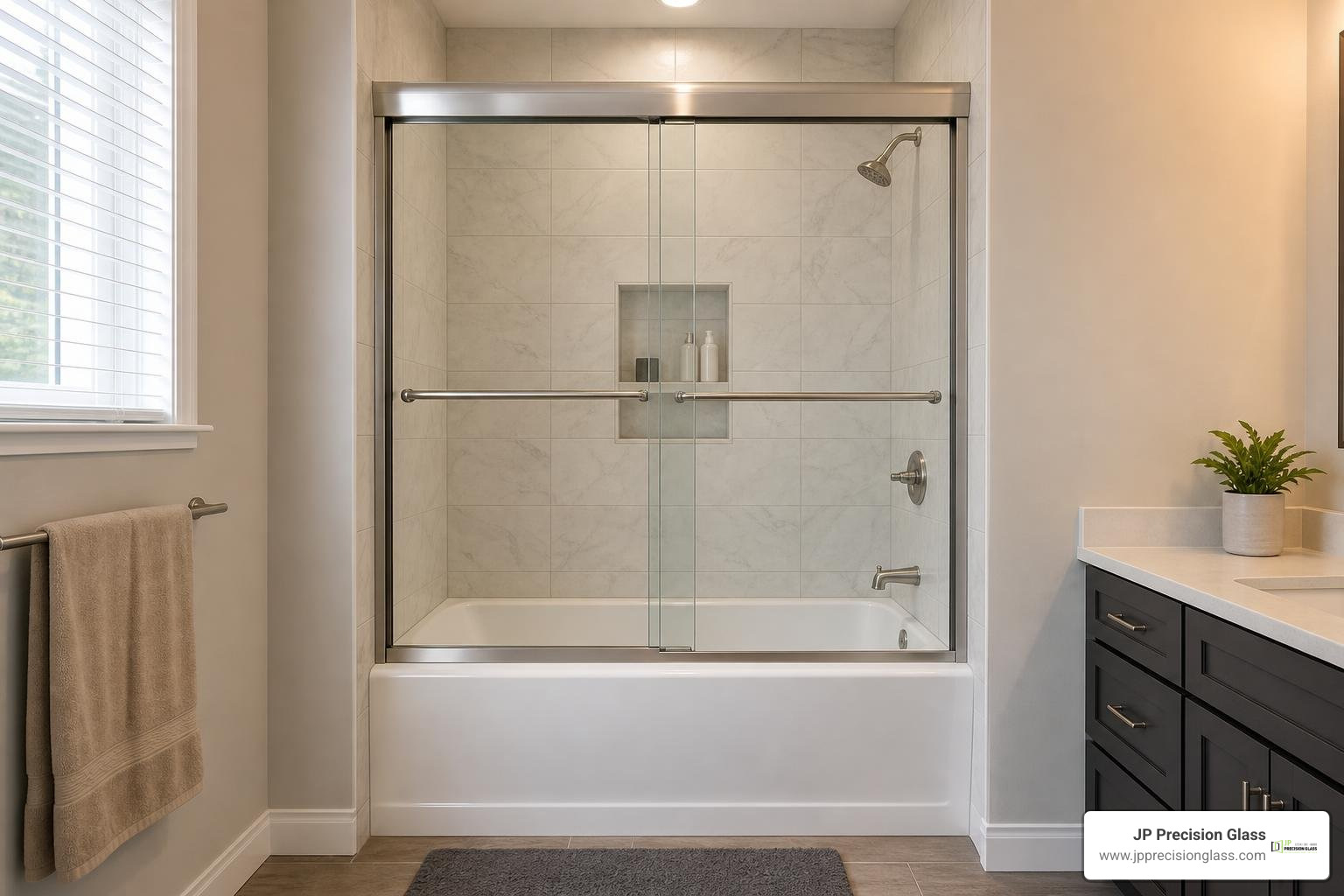
- Maximizing Bathroom Space: The most obvious benefit is space efficiency. In small or narrow bathrooms, every square inch counts. A sliding door remains entirely within the footprint of the tub, meaning you don’t have to plan your bathroom layout around swing radiuses.
- Superior Water Retention: Let’s face it: shower curtains are notorious for blowing inward, sticking to your legs, and letting water escape onto your bathroom floor. Sliding glass doors use tight-fitting seals, bottom sweeps, and overlapping panels to keep water exactly where it belongs—inside the tub.
- Visual Openness: By replacing a solid, opaque shower curtain with clear glass, you instantly open up the room. Light can flow freely, making a compact bathroom feel twice its actual size. If you want to learn more about how frameless glass can visually transform your space, check out our guide on the Benefits Of Frameless Glass Shower Doors.
- Aesthetics and Home Value: High-quality glass doors give your bathroom an immediate face-lift. Buyers in July 2026 continue to look for modern, low-maintenance bathrooms, and a sleek glass enclosure is a proven way to boost your home’s resale appeal.
Selecting the Right Glass Thickness, Materials, and Coatings
Choosing the glass for your bathroom tub shower doors is not just about looks; it is a critical safety and maintenance decision.
Glass Safety and Thickness
By building codes and safety standards, all residential shower doors must be constructed from tempered safety glass. If tempered glass breaks, it disintegrates into small, relatively harmless granular chunks rather than sharp, jagged shards.
When evaluating glass, you will typically choose between three thicknesses:
- 1/4-inch (6 mm): The standard thickness for budget-friendly, fully framed doors. It is lightweight but can feel slightly flimsy or rattle if not secured in a heavy frame.
- 5/16-inch (8 mm): The “sweet spot” for semi-frameless doors. It offers a premium, heavy feel without requiring massive structural support. The UNIKOO UKD08 and MAAX Halo collections use this thickness.
- 3/8-inch (10 mm) or 1/2-inch (12 mm): The standard for premium, fully frameless doors (like the Aston Belmore). This glass is incredibly heavy, rigid, and provides a true luxury hotel feel.
Glass Style and Privacy
- Clear Glass: The most popular choice. It lets in the most light and showcases beautiful tile work inside the tub alcove.
- Frosted Glass: Acid-etched or sandblasted to provide privacy. It is excellent for shared family bathrooms but will block some light and make the bathroom feel slightly smaller.
- Patterned or Rain Glass: Features a textured surface that obscures the view while still letting light pass through. It is highly effective at hiding water spots.
Protective Coatings (The Secret to Easy Cleaning)
Water spots and soap scum are the natural enemies of beautiful glass. To combat this, look for factory-applied hydrophobic coatings. These coatings fill in the microscopic pores of the glass, causing water to bead up and slide off effortlessly.
- EnduroShield: A highly durable, invisible protective shield that reduces cleaning time by up to 90% and protects against staining.
- CleanCoat Technology: Kohler’s proprietary glass treatment (featured on models like the Kohler Levity Bypass Bath Door) that repels water and dirt, keeping your doors looking newer for longer.
To ensure your hardware matches your glass and stands up to daily moisture, you can explore various options in our collection of Shower Glass Accessories.
How to Measure Your Bathtub for a Perfect Fit
In the glass world, there is a golden rule: Measure twice, cut once. Once tempered glass is manufactured, it cannot be cut, drilled, or altered. Even a 1/8-inch error can render an expensive glass panel completely useless.
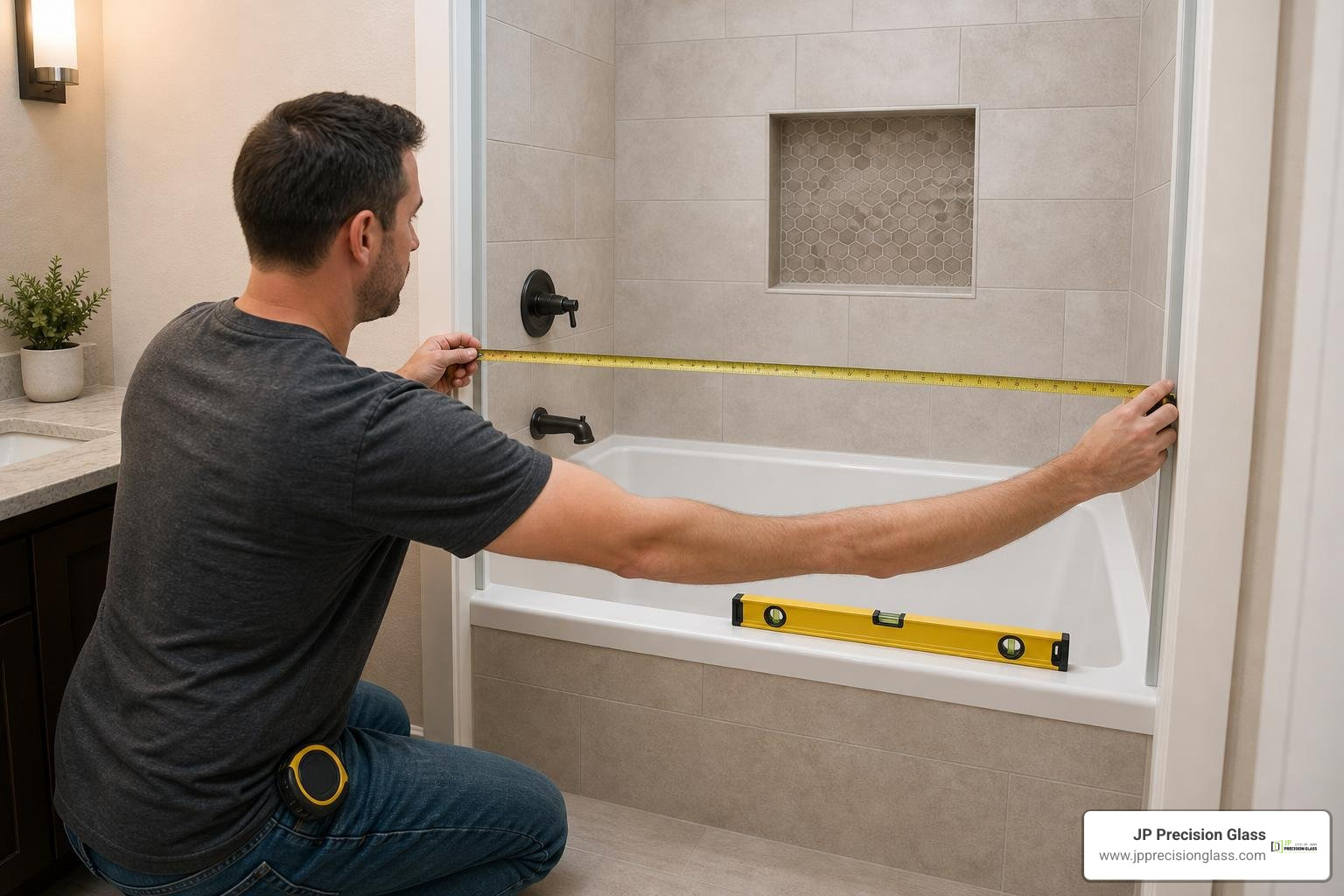
Here is how to measure your tub opening like a pro:
- Check for Plumb and Level: Use a high-quality spirit level to check if your walls are perfectly vertical (plumb) and if your bathtub ledge is perfectly horizontal (level). If your walls lean inward or outward, you will need a door with out-of-plumb adjustability (like the Aston Belmore, which allows up to 1 inch of play).
- Measure the Width: Measure the horizontal distance from wall to wall at three distinct points:
- Along the top ledge of the bathtub.
- At the midpoint of the opening (around 30 inches up).
- At the height where the top of the door will sit (usually 57 to 60 inches up).
- Note: Use the smallest of these three measurements when ordering a sliding door.
- Measure the Height: Measure the vertical distance from the flat top ledge of the tub up to the top of your tile or surround. Make sure you have enough vertical clearance, especially if you are installing a tall door (like a 76-inch door, which is often designed for shower pans rather than standard tubs).
- Account for Obstructions: Look closely at your bathroom layout. Will a swinging door hit a toilet or vanity? Is there a window trim or decorative tile border that will interfere with the wall jambs?
If your measurements reveal uneven walls or non-standard dimensions, a custom-cut door from a professional glass company is always the safest path to avoid leaks and poor operation.
Installation Considerations: DIY vs. Professional Services
Many big-box retailers sell “DIY-friendly” shower door kits. However, before you grab your drill and level, it is important to understand what is actually involved in installing glass doors.
- Weight Handling: A single 3/8-inch thick glass panel can easily weigh 80 pounds or more. Maneuvering this heavy, slippery material inside a cramped bathroom—while trying not to bump the corners against hard tile—is a recipe for stress. If a tempered glass panel bumps a hard tile surface on its corner, it can instantly shatter into thousands of tiny pieces.
- Structural Support: Glass doors must be anchored securely. Sliding rails and heavy hinges must be screwed into solid wood framing (studs) behind the tile. If studs aren’t present, professional installers must use specialized heavy-duty anchors to prevent the door from tearing out of the wall over time.
- Waterproofing and Alignment: Getting a door to slide smoothly and seal tightly requires precision alignment down to the millimeter. Professional installers use laser levels and commercial-grade silicone sealants to ensure the door is perfectly balanced and 100% watertight.
If you are looking for a seamless, stress-free experience, we highly recommend exploring our Affordable Shower Door Installation services. If you are replacing an old, leaky door, you can also learn more about our process for Shower Door Replacement Chicago.
Maintenance and Cleaning Tips for Long-Lasting Clarity
Once your beautiful new glass door is installed, you want to keep it looking pristine. Hard water minerals, soap scum, and body oils can quickly dull the surface if left unchecked.
- The Squeegee is Your Best Friend: Keep a small silicone squeegee hanging inside the shower. Spend 30 seconds after every single shower pulling the water off the glass. This simple habit prevents 95% of water spot buildup.
- Ditch the Harsh Chemicals: Avoid abrasive cleaners, steel wool, or harsh acid-based chemicals. These can strip away factory-applied protective coatings (like EnduroShield or CleanCoat). Instead, use a mild dish soap mixed with water, or a 50/50 solution of distilled white vinegar and water in a spray bottle.
- Keep the Tracks Clear: For track-based sliding doors, debris and hair can accumulate in the bottom channel, clogging the weep holes and causing water to overflow onto your floor. Vacuum or wipe out the tracks regularly, and use an old toothbrush to clear out any stubborn soap buildup.
If your door’s rollers begin to squeak, stick, or slide unevenly over time, it may be time for a professional tune-up. You can read more about how we restore smooth operation on our Shower Door Repair Chicago page.
Frequently Asked Questions About Bathtub Glass Doors
What is the typical price range for sliding bathtub glass doors?
The price of a sliding bathtub door depends heavily on the glass thickness, frame style, and hardware finish.
- Budget-friendly options: Basic framed sliding bypass doors with 1/4-inch glass typically range from $250 to $450.
- Mid-range options: Semi-frameless doors with 5/16-inch glass and modern roller systems (like the UNIKOO UKD08 at $650.82) range from $500 to $800.
- Premium custom options: Fully frameless sliding doors featuring heavy 3/8-inch glass, custom finishes, and professional installation generally range from $900 to $1,800+.
Can I install a frameless door on an uneven wall?
Yes, but it depends on the door design. Many retail frameless doors have a very limited adjustment range (often less than 1/4 inch). However, premium models like the Aston Belmore are engineered with wall channels or adjustable hinges that provide up to 1 inch of out-of-plumb adjustment. For walls that are severely out of alignment, a professional glass company can custom-cut the glass at an angle (tapered cut) to perfectly match the contour of your wall.
How do I prevent water leaks with a sliding tub door?
To prevent leaks, ensure your sliding door features high-quality vinyl seals, bottom sweeps, and a secure closing mechanism. Look for doors equipped with waterproof magnetic closures that pull the door firmly against the wall jamb. Additionally, the glass panels must overlap slightly in the center to prevent water from spraying between them. Proper installation is critical here; if the tracks are not sloped slightly inward toward the tub, water will pool and eventually leak onto your bathroom floor.
Conclusion
Choosing the perfect bathroom tub shower doors is all about balancing your bathroom’s physical layout, your personal style, and your budget. Whether you opt for a space-saving double sliding door with a matte black finish or a luxurious, heavy-glass frameless hinged door, upgrading from a shower curtain is a decision you won’t regret.
At JP Precision Glass, we specialize in taking the guesswork out of the process. As Chicago’s leading glass shower door provider, we design, customize, and install precision, made-to-size glass enclosures that fit your home perfectly—even if your walls are far from straight.
If you’re ready to upgrade your bathroom with a flawless, custom glass solution, contact our team at the leading Glass Company Chicago or explore our custom options directly on our Shower Doors Chicago page today!