
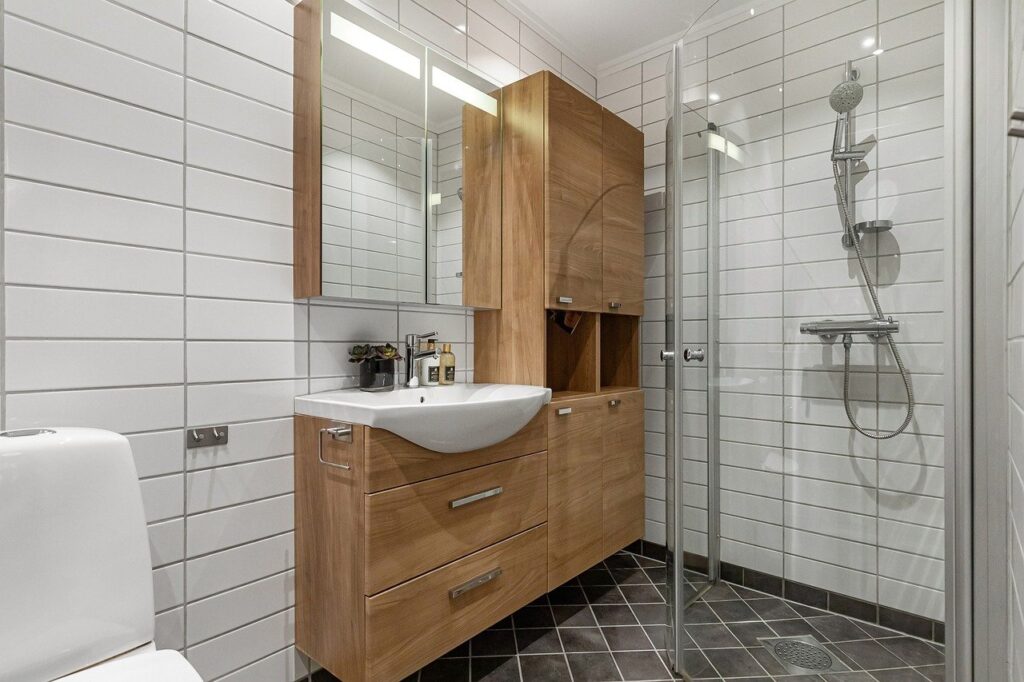
Why a 24-Inch Glass Shower Door Is the Smartest Upgrade for a Small Bathroom
A 24 inch glass shower door is the go-to solution for narrow alcove showers, tight guest baths, and compact bathroom remodels where every inch counts.
If you just need the quick answer, here it is:
| What You Need to Know | Quick Answer |
|---|---|
| Best door style for small spaces | Frameless hinged or pivot door |
| Typical width adjustability | 23″ to 25″ (retail kits) or exact custom fit |
| Recommended glass thickness | 3/8″ (10mm) tempered for frameless |
| Best hardware finish for longevity | Matte black or brushed nickel |
| DIY vs. professional install | Professional strongly recommended |
| Price range | $129 (basic framed) to $679+ (retail frameless) |
A 24-inch opening is one of the narrowest standard shower widths you’ll find in a residential bathroom. That makes the door choice critical — the wrong configuration can make a small space feel even more cramped, while the right one can make it feel open, clean, and intentional.
The challenge most Chicago homeowners run into? Standard retail kits are built to approximate fits. They rely on adjustable framing to mask walls that aren’t perfectly straight. A truly seamless look — the kind that makes a small bathroom look like a spa — usually requires glass that’s cut precisely to your opening.
This guide walks you through everything you need to choose the right 24-inch shower door: glass thickness, door styles, hardware finishes, how to measure correctly, and when to call a pro.
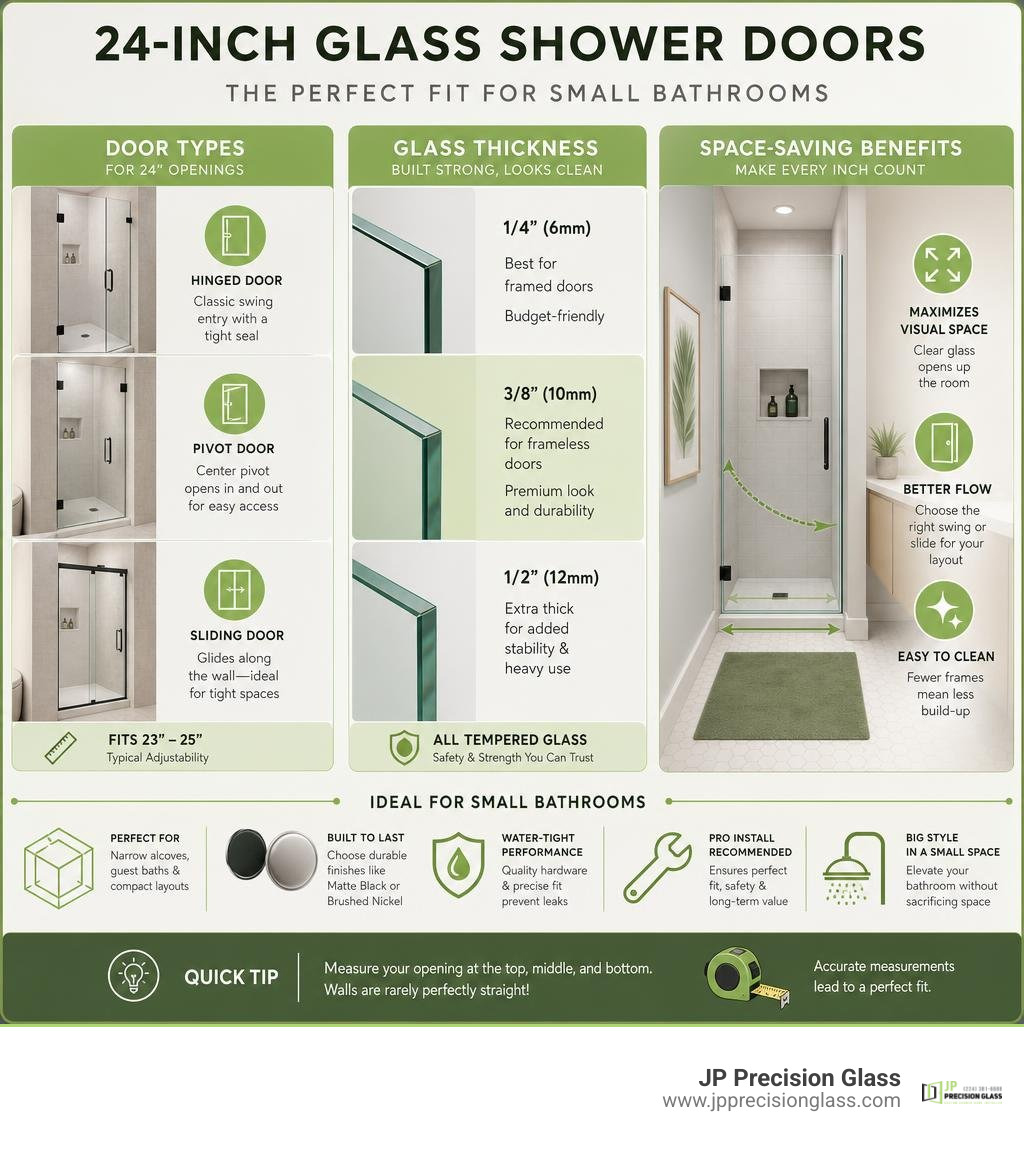
Frameless vs. Framed: Why Frameless Wins for a 24-Inch Glass Shower Door
When shopping for a 24 inch glass shower door, you will quickly discover three main design styles: framed, semi-frameless, and frameless. While framed doors are often the most budget-friendly upfront, they come with substantial visual and maintenance drawbacks—especially in a narrow 24-inch opening.
Let’s break down the differences:
- Framed Doors: These doors feature metal framing around all four sides of the glass panel. Because the metal frame provides structural support, manufacturers can use much thinner, lighter glass (often 1/8-inch or 1/4-inch). While highly functional, the heavy metal borders block sightlines, making a small bathroom feel even smaller.
- Semi-Frameless Doors: These models typically have metal framing around the main outer perimeter of the shower opening, but the door panel itself has exposed glass edges. It’s a middle-ground option, but it still introduces significant metal clutter into a tight 24-inch space.
- Frameless Doors: A frameless door relies on heavy, structural tempered glass mounted directly to the wall or a fixed glass panel using solid metal hinges. There are no bulky metal frames. This clean look allows natural light to flow freely, creating an illusion of depth that makes compact bathrooms feel twice as large.
To see the direct visual and structural benefits of going frameless, check out our guide on the Benefits Of Frameless Glass Shower Doors.
| Feature | Framed Doors | Semi-Frameless Doors | Frameless Doors |
|---|---|---|---|
| Aesthetic Appeal | Traditional, bulky metal borders | Moderate look, some metal framing | Ultra-modern, clean, and luxurious |
| Space Perception | Cuts off the room; feels smaller | Slightly better, still visually busy | Maximizes sightlines; feels spacious |
| Cleaning Difficulty | High (water and soap scum trap in frames) | Moderate (fewer frames, but still has tracks) | Low (smooth glass surfaces, easy to squeegee) |
| Glass Thickness | 1/8″ to 1/4″ | 1/4″ to 5/16″ | 3/8″ (10mm) to 1/2″ |
| Durability | Moderate (frames can corrode over time) | Good | Outstanding (heavy architectural glass) |
In a tight 24-inch opening, every fraction of an inch of visible space matters. Frameless glass eliminates the visual “noise” of metal tracks, letting your tile work shine and keeping your bathroom looking bright and airy.
Why Glass Thickness Matters for Your 24 inch glass shower door
Glass thickness is the single most important factor determining the structural integrity, safety, and hand-feel of your shower door. In the glass industry, residential shower glass is categorized into several standard thicknesses: 1/8-inch, 1/4-inch, 5/16-inch, and 3/8-inch (10mm).
For a frameless 24 inch glass shower door, 3/8-inch (10mm) heavy tempered safety glass is the gold standard.
Thinner glass (like 1/8-inch or 1/4-inch) is lightweight and flexible. It must be supported by a metal frame to prevent it from bowing, rattling, or breaking during daily use. When you open a framed door with 1/8-inch glass, it often feels flimsy and cheap.
Conversely, 3/8-inch tempered glass is incredibly dense and rigid. A standard 24″ x 78″ frameless door made of 3/8-inch glass weighs roughly 71 to 72 pounds. This weight gives the door a premium, substantial slide or swing. It doesn’t shake or rattle when closed. More importantly, tempered safety glass is engineered to withstand impacts, and in the rare event of a break, it crumbles into small, harmless granular chunks rather than sharp shards.
If your existing thin glass door is rattling, hard to clean, or showing signs of wear, it might be time to Replace Glass Shower Door with a premium, heavy-duty frameless option.
Hardware Finishes and Aesthetics
The hardware you choose is the jewelry of your shower door. Because a 24-inch door is compact, the metal hinges and handle will stand out, making your finish selection highly influential to the overall design.
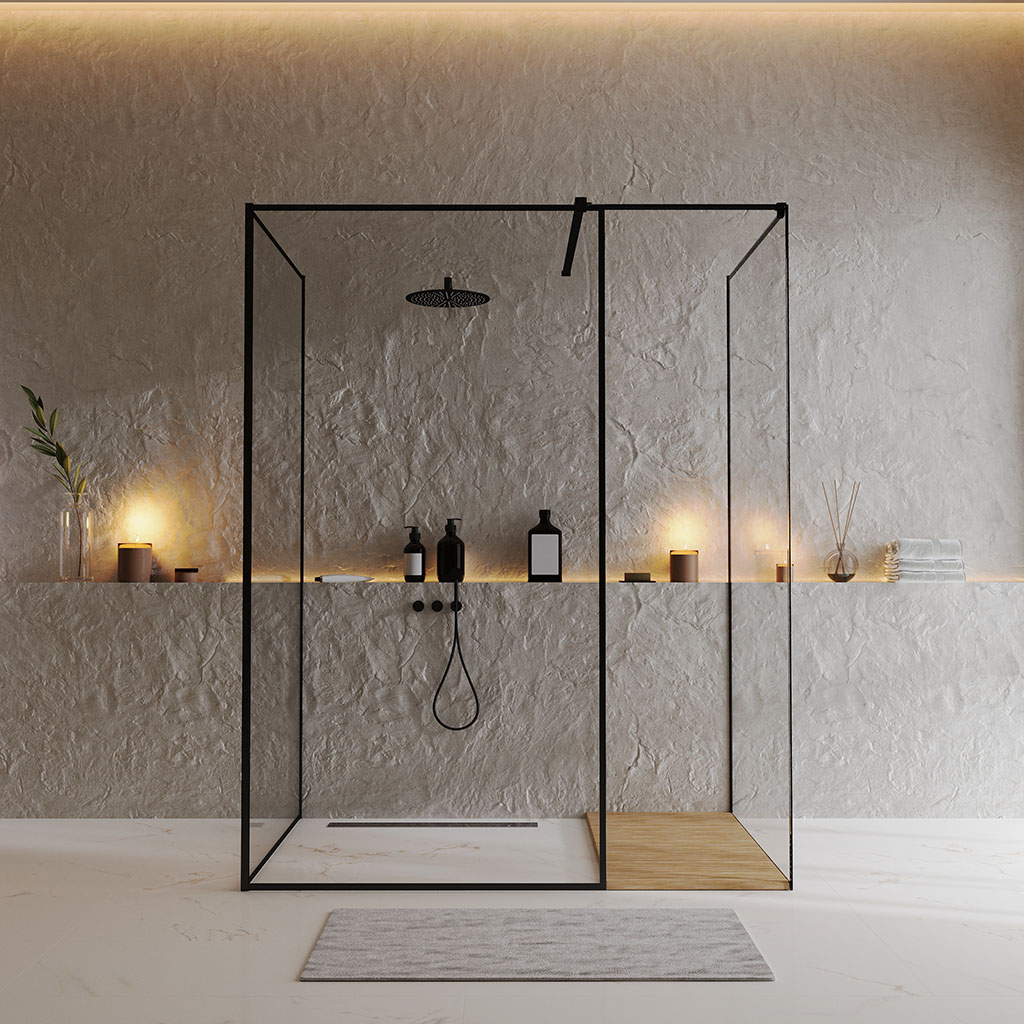
Here are the pros and cons of the most popular hardware finishes:
- Chrome: This classic, high-shine finish is excellent for reflecting light, making it a natural fit for small bathrooms. It is highly budget-friendly and pairs beautifully with traditional or modern fixtures. However, chrome is notorious for showing water spots and fingerprints, meaning it requires regular wiping to maintain its sparkle.
- Matte Black: Easily the trendiest finish in 2026, matte black offers a bold, high-contrast look. It hides fingerprints incredibly well and gives your bathroom a modern, industrial-chic vibe. The downside is that hard water deposits (limescale) can leave white spots on the black surface if not cleaned regularly.
- Brushed Nickel: A fantastic middle-ground finish. Brushed nickel has a warm, soft gold-silver undertone that hides water spots, soap scum, and fingerprints exceptionally well. It is highly durable and pairs effortlessly with transitional and rustic bathroom designs.
Whichever finish you choose, ensure the hardware is crafted from solid brass or high-grade stainless steel to prevent rust and corrosion in high-humidity environments.
Door Configurations for Compact Bathrooms
Choosing how your 24 inch glass shower door opens is just as important as how it looks. In tight layouts, you have to consider toilet clearance, vanity placement, and wall locations.
For narrow openings, you can choose between swing-out pivot doors, traditional hinged doors, or minimalist fixed panels. If you want to explore wider layouts or alternative entry styles, you can read more about Sliding Shower Doors or learn how to utilize fixed Glass Shower Panels to create a modern walk-in wet room.
Pivot vs. Hinged vs. Sliding in Tight Spaces
Let’s look at how different configurations operate in narrow 24-inch spaces:
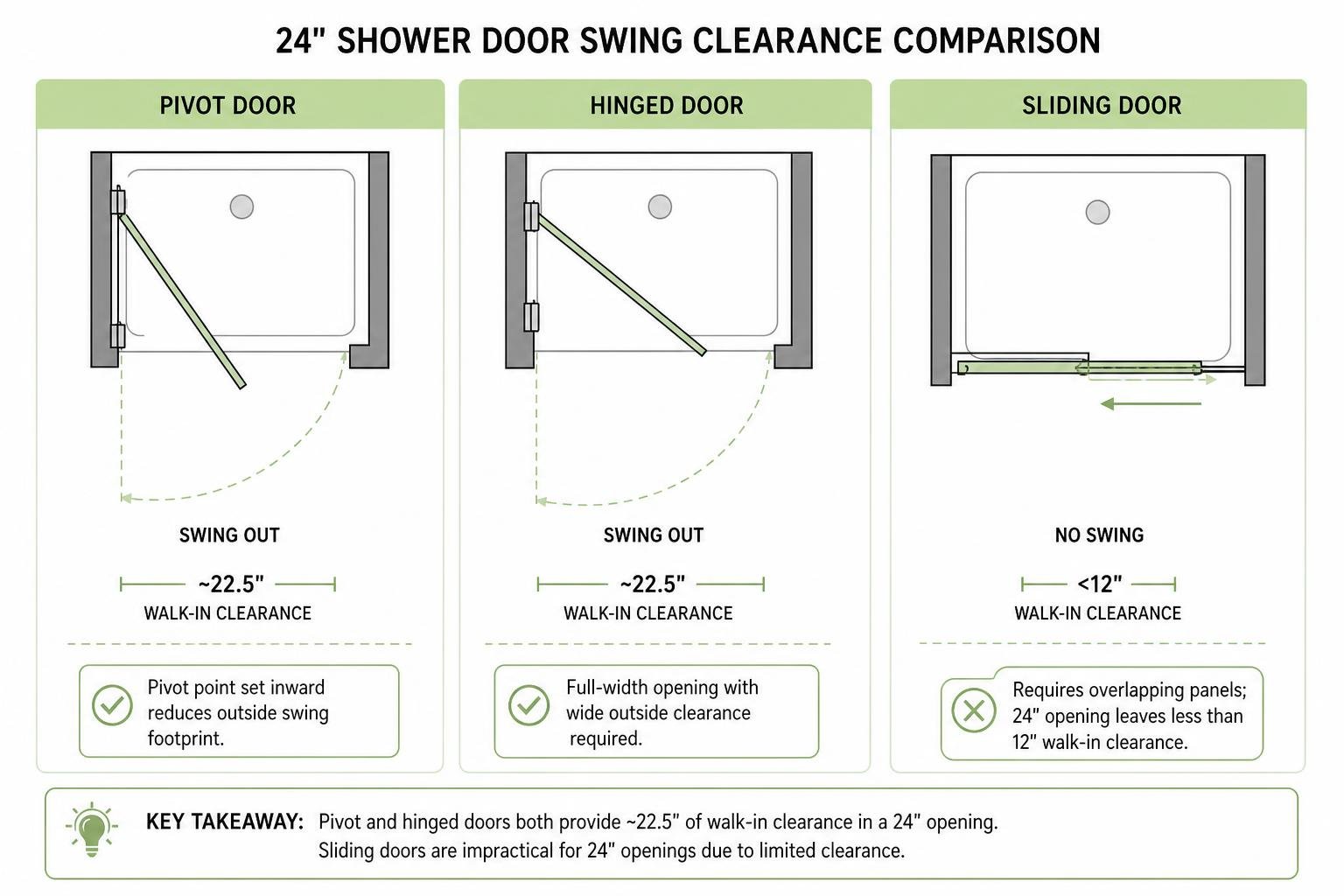
- Sliding Doors: For a standard 24-inch opening, sliding doors are structurally impractical. Sliding mechanisms require at least two overlapping panels, which means a sliding system in a 24-inch space would only leave you with a walk-in clearance of less than 12 inches! Therefore, sliding doors are reserved for wider openings (usually 48 to 60 inches).
- Hinged Doors: Traditional hinged doors use wall-mounted hinges that attach directly to your tile or drywall. They swing open like a standard bedroom door. This offers a wide walk-in clearance but requires total clearance outside the shower.
- Pivot Doors: Pivot doors utilize pins mounted at the top and bottom corners of the door panel. This design allows the door to rotate. Because the pivot point is offset slightly inward, the swing footprint outside the shower is slightly reduced compared to a standard side-hinged door.
When planning a swing door, keep in mind that a standard 24-inch retail swing door actually provides a walk-in distance of approximately 22.5 inches due to the physical space taken up by the hinges, sweeps, and side clearances. Additionally, standard retail kits often offer built-in width adjustability (e.g., 23.5 to 25 inches) using metal wall jambs, whereas custom glass is cut to your exact measurements, allowing you to maximize every millimeter of walk-in space.
Best Options for Small Alcoves and Privacy
If your 24-inch shower is tucked away in a dark alcove or a shared family bathroom, you may want to look beyond standard clear glass.
While clear glass is the best option for maximizing light transmission and making a small room feel larger, it offers zero privacy. If privacy is a priority, consider these textured glass options:
- Frosted Glass (Acid-Etched): This glass has a smooth, satin-like finish that diffuses light while completely obscuring the view. It is excellent for shared bathrooms where multiple people might be using the space at once.
- Pebbled Glass: This textured glass features a bumpy, water-droplet pattern. It provides excellent privacy, diffuses light beautifully, and is highly forgiving when it comes to hiding water spots and soap scum.
- Rain Glass: Featuring a vertical texture that mimics falling rain, this style adds a lovely organic design element to your bathroom while offering moderate privacy.
Essential Guide to Measuring and Installation
Before you order a 24 inch glass shower door, you must understand that glass cannot be cut, drilled, or altered once it has been tempered. A single measurement error of 1/8 of an inch can turn an expensive piece of glass into an unusable paperweight.
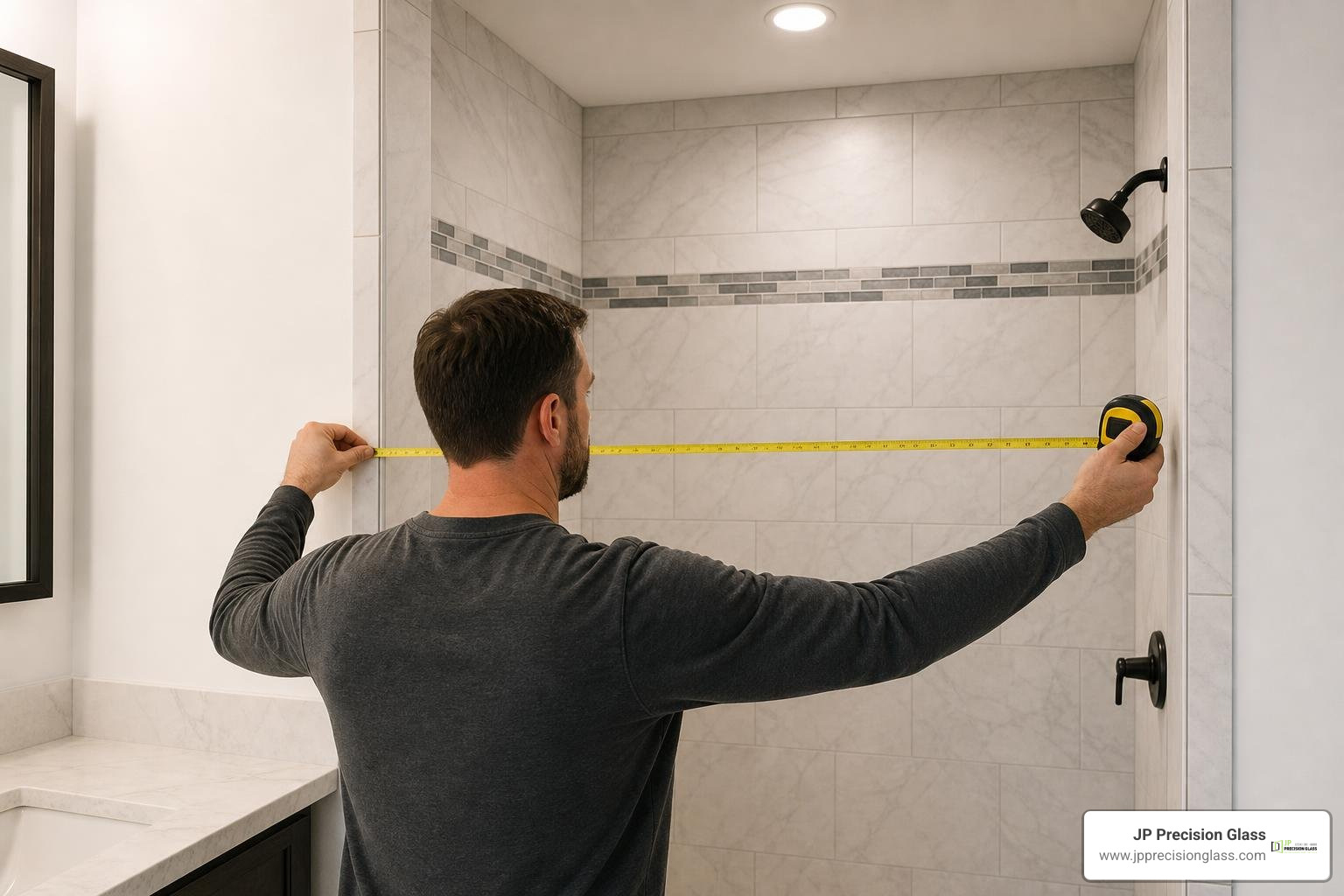
Before making any purchases, make sure to read our essential checklist of 3 Things To Do Before Buying A Glass Shower Door.
How to Measure for a 24 inch glass shower door
Measuring for a shower door is a highly precise process. You should only measure after all tiling, grouting, and threshold work are 100% complete. Never measure raw drywall or backer board, as finished tile and thinset can easily reduce your opening width by 1/2 inch or more.
To get an accurate measurement, follow these steps:
- Measure the Width in Three Places: Measure the distance from wall to wall at the bottom (threshold), the middle, and the top of the opening. Write down all three measurements.
- Check for Plumb (Vertical Alignment): Hold a level against both side walls. If the bubble is not perfectly centered, your walls are “out-of-plumb.” Many standard retail doors have zero out-of-plumb adjustment. If your walls lean even slightly, a pre-fabricated retail door will leave ugly, water-leaking gaps. Custom glass, however, can be cut with a slight taper to match your walls perfectly.
- Measure the Height: Measure from the threshold up to your desired door height (standard heights are 64, 72, or 78 inches). Ensure you have enough vertical clearance and that the door won’t hit any ceiling fixtures or exhaust fans.
- Account for Hardware Clearance: If you are buying a modular, frameless pivot door, remember the “3/8-inch rule.” Most wall-mounted hinges require an additional 3/8-inch clearance between the glass panel and the tile to operate smoothly without binding.
For a deeper dive into common sizing hurdles, check out our guide on 6 Glass Shower Door Questions.
Why Professional Installation is Essential for Custom Glass
It can be tempting to buy a cheap retail kit and try to install it yourself over the weekend. However, installing heavy, frameless glass is a high-risk DIY project.
First, there is the physical weight. A 3/8-inch thick frameless door panel can easily weigh over 70 pounds. Handling a heavy, slippery piece of glass while trying to line up screw holes on a tiled wall is a recipe for disaster. If you accidentally bump the corner of a tempered glass panel against a hard tile floor, the entire sheet can instantaneously shatter into thousands of tiny pieces.
Second, drilling into tile requires specialized diamond-tipped drill bits, water cooling, and a steady hand. One wrong move can easily crack your expensive new wall tile, leading to costly repairs. Finally, professional installers understand how to properly seal thresholds and align hinges to ensure your door is perfectly watertight and self-closing.
If you want peace of mind, professional alignment, and a lifetime of smooth operation, it is always best to invest in Affordable Shower Door Installation from an experienced glass company.
Frequently Asked Questions about 24-Inch Shower Doors
How do I clean and maintain my glass shower door?
The secret to keeping a glass shower door looking brand new is preventing water spots and soap scum from bonding to the surface. When hard water evaporates on untreated glass, it leaves behind calcium and magnesium deposits that can eventually etch the glass permanently.
To protect your investment, consider these tips:
- Factory Coatings: Look for doors treated with protective, hydrophobic coatings like EnduroShield or ClearMax. These double-sided, non-stick treatments repel water and grime, reducing cleaning time by up to 90%.
- The Daily Squeegee: Keep a small silicone squeegee inside the shower. Spending 30 seconds wiping down the glass after your daily shower will keep it sparkling and eliminate the need for harsh chemical cleaners.
- Avoid Abrasives: Never use abrasive scrub brushes, steel wool, or harsh powder cleansers on your glass or metal hardware, as they will scratch the protective coatings and finishes. Instead, use a mild mixture of water and white vinegar or a gentle dish soap.
To learn more about the structural and maintenance benefits of glass surfaces, read about the 3 Advantages Of Glass Shower Walls.
What is the typical price range and what features justify a higher cost?
The price of a 24 inch glass shower door varies widely depending on glass thickness, design, and whether you choose a mass-produced retail kit or a custom-cut solution.
- Budget Tier ($120 – $250): Standard framed pivot doors with thin 1/8-inch or 1/4-inch glass. These often feature textured glass (like pebbled or rain patterns) and basic silver aluminum frames. An example of this is the 24 in. x 64 in. Framed Pivot Shower Door Kit in Silver with Pebbled Glass , which serves as a highly functional, budget-friendly option for simple alcoves.
- Mid-Range Tier ($250 – $450): Semi-frameless or framed doors with thicker glass (1/4-inch to 5/16-inch) and better finishes like matte black or brushed nickel. A reliable example in this range is the Paragon 24 in. to 24.75 in. x 70 in. Framed Continuous Hinged Shower Door in Chrome with Clear Glass , which uses continuous hinges to distribute weight evenly in tight spaces.
- Premium Retail Tier ($450 – $680+): Heavy-duty, 3/8-inch (10mm) frameless pivot doors with solid brass hardware and factory-applied water-repellent coatings. A popular modular option is the 24 in. W x 78 in. H Pivot/Hinged Frameless Shower Door in Chrome – Door Only – Width Adj 24.375 – 24.775 , which offers a near-custom aesthetic using modular sizes.
What justifies a higher price tag? Premium glass thickness (3/8″ or 10mm), solid brass hardware that won’t pit or rust, custom glass cuts that accommodate out-of-plumb walls, and professional installation warranties.
What do customer reviews say about standard retail doors?
When you read customer reviews for standard, pre-fabricated retail shower doors, a few common complaints consistently pop up:
- Shipping Damage: Heavy glass panels are incredibly fragile during transit. Many customers report receiving chipped glass or completely shattered panels due to rough handling by standard shipping carriers.
- Out-of-Plumb Gaps: Many DIYers buy a standard 24-inch door only to realize during installation that their bathroom walls are slightly crooked. Without built-in adjustability or a custom glass cut, they are left with doors that don’t close properly or leak water onto the bathroom floor.
- Cheap Hardware: Lower-priced retail kits often use lightweight aluminum or plastic hardware that can feel flimsy, sag under the weight of the glass, or begin to corrode within the first year of use.
By opting for a custom, professionally installed glass door, you completely bypass these headaches. A professional glass company handles all measurements, transports the glass safely in specialized racks, and ensures a flawless, level fit with premium, commercial-grade hardware.
Conclusion
A 24 inch glass shower door is the perfect way to bring modern elegance, light, and a sense of spaciousness to a compact bathroom. While pre-fabricated retail kits offer a quick fix, they often come with structural limitations, thin glass, and tricky installation requirements.
At JP Precision Glass, we believe that even the smallest spaces deserve premium style. We specialize in designing, customizing, and installing high-quality, made-to-size glass shower doors and enclosures for homeowners throughout the Chicago area. Whether you need a brand-new installation, a replacement for an outdated framed door, or a quick repair, we are here to help.
Explore our professional glass services across the Chicagoland area:
Ready to transform your compact bathroom with a beautiful, custom-fit glass shower door? Schedule Your Custom Consultation with our expert team today!