
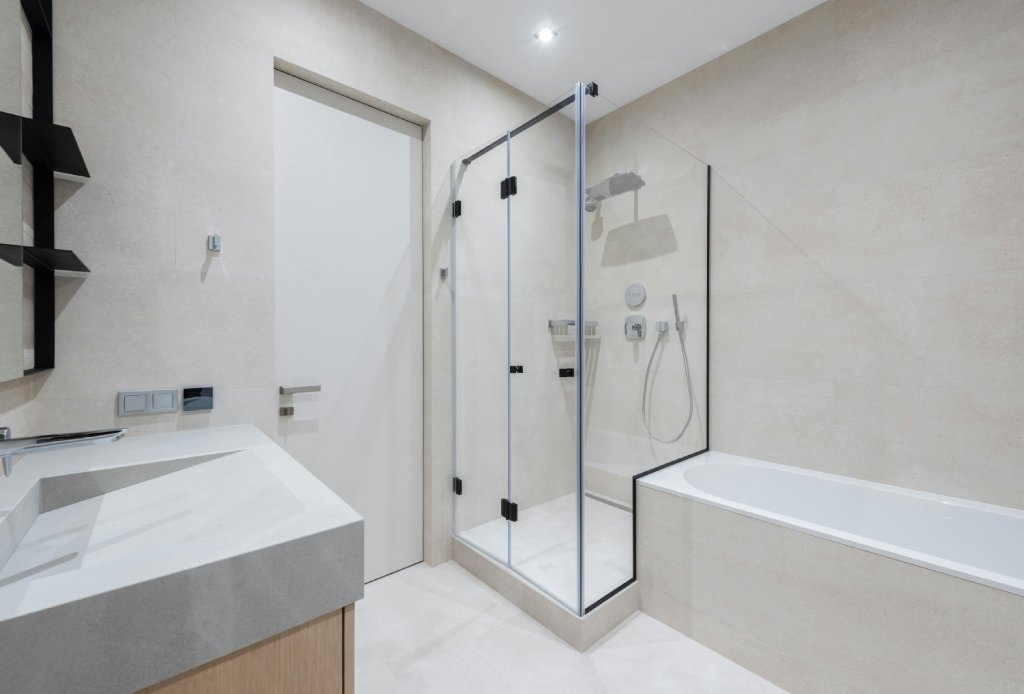
Is a Bathtub Glass Half Door Right for Your Bathroom Remodel?
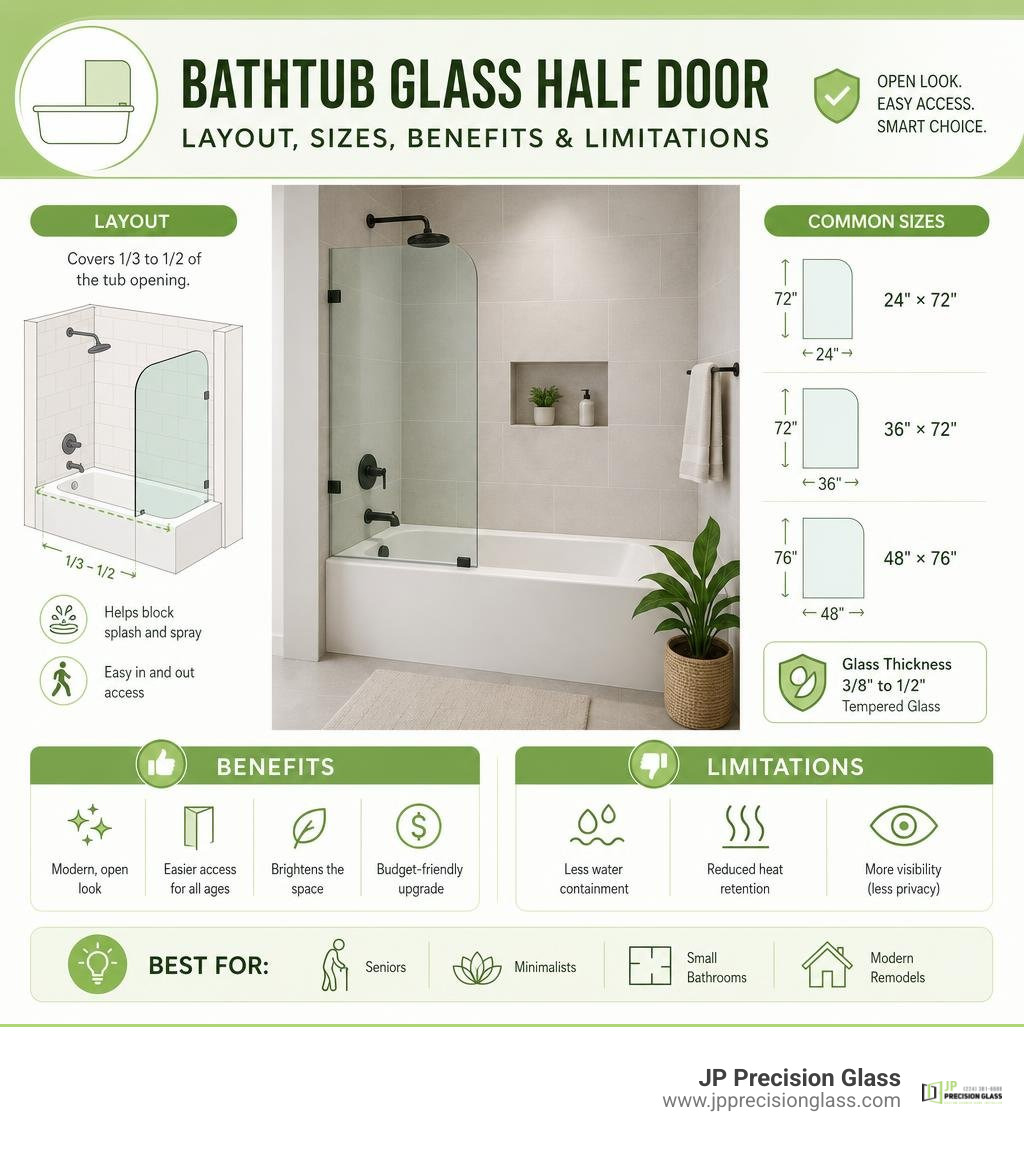
A bathtub glass half door is a single fixed or hinged glass panel that covers part of your tub or shower opening — not the entire width. It acts as a splash guard while keeping the space open and easy to access.
Quick answer: here’s what you need to know at a glance:
| Question | Short Answer |
|---|---|
| What is it? | A partial glass panel covering 1/3 to 1/2 of the shower or tub opening |
| Main benefit | Open, modern look with easier access than full enclosures |
| Main drawback | Less water containment and reduced heat retention |
| Best for | Seniors, minimalists, small bathrooms, modern remodels |
| Common sizes | 24″×72″, 36″×72″, 48″×76″ |
| Glass type | 3/8″ to 1/2″ tempered glass |
| Worth it? | Yes — for many Chicago homeowners remodeling on a budget |
Bathroom design in 2026 leans hard toward simplicity. Clean lines, open space, and less visual clutter are what buyers and homeowners want. A partial glass enclosure fits right into that trend — and it can work beautifully on an alcove bathtub or a walk-in shower.
But it’s not perfect for every situation. Water containment, privacy, and heat retention are real trade-offs you need to weigh before committing.
This guide breaks down the honest pros and cons so you can decide if a bathtub glass half door makes sense for your space and budget.
What is a Bathtub Glass Half Door and How Does It Work?
At its core, a bathtub glass half door (often called a partial glass shower screen or a splash guard) is a minimalist alternative to sliding glass doors or traditional shower curtains. Instead of sealing off the entire length of your tub from wall to wall, it covers only the portion of the tub closest to the showerhead.
This layout relies on a stationary design where a single fixed panel of glass is permanently anchored to the wall and the tub deck. Alternatively, some setups feature a hinged mechanism that allows the glass to swing inward or outward, making it easier to turn on the water valves before stepping in. By using sleek Glass Shower Panels, you eliminate the visual and physical weight of heavy metal frames and sliding tracks, opening up the entire visual plane of your bathroom.
While traditionally popularized in European hotels and compact flats, this style has taken off in American residential design. It offers a permanent, hygienic, and highly architectural solution for modern alcove bathtubs and walk-in wet rooms alike.
Defining the Half Glass vs. Full Glass Enclosure
The differences between a partial glass panel and a full glass enclosure come down to physical boundaries and spatial perception.
- Physical and Visual Boundaries: A full glass door creates a completely sealed chamber. Steam, water, and air are locked inside. While a full frameless enclosure offers excellent water containment, it requires a complete set of tracks, headers, or heavy hinge systems. A half glass door, by contrast, removes the physical boundary on one side of the tub. It relies on open space, allowing the bathroom and the bathing area to merge into one continuous room.
- Spatial Perception: In small bathrooms, a full enclosure—even one made of clear glass—can sometimes feel like a physical barrier because of the metal hardware required to support sliding or pivoting panels. A single, fixed half glass panel uses minimal hardware, making the bathroom feel twice as large by keeping sightlines completely uninterrupted.
- Access and Usability: Full doors require sliding or swinging open a large barrier, which can feel restrictive. A half door offers barrier-free access, allowing you to simply walk or reach around the glass without moving a heavy door.
Mounting on a Tub Rim vs. Walk-In Shower Floor
While the design principles remain similar, the structural support and installation techniques differ significantly depending on whether you are mounting the panel on a bathtub rim or directly onto a walk-in shower floor.
- Bathtub Rim Installation: When installing a bathtub glass half door, the bottom of the glass rests on the flat, horizontal ledge (the deck) of the tub. This requires a perfectly flat, wide tub rim—ideally at least 2 to 3 inches of flat surface—to ensure a stable seal. Because bathtubs are made of cast iron, acrylic, or steel, the fastening hardware must be carefully anchored to the surrounding wall studs while the bottom of the glass is sealed with high-grade silicone directly to the tub rim.
- Walk-In Shower Floor Installation: For a walk-in shower, the glass panel mounts directly to the tile, stone, or acrylic shower pan. The primary difference here is the threshold and drainage alignment. Walk-in showers rely on a precise floor slope (usually a minimum of 1/4 inch per foot toward the drain) to ensure that water flowing toward the open half of the shower is pulled back down the drain rather than spilling onto the bathroom floor.
Pros and Cons of a Partial Tub Enclosure
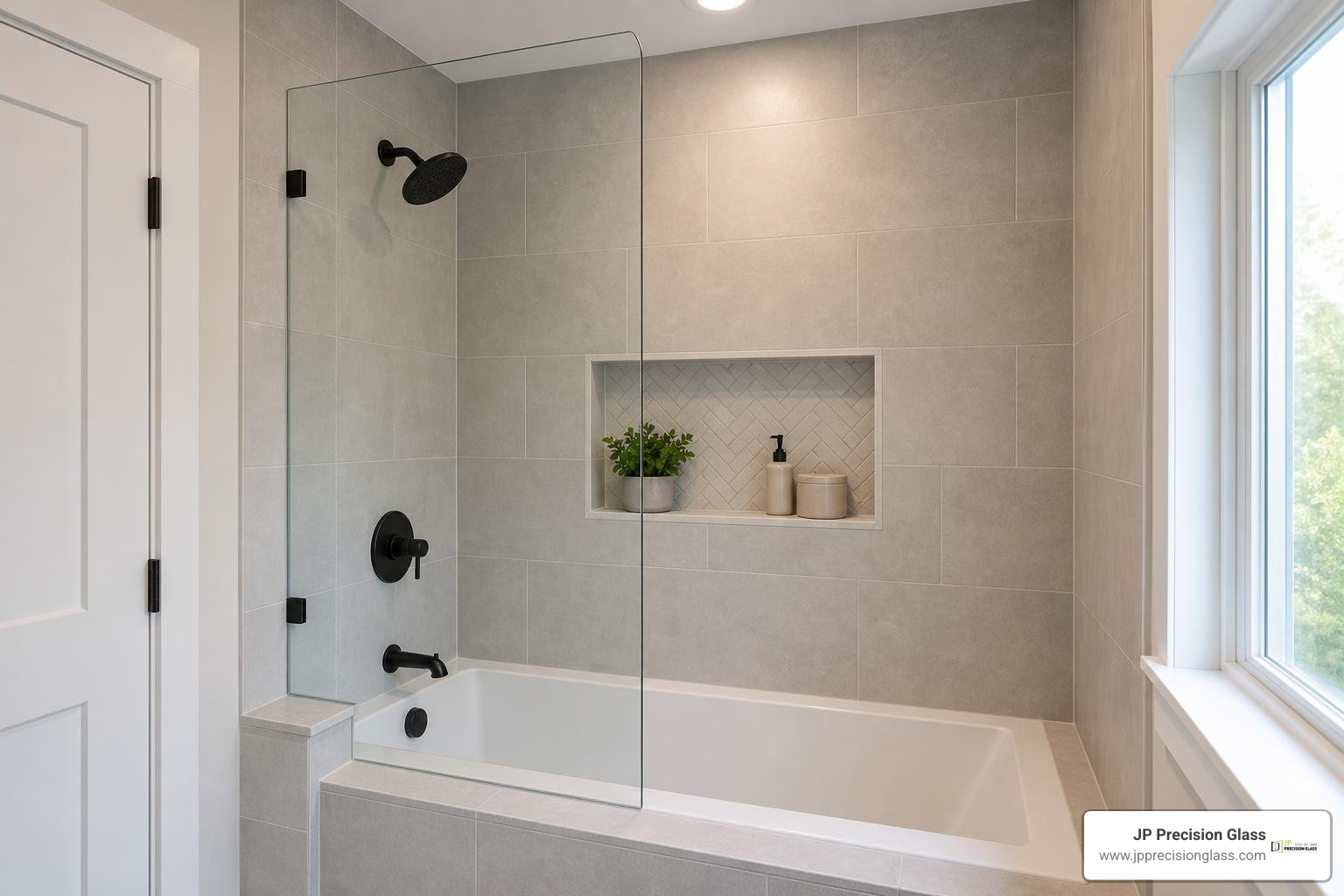
Before throwing out your old shower curtain, it is vital to weigh the aesthetic improvements against the daily practicalities of a partial glass setup. Understanding the Benefits of Frameless Glass Shower Doors can help put these pros and cons into context.
Key Benefits of Partial Glass Enclosures
- Modern, High-End Aesthetic: There is no denying that a bathtub glass half door looks exceptionally sleek. It instantly elevates a standard alcove tub into a custom, spa-like feature.
- Incredible Ease of Maintenance: Traditional sliding doors have bottom tracks that collect soap scum, hair, and hard water minerals. Shower curtains harbor mold and mildew. A fixed half glass panel has no tracks, no rollers, and no overlapping glass panes. It is incredibly fast and easy to clean.
- Universal Design and Accessibility: Because there are no tracks to step over or heavy doors to slide, half glass panels align beautifully with aging-in-place and universal design principles. They make it much easier for parents to bathe young children or for individuals with limited mobility to access the tub controls.
- Enhanced Natural Light: By eliminating dark curtains or frosted sliding panels, natural light from bathroom windows can flood the entire space, making the shower itself feel brighter and safer.
Limitations and Cons to Consider
- Water Splashes and Overspray: This is the most common concern. Because the back half of the tub is completely open, water can splash out if the showerhead is pointed in the wrong direction or if you have high water pressure.
- Drafty Showers and Heat Loss: A fully enclosed shower traps steam, creating a warm microclimate. With a half glass door, steam and warm air escape freely into the rest of the bathroom. If you live in a colder climate (like our chilly Chicago winters), your shower may feel noticeably draftier.
- Reduced Privacy: Clear glass offers zero privacy. If you share a bathroom with family members who might need to use the space simultaneously, a completely clear partial panel might feel too exposed.
- Bathroom Floor Protection: If your floor tiles are not properly sealed or if your bathroom lacks a floor drain, regular water escape from a partial door can eventually damage baseboards or subflooring if not wiped up promptly.
Materials, Glass Types, and Hardware Options
The durability, safety, and look of your partial door depend heavily on the materials you select. Because these panels do not have a full frame to support them, using premium glass and heavy-duty Shower Glass Accessories is non-negotiable.
Glass Styles: Clear, Frosted, and Textured
The type of glass you choose dictates both the visual impact and the privacy level of your bathroom.
- Tempered Clear Glass: This is the gold standard for a modern, invisible look. It maximizes light transmission and makes the room feel as spacious as possible. To make clear glass practical, we highly recommend selecting glass pre-treated with a water-repellent coating like EnduroShield, which prevents hard water stains and soap scum from bonding to the surface.
- Frosted Glass (Acid-Etched): If privacy is a concern, frosted glass is an excellent compromise. It diffuses light beautifully, hiding the interior of the shower while still allowing natural light to pass through. It is also excellent at hiding water spots.
- Textured and Patterned Glass: Rain glass, ribbed glass, and fluted glass have surged in popularity in 2026. These textured styles add a rich, tactile design element to the bathroom, offering moderate privacy while creating beautiful light patterns across the room.
Regardless of style, always ensure your panel is constructed of tempered safety glass with a thickness of either 3/8 inch or 1/2 inch. Thinner retail glass (like 1/4 inch) will flex and vibrate when touched, which can feel cheap and unsafe.
Hardware Finishes and Attachment Methods
To secure a heavy sheet of tempered glass to your wall and tub rim, you must choose between two main structural attachment methods:
- U-Channels: A continuous metal channel that runs along the wall and the tub rim. It provides excellent structural support and can help mask slightly out-of-plumb walls, but it features a slightly more visible metal profile.
- Wall Clamps: Small, heavy-duty metal brackets that clamp the glass at specific points. This is the ultimate frameless look, showing off the clean, polished edges of the glass, but it requires perfectly plumb walls and precise professional installation.
For those looking for a premium retail option to install themselves, products like the 51 in. x 58 in. Frameless Glass Hinged Bathtub Door in Polished Brass demonstrate how high-quality hardware finishes can elevate a standard tub.
When choosing hardware, match your existing bathroom fixtures with these popular finishes:
- Polished Brass: Warm, luxurious, and highly classical.
- Matte Black: Bold, modern, and high-contrast.
- Chrome / Polished Chrome: Highly reflective, clean, and timeless.
- Brushed Nickel: Soft, muted, and excellent at hiding fingerprints.
Comparing Half Glass Doors to Other Styles
To understand if a partial door is truly the right fit, it helps to see how it stacks up directly against more traditional options like Sliding Shower Doors, pivot doors, and standard curtains.
| Feature | Half Glass Door (Fixed/Hinged) | Sliding Shower Doors | Pivot (Swing) Doors | Traditional Curtains |
|---|---|---|---|---|
| Visual Openness | Excellent (Minimal hardware) | Moderate (Has metal tracks) | Good (Requires swing clearance) | Poor (Closes off the space) |
| Water Containment | Moderate (Splashing possible) | Excellent (Fully sealed) | Excellent (Fully sealed) | Good (If kept inside tub) |
| Cleaning Effort | Very Low (No tracks/crevices) | High (Tracks collect grime) | Moderate (Hinges require wiping) | High (Fabric molds easily) |
| Access Space | Open (No physical door to slide) | Restricted (Only opens 50%) | Open (Requires floor space) | Open (Pushed to the side) |
| Moving Parts | None to One (Low wear) | Many (Rollers, tracks, guides) | Few (Wall hinges) | None |
Sliding and Pivot Doors vs. Fixed Panels
While sliding bypass systems and pivoting glass doors offer absolute water containment, they come with physical limitations. Sliding systems always restrict your entry space to exactly half of the tub width, and their metal tracks are notorious for trapping water, hair, and soap residue.
Pivot doors require a wide “swing zone” in the bathroom, meaning you cannot place a toilet, vanity, or towel bar directly next to the shower opening without risking a glass collision.
A fixed half glass panel eliminates all moving parts, tracks, and swing-space worries. It is a set-it-and-forget-it design that relies on physical layout rather than moving mechanical parts to keep your bathroom functional.
Cost and Value: Custom Fabrication vs. Standard Options
When shopping for a bathtub glass half door, you will find two paths: pre-fabricated retail kits or professional custom fabrication.
- Pre-Fabricated Retail Kits: These are budget-friendly, off-the-shelf sizes designed to fit standard tub dimensions. While cost-effective, they assume your bathroom walls are perfectly plumb (90-degree angles) and your tub is completely level. In older homes, walls almost always bow or lean, which can leave ugly gaps between a pre-cut glass panel and your tile.
- Custom Professional Fabrication: Working with a local specialist like us ensures that the glass is cut precisely to match the unique contours of your bathroom. We measure your walls using laser levels to account for any bowing, ensuring a flawless, airtight fit. While custom work carries a higher initial investment, it prevents leaks, eliminates ugly gaps, and adds genuine resale value to your home.
Sizing, Measuring, and Installation Guide
Getting the measurements right is the single most important step when planning a partial glass installation. A mistake of even 1/16 of an inch can result in water leaking onto your bathroom floor or a glass panel that simply won’t fit into place. If you are uncertain, seeking Affordable Shower Door Installation from professionals is always the safest bet.
Standard Sizes for a Bathtub Glass Half Door
While custom sizing is always ideal, standard pre-fabricated sizes generally fall into three categories:
- 24″ Width × 72″ Height: Best for highly compact bathrooms, tiny home layouts, or very short tubs where space is at an absolute premium.
- 36″ Width × 72″ Height: The sweet spot for small to mid-sized standard alcove bathtubs. It covers enough of the tub to block direct spray from the showerhead while leaving plenty of room to step in and out.
- 48″ Width × 76″ Height: Designed for spacious walk-in showers or large master bathroom wet rooms where deep water containment is desired.
To balance water containment and visual openness, the glass panel should cover at least one-third to one-half of your total shower opening width.
Step-by-Step Measuring and Leak Prevention
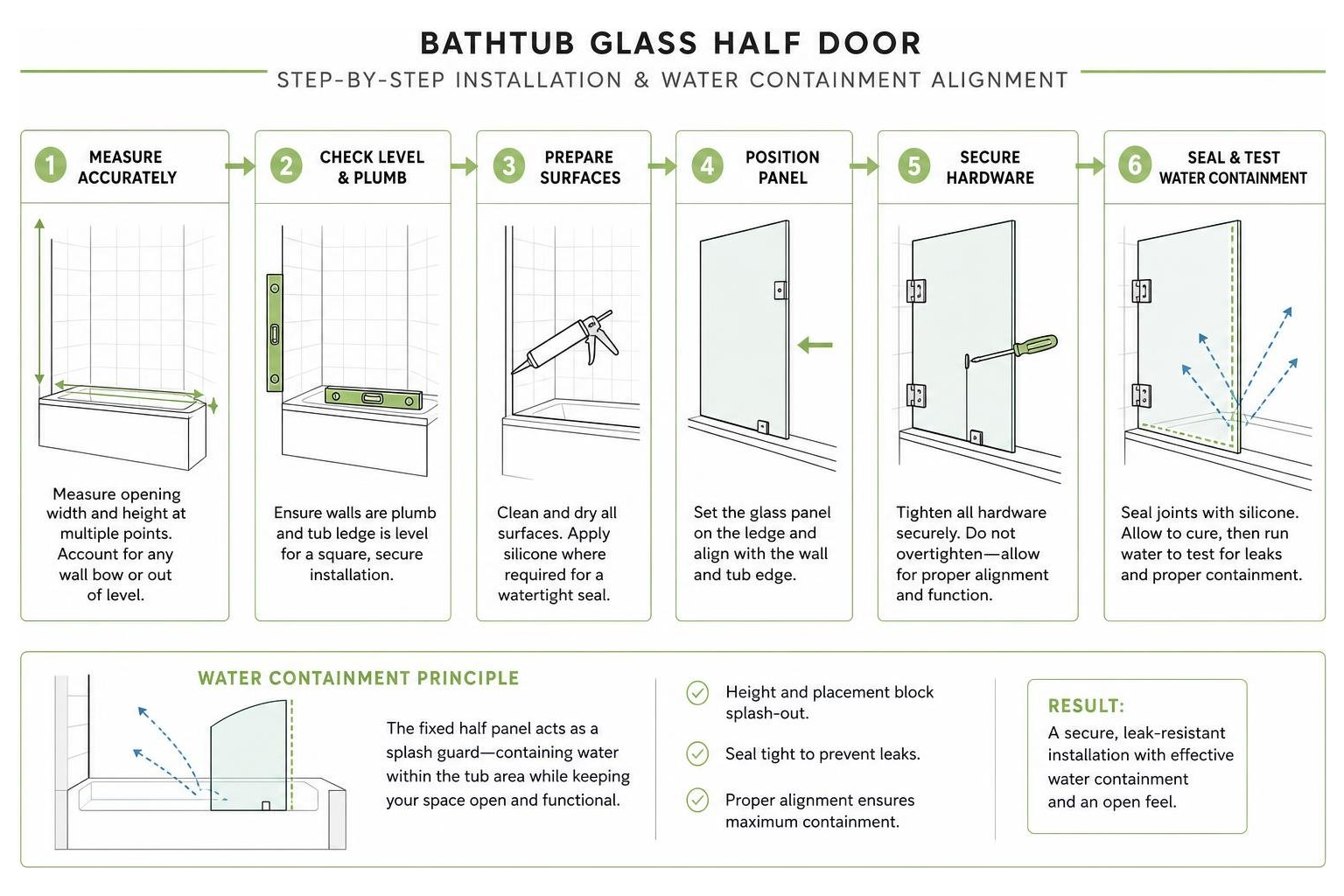
If you are preparing for an installation, keep these critical guidelines in mind to prevent future leaks:
- Check for Plumb and Level: Use a long level to check the vertical wall where the glass will mount, as well as the horizontal tub rim. If the wall is out-of-plumb by more than 1/4 inch, a standard retail kit will not seal properly, and you will need a custom-cut glass panel.
- Verify Floor and Tub Slope: Ensure your tub rim slopes slightly inward toward the tub drain. For walk-in showers, a floor slope of 1/4 inch per foot toward the drain is recommended to prevent water from pooling and running outward past the open side of the glass.
- Strategic Showerhead Placement: Position your showerhead so that it points directly down or toward the tiled back wall—never directly at the open gap of the half door.
- Use High-Grade Seals: Install a clear polycarbonate sweep or drip rail at the bottom edge of the glass where it meets the tub rim. Apply professional-grade, mold-resistant waterproof silicone along the outer edges of the wall and tub joints.
- Let it Cure: If you or a professional installer have recently completed a Shower Door Replacement Chicago, allow the silicone sealant to cure for a full 24 to 48 hours before running the water.
Who is the Ideal User for This Design?
A bathtub glass half door is a fantastic design choice, but it is tailored to specific lifestyles and layouts.
- Seniors and those Aging-in-Place: Because it eliminates heavy sliding doors and tracks, a partial door offers barrier-free access. It makes stepping over a tub ledge safer and allows physical therapists or caregivers to assist without fighting a sliding glass panel.
- Minimalists and Modern Design Lovers: If you love clean lines, hidden hardware, and open-concept living, this design is the ultimate expression of bathroom minimalism.
- Small Apartment Dwellers: In compact bathrooms where a swinging door would hit the toilet or vanity, a fixed half glass panel provides a sleek, space-saving solution.
- Luxury Hotels and Spas: Hospitality designers favor this style because it creates a high-end, airy guest experience that is incredibly fast for housekeeping staff to clean and sanitize between stays.
Maintenance and Care for Long-Lasting Clarity
The primary appeal of a half glass door is how easy it is to keep clean, but it still requires some basic care to maintain its crystal-clear look. To keep up with modern Shower Glass Innovations, follow these simple maintenance habits:
- Embrace the Squeegee: Keep a small silicone squeegee hanging inside your shower. Spending 10 seconds wiping down the glass after your final shower of the day will eliminate 90% of water spots and hard water mineral buildup.
- Use Water-Repellent Coatings: If your glass did not come pre-treated with a protective barrier, apply an aftermarket water-repellent coating (like Rain-X or EnduroShield) every few months. This causes water to bead up and roll off the glass, taking soap residue with it.
- Avoid Abrasive Cleaners: Never use steel wool, harsh scrub brushes, or abrasive powder cleansers on your glass or hardware. These can create microscopic scratches that trap dirt and permanently dull the glass. Instead, opt for a simple mixture of distilled white vinegar and water, or a gentle liquid dish soap.
Frequently Asked Questions
Do half shower doors leak?
They do not “leak” in the traditional sense of a broken seal, but they can allow water to splash onto the bathroom floor if not configured correctly. Because the shower is partially open, water containment depends heavily on proper showerhead positioning, a correctly sloped tub rim or shower floor, and keeping the glass panel wide enough (covering 1/3 to 1/2 of the opening width) to block the primary spray zone.
Why do some showers only have half a door?
This design is a deliberate choice to balance style, accessibility, and cost-effectiveness. It is a staple of European design, created to make small bathrooms feel larger, eliminate hard-to-clean sliding door tracks, and provide a barrier-free entryway that accommodates universal design standards.
Is a Bathtub Glass Half Door Worth the Investment?
Absolutely. For homeowners looking to modernize their bathroom without the massive expense of a full-scale wet room remodel, a half glass door is a highly cost-effective upgrade. It instantly boosts visual appeal, increases natural light, and is far more hygienic than a traditional shower curtain. If your existing glass door is scratched, cloudy, or outdated, choosing to Replace Glass Shower Door with a partial glass panel is an excellent way to elevate your home’s value.
Conclusion
A bathtub glass half door is the perfect marriage of minimalist design and daily practicality. By eliminating heavy frames, hard-to-clean tracks, and dark shower curtains, it opens up your bathroom, floods the space with natural light, and offers a level of cleaning simplicity that traditional doors simply cannot match. While it requires a bit of mindfulness regarding water splashing and draftiness, the aesthetic and maintenance benefits make it a favorite for modern homeowners in 2026.
If you are ready to upgrade your Chicago bathroom with a precise, made-to-size custom glass solution, we are here to help. At JP Precision Glass, we specialize in designing, customizing, and installing high-quality frameless glass systems tailored perfectly to your home’s unique layout.
Ready to transform your bathroom? Contact us today to explore our custom Shower Doors Chicago and get a free, professional consultation for your home.