
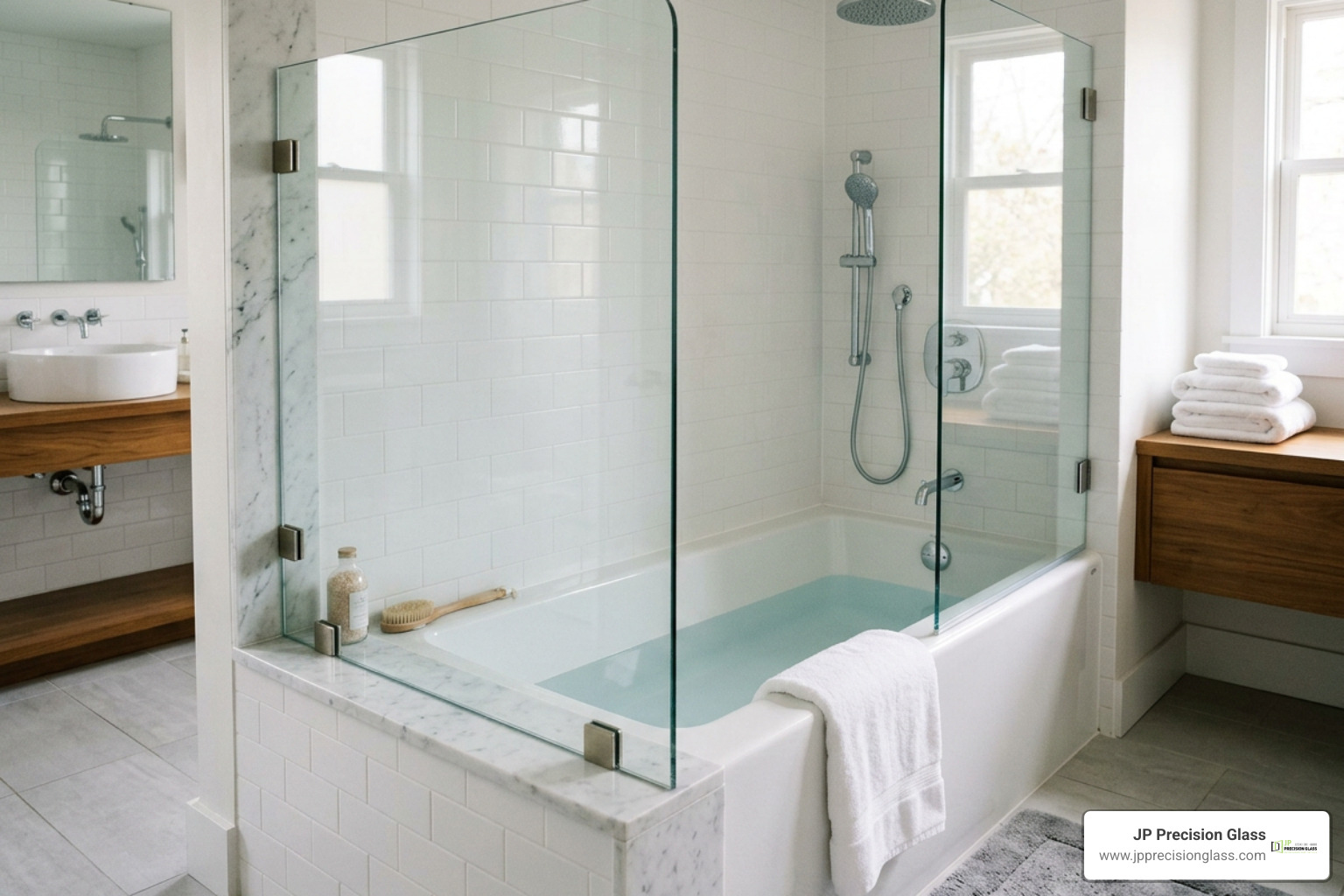
What Is a Half Glass Tub Enclosure and Is It Right for You?
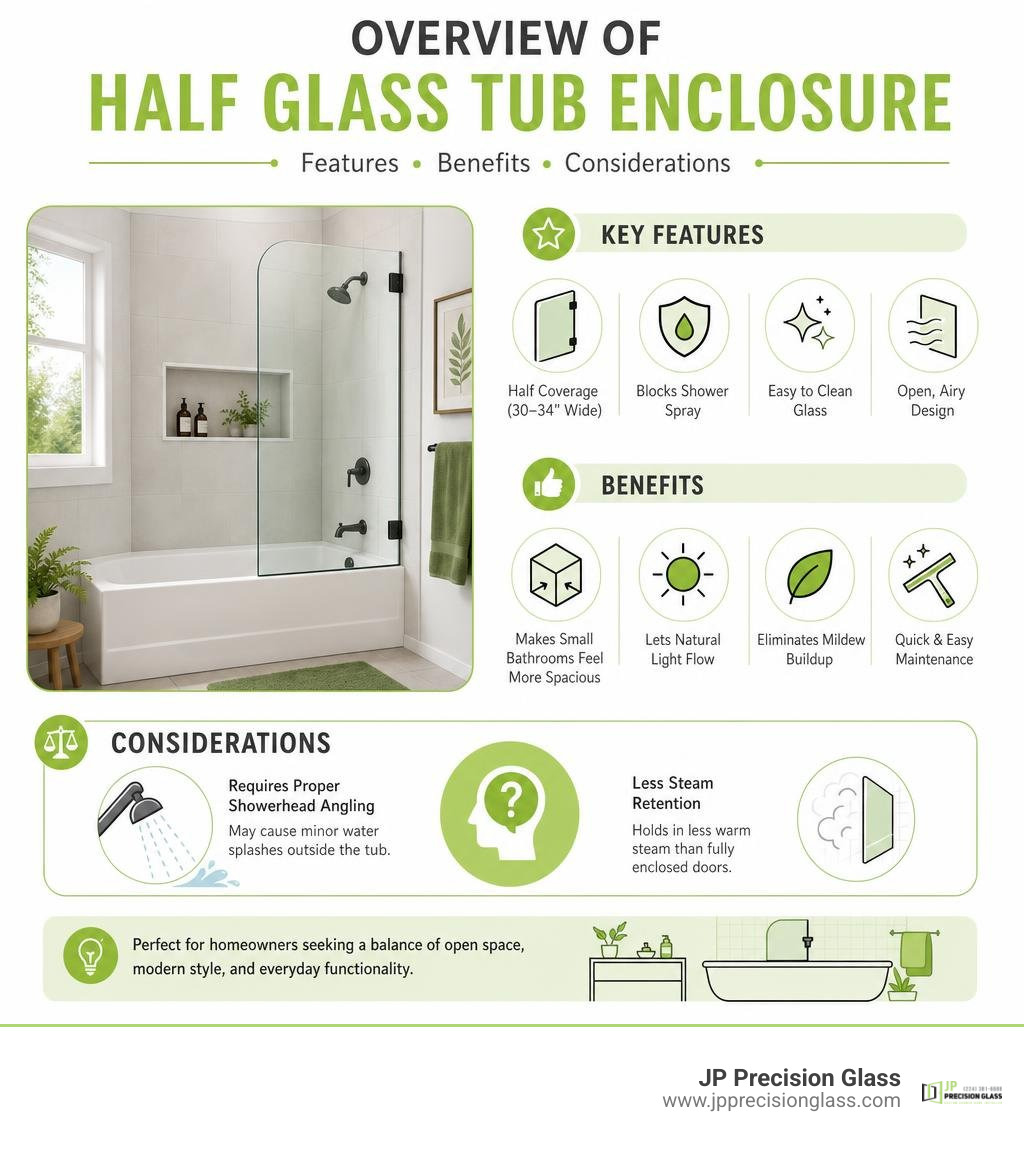
A half glass tub enclosure—often called a European tub screen or tub shield—is a fixed or hinged glass panel that covers roughly half your bathtub (typically 30 to 34 inches wide) to block shower spray while leaving the rest open. It replaces bulky sliding doors and mold-prone curtains with a sleek, open-concept look.
Here is a quick assessment to help you decide if it fits your space:
- The Big Wins: Makes small bathrooms feel twice as large, lets natural light flow into the tub, eliminates mildew buildup, and cleans in seconds with a squeegee.
- The Trade-Offs: Requires proper showerhead angling to prevent minor water splashes outside the tub, and it holds in less warm steam than fully enclosed doors.
For homeowners remodeling a standard alcove tub, a partial glass screen bridges the gap between open space and clean functionality.
Handy half glass tub enclosure terms:
Understanding the Half Glass Tub Enclosure Design
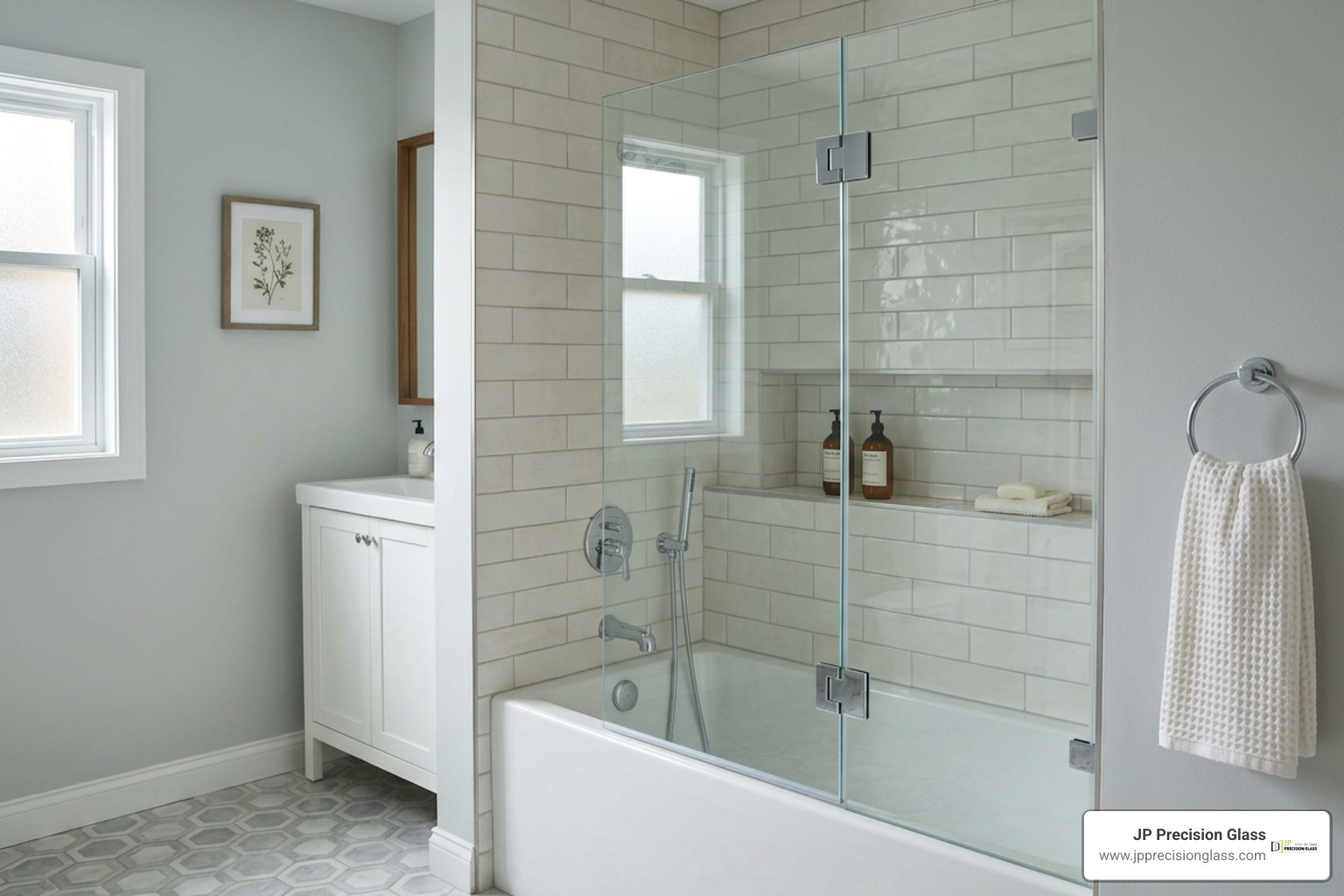
A partial glass setup redefines the boundary between the shower area and the rest of the bathroom. Instead of spanning the entire 60-inch width of an alcove tub opening, the glass covers just the critical splash zone right next to the showerhead. This design concept originated in European boutique hotels, where compact square footage demands creative, functional, and visually unobtrusive fixtures.
Understanding shower power why you need a glass bathtub shield begins with looking at the balance between openness and water control. Traditional bypass sliding enclosures require dual top-and-bottom metal tracks. These tracks often trap standing water, shed aluminum oxide dust over time, and create a visual barricade that cuts a bathroom in half. In contrast, partial glass panels mount cleanly to the wall and tub threshold with minimal hardware, letting sightlines pass straight through to decorative tilework.
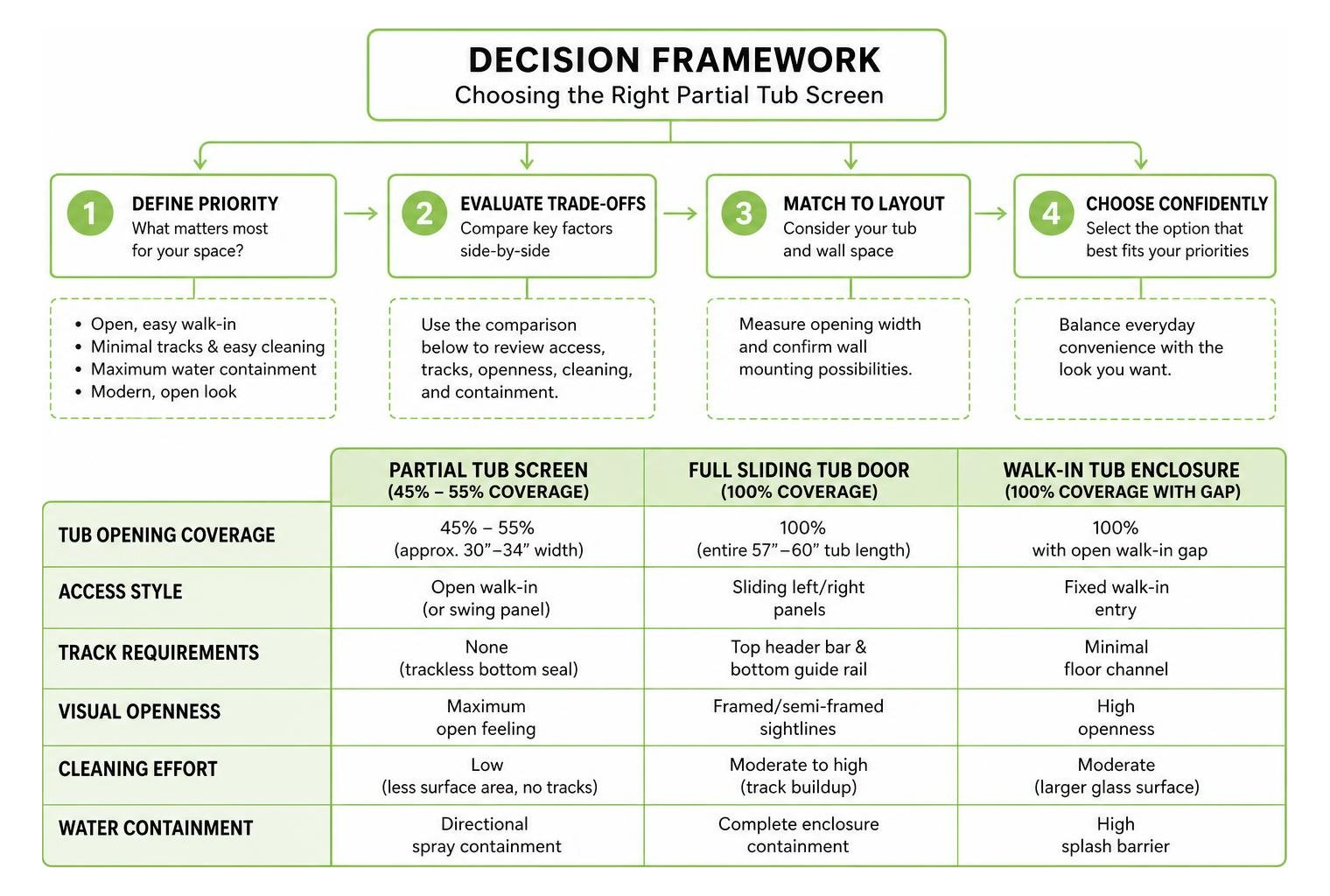
| Feature | Half Glass Enclosure / Shield | Full Bypass Sliding Doors | Stationary Full-Height Screen |
|---|---|---|---|
| Tub Opening Coverage | 45% – 55% (approx. 30″–34″ width) | 100% (entire 57″–60″ tub length) | 100% with open walk-in gap |
| Access Style | Open walk-in (or swing panel) | Sliding left/right panels | Fixed walk-in entry |
| Track Requirements | None (trackless bottom seal) | Top header bar & bottom guide rail | Minimal floor channel |
| Visual Openness | Maximum open feeling | Framed/semi-framed sightlines | High openness |
| Cleaning Effort | Low (less surface area, no tracks) | Moderate to high (track buildup) | Moderate (larger glass surface) |
| Water Containment | Directional spray containment | Complete enclosure containment | High splash barrier |
Fixed Panels vs Hinged Splash Guards
When designing a partial tub screen, the first structural choice is whether the panel remains stationary or moves on hinges:
- Stationary (Fixed) Panels: A single pane of safety glass is secured directly to the wall with low-profile metal clamps or a slim vertical U-channel, sealed to the tub rim with continuous mildew-resistant silicone. Because there are no moving parts, fixed panels offer rock-solid structural stability and zero mechanical wear.
- Hinged Splash Guards: These panels utilize wall-mounted or glass-to-glass pivoting hinges that allow the panel to rotate smoothly up to 180 degrees. Swinging the glass outward lets you turn on the water controls without stepping inside, bathe children or pets comfortably, and clean the bathtub corners without contorting your body.
- Combination Systems: Some layouts feature a narrow stationary panel (around 12 to 14 inches) fixed to the wall, paired with a hinged swinging door (around 18 to 20 inches) attached to its outer edge. This keeps the primary shower stream blocked while extending splash protection during use.
Many hinged models also include integrated horizontal towel bars or exterior handles, which provide a stable grip point for entering and exiting the tub while keeping towels within reach.
Structural Profiles and Hardware Finish Options
The hardware holding the glass sets the tone for your entire bathroom aesthetic:
- Frameless Glass Styling: Uses heavy tempered glass secured by discrete solid brass or stainless steel wall brackets. With no bulky perimeter framing, frameless glass offers an ultra-clean, architectural finish that blends into modern spaces.
- Semi-Frameless Designs: Utilizes a slim wall-mounted vertical profile to support slightly lighter glass panels. This profile offers subtle adjustability for out-of-plumb walls while keeping the top and outer edges exposed.
- Hardware Finishes: You can match your glass hardware to your existing plumbing fixtures. Matte black delivers an industrial, high-contrast look that pairs well with subway or slate tiles. Brushed nickel and brushed stainless steel provide timeless warmth and hide water spots effortlessly. Polished chrome delivers a crisp, mirror-like shine, while brushed gold or champagne bronze adds a touch of modern luxury.
The Key Advantages and Disadvantages of Partial Bathtub Screens
Installing partial glass requires balancing contemporary design with everyday practicality. Examining the splish splash no bath pros and cons of a bathtub glass half door helps set realistic expectations for your daily routine.
Major Benefits of a Half Glass Tub Enclosure System
- Expanded Spatial Perception: Shower curtains and frosted full doors create visual walls that make standard 5×8-foot bathrooms feel cramped. Clear glass lets your eye travel from wall to wall, making the room feel wider, brighter, and taller.
- Elimination of Mold and Mildew: Fabric and vinyl shower curtains cling to wet skin and harbor soap scum and black mold along their bottom hems. Smooth tempered glass dries quickly, resists bacterial growth, and eliminates recurring curtain replacements.
- Effortless Maintenance: With less glass surface area than a full bypass door system, keeping a half enclosure pristine takes under a minute. A quick wipe with a silicone squeegee after showering prevents mineral buildup.
- Showcasing Custom Tilework: If you have invested in intricate herringbone tile, natural marble, or accent niches, a partial glass screen keeps those design investments fully visible.
- Steam and Warmth Retention: While partially open, a properly placed glass shield captures and deflects the upward thermal draft of the shower stream, keeping the bathing zone pleasantly warm.
When planning a full bathroom refresh, choosing to upgrade your tub the best bathtub with half glass enclosures to buy gives an older alcove setup an instant facelift.
Potential Drawbacks and Splash Limitations
- Water Escape Risks: Because roughly half the tub remains open, high-pressure horizontal body sprays or wild splashing can send droplets onto the bathroom floor. Angling your showerhead downward toward the opposite back corner is essential.
- Draft Sensitivity: Because the enclosure does not seal off the ceiling and tub ledge completely, cooler air can circulate into the shower area if your bathroom is particularly drafty.
- Privacy Limitations: Clear glass offers no visual barrier. If multiple family members share a bathroom simultaneously during morning rush hours, an opaque or textured glass treatment may be necessary.
- Precise Installation Tolerances: Unlike flexible shower curtains that forgive uneven surfaces, rigid glass panels require flat tub ledges and plumb walls to maintain a watertight seal.
Choosing the Right Glass Type and Configurations
Selecting the correct glass involves evaluating structural thickness, safety compliance, and visual opacity. For a deeper look at glass fabrication options, consult our breakdown on how glass shower doors a comprehensive guide to types comparison covers safety and performance profiles.
Glass Thickness and Safety Treatments for a Half Glass Tub Enclosure
Glass panels for bathtub screens must withstand thermal changes, accidental bumps, and continuous moisture.
- 1/4-Inch (6 mm) Tempered Glass: Standard for semi-framed designs and lighter swinging doors. It provides structural safety while keeping the overall panel weight light, reducing stress on wall anchors.
- 5/16-Inch (8 mm) Tempered Glass: A popular mid-weight option for frameless hinged screens, providing a solid feel without excessive weight.
- 3/8-Inch (10 mm) Tempered Glass: The gold standard for heavy frameless installations. It provides premium stability, eliminates panel wobble, and features smooth, polished beveled edges.
- Laminated Safety Glass Options: Engineered by bonding two glass lites around a tear-resistant polyvinyl butyral (PVB) interlayer. In the rare event of impact breakage, the glass fragments remain bonded to the plastic interlayer rather than falling into the tub.
- Factory-Applied Protective Coatings: High-performance hydrophobic surface treatments fill the microscopic pores of the glass. This causes water to bead up and roll off, carrying minerals and soap residues away before they can bond and cause etching.
Privacy Options: Frosted, Tinted, and Patterned Styles
- Standard Clear Glass: The classic option. It features a faint greenish tint along the exposed polished edges due to natural iron oxide content.
- Ultra-Clear (Low-Iron) Glass: Specially formulated to remove the greenish tint, offering crystal-clear optical clarity. This is ideal if you have pure white marble, bright subway tile, or colorful accents you want to display accurately.
- Acid-Etched (Frosted) Glass: Chemically treated on one side to produce a smooth, satin translucent finish. It diffuses incoming light while providing complete privacy for the bather.
- Cast and Patterned Glass: Features textured designs (such as rain, fluted, or reed patterns) rolled into the glass surface during manufacturing. It scatters light, hides water spots, and adds a decorative focal point.
- Tinted Glass (Smoke Gray or Bronze): Infused with subtle metal oxides to provide a shaded, moody aesthetic that complements dark slate, brass accents, or modern industrial bathroom palettes.
Measuring, Installation, and Bathtub Compatibility
Installing glass onto an existing bathtub requires checking clearances, plumb lines, and structural backing. To explore complementary design layouts, reviewing how to choose the perfect glass tub enclosure for your bathroom ensures your selected panel matches your room’s traffic patterns.
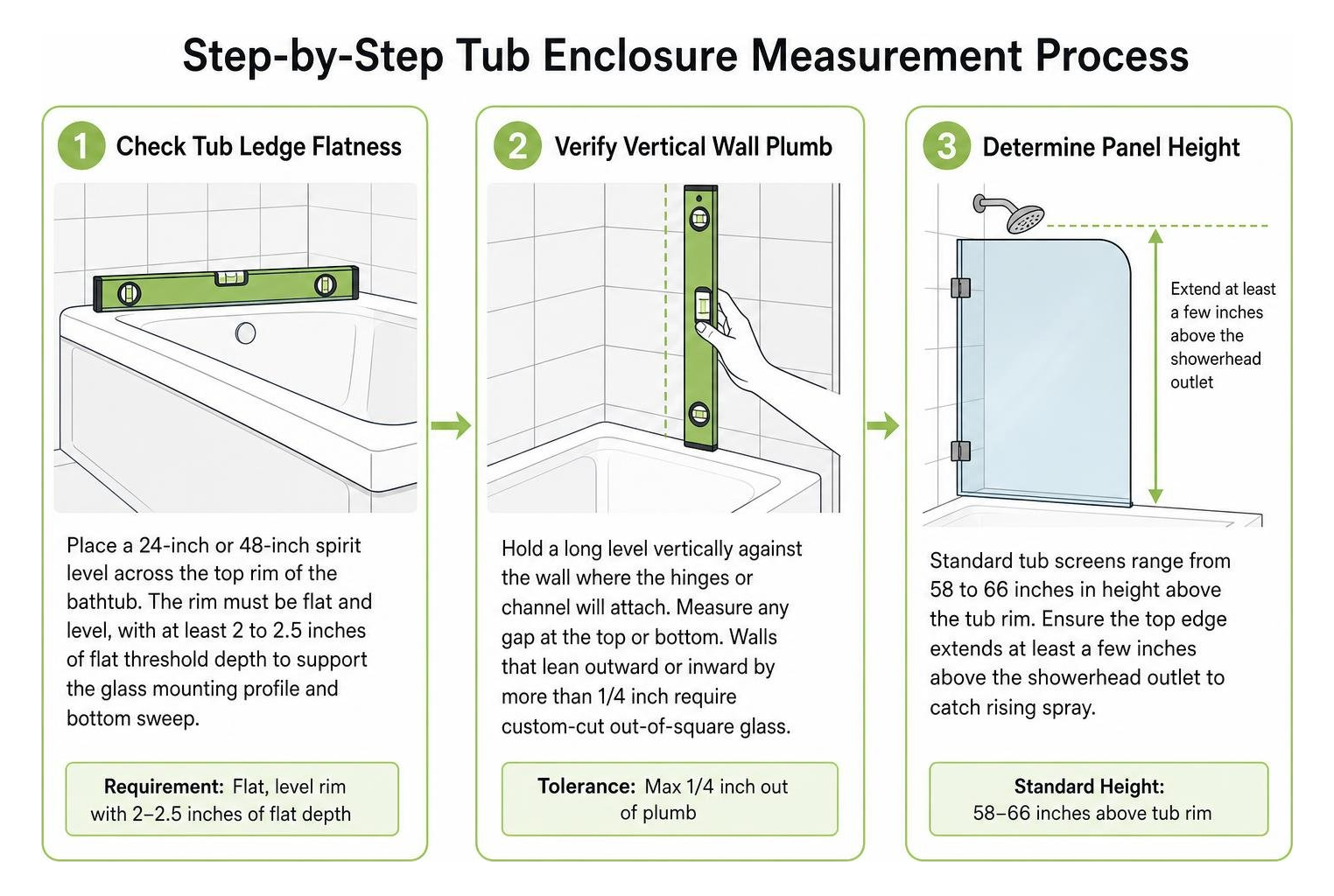
Measuring Existing Alcove Bathtubs Accurately
- Check Tub Ledge Flatness: Place a 24-inch or 48-inch spirit level across the top rim of the bathtub. The rim must be flat and level, with at least 2 to 2.5 inches of flat threshold depth to support the glass mounting profile and bottom sweep.
- Verify Vertical Wall Plumb: Hold a long level vertically against the wall where the hinges or channel will attach. Measure any gap at the top or bottom. Walls that lean outward or inward by more than 1/4 inch require custom-cut out-of-square glass to avoid large, unsightly silicone gaps.
- Determine Panel Height: Standard tub screens range from 58 to 66 inches in height above the tub rim. Ensure the top edge extends at least a few inches above the showerhead outlet to catch rising spray.
- Map Outswing Clearances: For hinged models, check the arc of the swing. Ensure the glass panel will not strike the vanity cabinet, toilet bowl, or towel bars when opened into the room.
Installation Requirements and Building Codes
- Solid Wall Anchoring: Glass screens are heavy. Mounting screws must bite directly into solid wood wall studs behind the tile or use heavy-duty toggle anchors rated for masonry and cement backer board.
- Tile Drilling Techniques: Drilling through porcelain, granite, or natural stone requires specialized diamond-tipped core drill bits lubricated with water to avoid cracking expensive tile.
- Structural Silicone Application: High-grade 100% neutral-cure silicone sealant must be applied along the stationary panel joints. Allow a full 24 to 48 hours for curing before exposing the enclosure to shower water.
- Safety Glazing Codes: All glass installed adjacent to bathtubs must comply with building codes and safety glazing standards (such as ANSI Z97.1 and CPSC 16 CFR 1201). Certified panels feature a permanent etched safety stamp in one corner.
Frequently Asked Questions About Tub Splash Guards
Can a partial glass screen be installed on any standard bathtub?
Most standard alcove bathtubs made of cast iron, enameled steel, or acrylic can accommodate a partial glass screen. The key requirement is a flat, level tub rim that measures at least 2 inches across. Tubs with heavily curved roll-top rims or steep internal slopes along the edge may not provide a stable, watertight seating surface for the bottom seal.
How do you prevent water from leaking past a partial tub shield?
To minimize water escaping past the open half of the tub:
- Direct the Showerhead: Angle your adjustable showerhead slightly downward and toward the wet wall or back corner rather than pointing it toward the open room.
- Use Bottom Sweep Seals: Install a tight, UV-resistant translucent vinyl bottom sweep with a built-in deflector fin that directs water running down the glass back into the tub basin.
- Position Correctly: Ensure your stationary glass panel extends at least 30 to 34 inches from the plumbing wall, fully covering the primary splash impact zone.
How do you clean and maintain glass tub panels?
Keeping your tub screen sparkling requires a simple routine:
- Daily Care: Use a squeegee to wipe water droplets down the glass after your final shower of the day. This takes less than 30 seconds and stops hard water minerals from bonding to the surface.
- Weekly Care: Wipe the hardware and bottom vinyl sweep with a soft microfiber cloth and a pH-neutral cleaner. Avoid abrasive scouring pads, bleach, or ammonia-based sprays, which can degrade protective coatings and corrode metal hinges.
- Hard Water Removal: For mineral spots, apply a 50/50 mix of distilled water and white vinegar, let it sit for two minutes, and wipe clean with a microfiber cloth.
Conclusion
Upgrading your bathroom with a partial tub screen turns a standard shower-tub combo into a bright, modern, spa-inspired retreat. By swapping out cumbersome curtains or metal tracks for sleek, architectural glass, you open up sightlines, eliminate mildew, and showcase your tilework.
At JP Precision Glass, we specialize in designing, custom-fabricating, and installing precision-fit glass shower and bathtub enclosures across the greater Chicago area. Whether you need a custom-cut out-of-plumb stationary screen or a frameless hinged splash guard with designer hardware, our team ensures a seamless fit tailored to your home. Contact us today to start designing your ideal bathroom glass solution.