
Inspiring Bathroom Shower Door Ideas to Transform Your Space
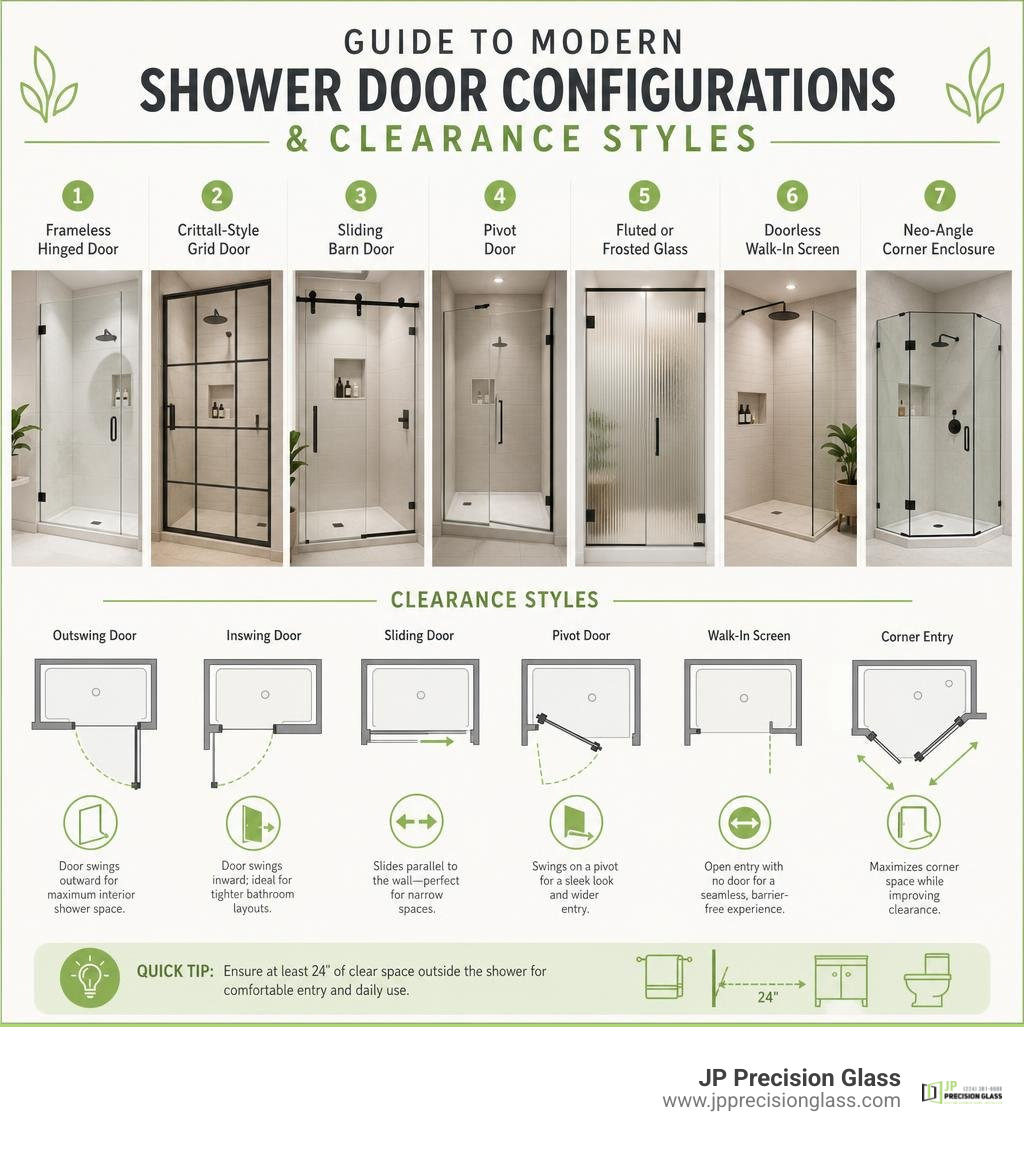
The best bathroom shower door ideas balance your room layout, lighting, and daily routine. Choosing the right design instantly opens up your space and eliminates visual clutter:
- Ultra-Clear Frameless Doors: Use low-iron glass to eliminate green tints and maximize visual space.
- Crittall-Style Black Grid Doors: Add bold, architectural lines for an industrial or modern farmhouse look.
- Sliding Barn-Door Rollers: Save valuable floor clearance in tight bathrooms using smooth, top-hung rollers.
- Minimalist Pivot Doors: Deliver a clean, seamless look for classic alcove openings.
- Fluted or Frosted Glass: Diffuse sightlines for privacy while keeping natural daylight flowing.
- Doorless Walk-In Screens: Create an accessible, barrier-free wet room with a single stationary panel.
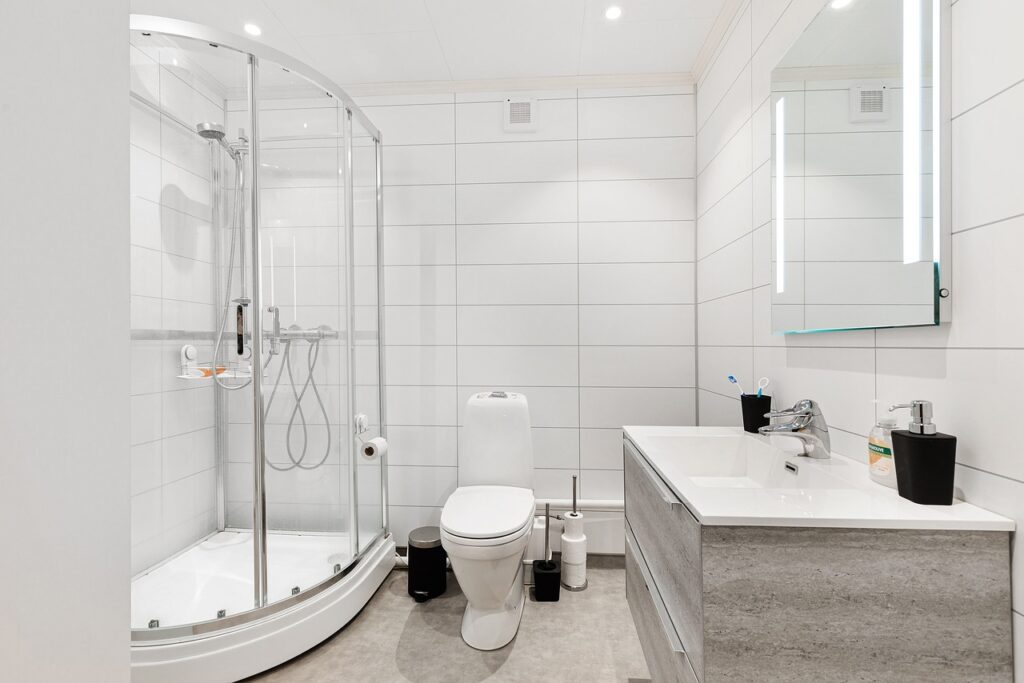
- Neo-Angle Corner Enclosures: Maximize awkward corner footprints to prevent collisions with vanities or toilets.
Whether you are updating a compact guest bath or designing a custom primary suite, matching the right door mechanism to your room dimensions makes all the difference.
Glossary for bathroom shower door ideas:
7 Sleek Bathroom Shower Door Ideas for Modern Homes
Upgrading your shower enclosure is one of the single most impactful changes you can make during a remodel. Replacing an old, cloudy framed slider or a clingy vinyl curtain with custom glass instantly reshapes your bathroom into an open, spa-like sanctuary. To help you determine the best layout for your home, our glass shower doors: a comprehensive guide to types comparison breaks down how various glass profiles interact with natural light, tiled walls, and room footprints.
Below, we explore seven leading design concepts shaping modern residential interiors this year.
1. Ultra-Clear Frameless Glass Shower Doors
Frameless clear glass remains the gold standard of contemporary bathroom design. By eliminating bulky metal framing along the perimeter, frameless enclosures provide uninterrupted sightlines that extend across the entire room. This transparency allows your interior tilework—whether luxurious Calacatta marble, handcrafted zellige, or rich slate—to take center stage.
To achieve maximum visual clarity, we often recommend low-iron glass (such as Starphire). Standard architectural clear glass naturally contains trace amounts of iron oxide, which imparts a subtle greenish tint visible along cut edges or against pure white backdrops. Low-iron glass drastically reduces this iron content, delivering true color rendition and crystal-clear transparency.
Exploring the architectural benefits of frameless glass shower doors reveals that their minimal hardware leaves fewer places for moisture, mineral scale, and soap scum to collect, making daily cleaning significantly simpler.
2. Crittall-Style Industrial Black-Framed Grid Doors
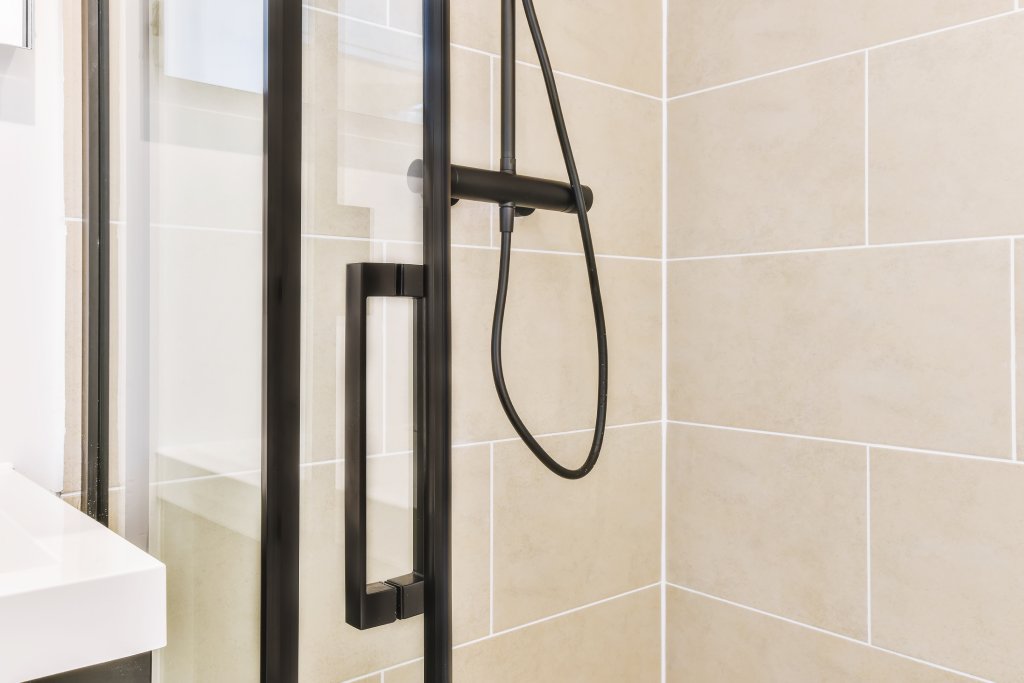
For homeowners seeking striking visual contrast and structure, Crittall-style black-framed grid doors provide an unmistakable architectural statement. Originating from historic steel-framed glazing, modern interpretations utilize lightweight, rust-resistant matte black aluminum framing or durable ceramic silk-screened grids applied directly to tempered safety glass.
These black geometric mullions pair effortlessly with concrete vanities, white subway tiles, brushed gold plumbing fixtures, and exposed pipe accents. If you love industrial chic or modern transitional decor, an external grid enclosure introduces bold verticality and drama while retaining light distribution throughout the shower interior.
3. Space-Saving Sliding Roller Barn Door Systems
Traditional sliding enclosures frequently relied on heavy, rattling floor tracks that trapped dirt and required constant scrubbing. Modern sliding barn-door shower systems reimagine this mechanism with precision-engineered, top-hung roller hardware.
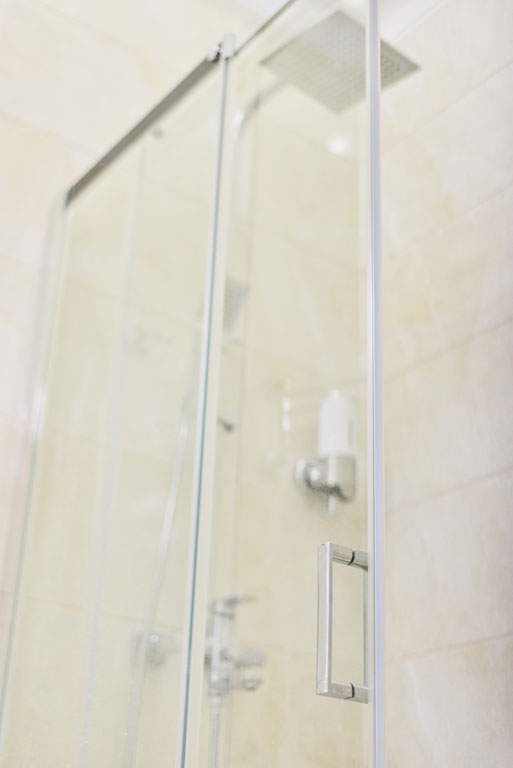
Heavy tempered glass panels hang securely from an overhead stainless steel bar, utilizing exposed wheels that glide effortlessly. A low-profile, trackless floor guide at the base keeps the panels aligned without creating an awkward step-over metal channel. Modern sliding shower doors are ideal for tighter bathrooms where swinging doors might collide with vanities, toilets, or linen towers.
4. Minimalist Pivot Bathroom Shower Door Ideas for Alcoves
When working with classic alcove showers, pivot doors offer clean functionality with minimal visible hardware. Unlike continuous side-mounted piano hinges, pivot systems utilize top and bottom hinges anchored directly into the wall stud, curb, or ceiling header.
This hardware placement creates a clean, floating appearance and distributes weight evenly. If you have an alcove opening, a 36 inch frameless or pivot shower door delivers a substantial opening clearance while maintaining a minimalist profile. For compact standard alcoves, tailored pivot mechanisms maximize entry width even in tight spaces.
5. Fluted and Frosted Privacy Bathroom Shower Door Ideas
If your bathroom is shared across a busy household, complete transparency might not fit your daily routine. Fortunately, modern privacy glass provides modesty without sacrificing light flow:
- Fluted / Reeded Glass: Features vertical rounded convex ribs that distort direct sightlines while reflecting light across tactile textures.
- Acid-Etched / Sandblasted Frosted Glass: Creates a smooth, matte translucent surface across the entire glass panel.
- Partial Modesty Bands: Positions a frosted horizontal band across the torso zone while leaving the top and bottom panels crystal clear.
- Slumped / Cast Glass: Formed in specialized ceramic molds to produce organic textures resembling ocean waves, falling rain, or stratified stone.
These textured panels soften ambient light, prevent heavy glare, and introduce tactile richness to minimalist interiors.
6. Doorless Walk-In Showers with Fixed Glass Screens
Doorless walk-in showers—often integrated into European-style wet rooms—eliminate movable doors entirely. Instead, a single, structural stationary glass panel shields adjacent vanity areas from splashing while leaving an open entryway.
Creating a successful doorless design requires careful spatial planning. Floor tiles must slope gradually toward a linear or center drain, and rainfall showerheads should be positioned far enough from the opening to prevent splashing. Incorporating sturdy glass shower panels provides barrier-free, zero-threshold accessibility, creating a seamless transition across the room’s continuous tile flooring.
7. Curved and Neo-Angle Glass Shower Enclosures
Corner showers often present tricky spatial challenges, especially in square guest bathrooms where adjacent fixtures leave little room to spare. Neo-angle and curved glass shower enclosures solve this by clipping off the sharp 90-degree corner:
- Neo-Angle Enclosures: Feature a three-panel configuration (two fixed side panels set at 45-degree angles flanking a central swinging door). This angled layout keeps foot-traffic lanes clear around toilets and sinks.
- Curved Glass Corner Units: Utilize smooth, bent tempered glass that glides on curved tracks, eliminating angular corners altogether.
These configurations maximize interior showering elbow room while keeping the exterior footprint compact and efficient.
Glass Thickness, Safety Standards, and Layout Planning
Building codes require all residential shower enclosures to be constructed from tempered safety glass. Annealed flat glass undergoes an intense thermal heating cycle followed by rapid high-pressure air cooling. This process creates high surface compression, making tempered glass roughly four times stronger than standard glass.
In the rare event that tempered glass breaks, it shatters into thousands of small, blunt, pebble-like granules rather than sharp, dangerous shards.
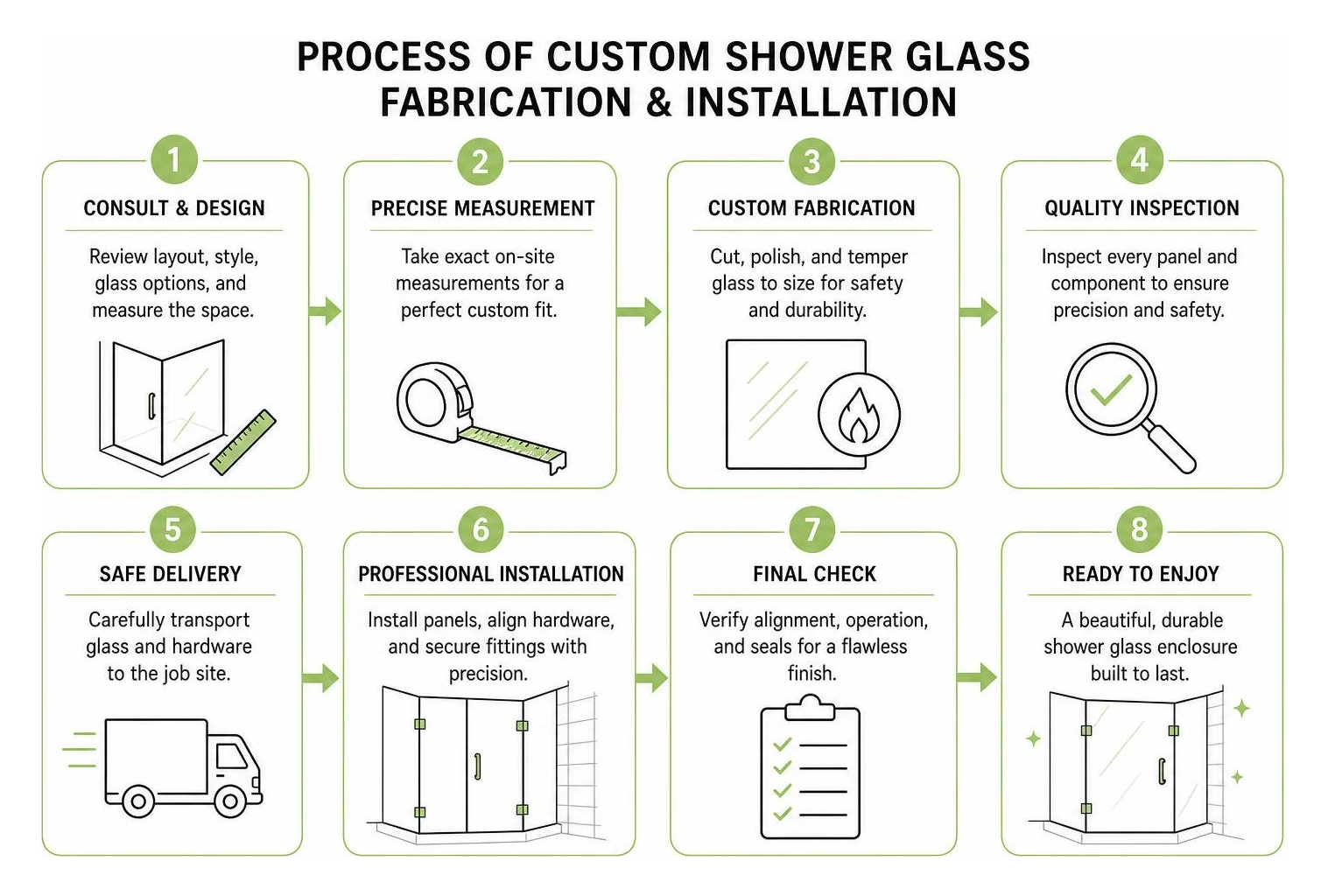
Comparing 3/8-Inch vs. 1/2-Inch Tempered Safety Glass
When planning a custom frameless enclosure, selecting the correct glass thickness is a vital engineering choice.
| Feature / Metric | 3/8-Inch (10mm) Tempered Glass | 1/2-Inch (12mm) Tempered Glass |
|---|---|---|
| Primary Application | Standard frameless doors, inline panels, sliding setups | Oversized custom panels, tall steam showers, luxury suites |
| Structural Rigidity | Excellent structural integrity for standard door sizes | Superior rigidity; eliminates panel flex on tall spans |
| Weight Profile | ~5.0 lbs per square foot | ~6.6 lbs per square foot |
| Hardware Demands | Standard heavy-duty solid brass hinges & wall clamps | Heavy-duty commercial hinges; requires structural stud blocking |
| Aesthetic Feel | Sleek, clean, and unobtrusive | Substantial, vault-like luxury feel |
While 3/8-inch glass remains the industry standard for most residential frameless doors, 1/2-inch glass delivers a rock-solid, luxurious feel for tall glass enclosures and sprawling open walk-ins.
Space-Saving Configurations for Small Bathrooms and Tub Combos
You don’t need a sprawling primary suite to enjoy custom glass. If your layout features a bathtub/shower combination, replacing a curtain with a fixed glass splash shield or hinged bath screen modernizes the entire room.
Reviewing how to choose the perfect glass tub enclosure for your bathroom helps you explore configurations such as bi-fold tub screens and pony-wall (half-wall) mounted glass. Anchoring stationary glass securely to a tiled half-wall keeps plumbing or custom benches neatly integrated while maintaining an open, airy feeling above.
Hardware Finishes and Low-Maintenance Glass Care
The hardware holding your glass panels together acts as the jewelry of your bathroom. To prevent corrosion in humid environments, always choose components forged from solid brass or marine-grade stainless steel.
Hardware Trends: Matte Black, Brushed Brass, and Polished Chrome
Coordinating your glass hardware with your plumbing fixtures, vanity pulls, and vanity mirrors ensures a cohesive design:
- Matte Black: Provides sharp architectural contrast against light tile and anchors industrial or modern farmhouse aesthetics.
- Brushed Brass & Warm Gold: Adds inviting warmth, pairing beautifully with natural wood vanities, zellige tile, and transitional spaces.
- Polished Chrome & Brushed Nickel: Timeless, versatile, and highly reflective, chrome complements cool marble, gray porcelain, and classic subway tile.
Hydrophobic Protective Coatings and Daily Maintenance Tips
Untreated glass is naturally porous at a microscopic level. Over time, hard water minerals, soap residues, and body oils settle into these microscopic peaks and valleys, causing cloudy mineral hazing that ordinary cleaners cannot remove.
A factory-applied hydrophobic protective coating chemically bonds to the glass surface, sealing microscopic pores and creating an ultra-smooth, water-repellent barrier. Water and soap bead up and roll off the surface rather than clinging to the glass. Discovering recent shower glass innovations shows how treated glass cuts down cleaning time significantly.
Daily Care Best Practices:
- Squeegee After Every Shower: A quick 30-second wipe down with a rubber squeegee eliminates lingering water droplets before they evaporate and leave mineral spots.
- Use pH-Neutral Cleaners: Clean weekly using a soft microfiber cloth and a mild solution of water and pH-neutral dish soap.
- Avoid Abrasives: Never use steel wool, abrasive scouring powders, or harsh ammonia-based glass sprays on treated protective coatings.
Frequently Asked Questions About Shower Doors
What type of shower door makes a small bathroom look bigger?
A clear frameless glass shower door makes a small bathroom appear larger by eliminating visual barriers. Because clear glass lets light move freely across the entire space and keeps your back wall tile in view, the eye perceives the room as one continuous, open area.
Should a shower door open inward or outward for safety?
Building codes generally require swinging shower doors to open outward into the bathroom. This ensures an occupant can safely exit or receive assistance in an emergency without being blocked by an inward-swinging panel. Many custom pivot hinges also feature dual-swing operation, allowing the door to swing both inward to contain drips and outward for easy egress.
How do hydrophobic glass coatings prevent hard water stains?
Hydrophobic coatings create a permanent molecular bond that fills the microscopic pores on the surface of raw glass. By creating a slick, water-repellent surface, the coating forces water to bead up and sheet off cleanly. This prevents calcium, magnesium, and soap scum from bonding to or chemically etching into the glass panel.
Conclusion
Choosing the right shower door transforms your daily routine and elevates your entire bathroom. Whether your aesthetic calls for the crisp transparency of ultra-clear frameless glass, the striking structure of Crittall-style black grids, or the smooth functionality of modern sliding barn rollers, tailored glass design makes all the difference.
At JP Precision Glass, we specialize in designing, customizing, and installing made-to-measure glass enclosures built to your exact specifications. Every bathroom features unique angles, tile variations, and spatial considerations. Explore our wide range of custom shower doors and let our team help you create a beautiful, durable glass enclosure tailored perfectly to your home.