
Is a Bath Shower Screen with Return Worth It?
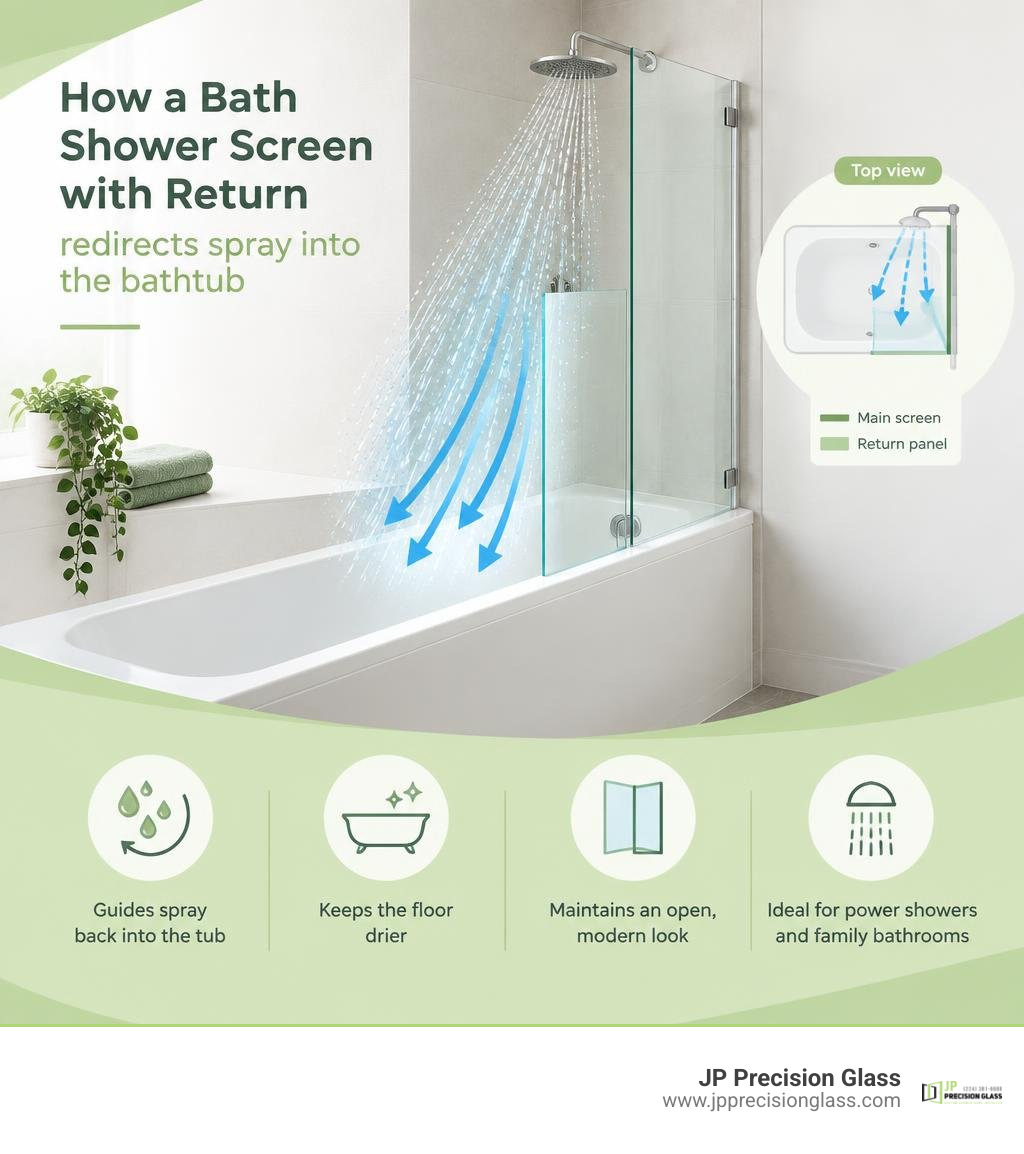
Yes, a bath shower screen with return is usually worth choosing if you want better splash control without closing off the bathroom. It adds a short glass panel at the open edge of the main bath screen, creating an L-shaped barrier that guides spray back into the tub.
It is especially useful for power showers, busy family bathrooms, and tubs with a wider showering end. Compared with a standard single flat screen, a return panel helps keep the floor drier while preserving the clean, open look of glass.
Before choosing one, confirm that:
- Your bath has a flat, suitable rim for the screen and return panel.
- The screen matches the bath shape, whether straight, L-shaped, P-shaped, or curved.
- There is enough clearance for a fixed or hinged panel to sit safely near the bath edge.
- The glass, seals, and wall fixings are sized for your bathroom’s layout.
A well-fitted return is not a guarantee against every drop of water, but it greatly reduces the main splash path that escapes around the end of an over-bath screen. For a remodel where sleek design, easy cleaning, and practical water control matter, it can be a smart upgrade. For broader context on how these enclosures compare with other glass options, see the shower enclosure overview.
Quick look at bath shower screen with return:
What Is a Bath Shower Screen with Return and How Does It Work?
An over-bath showering setup brings together the relaxation of a soaking tub with the daily convenience of a standing shower. However, standard single-panel glass screens often leave a significant gap where ricocheting water escapes onto the bathroom floor. This is where a return panel comes into play.
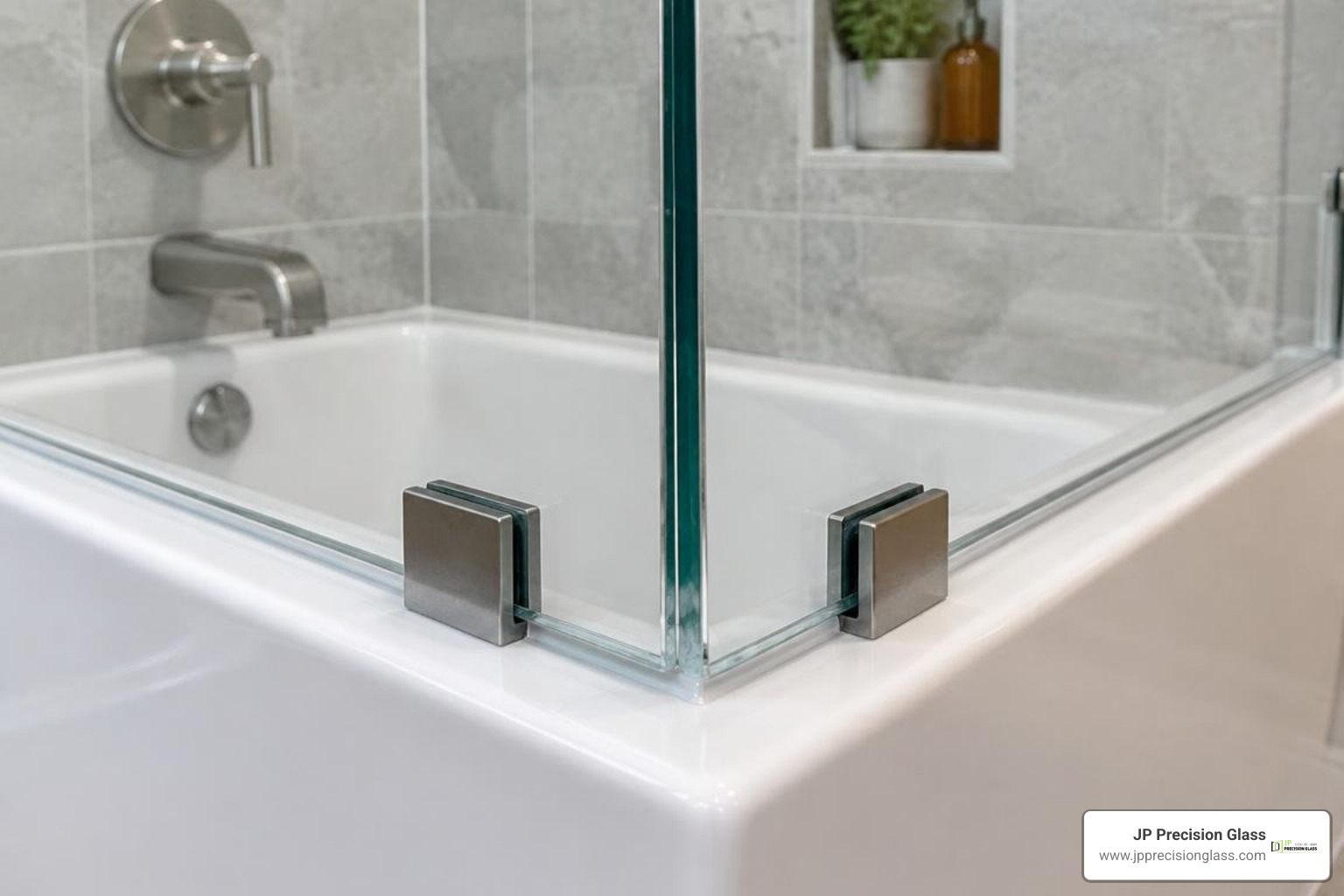
A return panel is an additional, shorter pane of glass positioned at an angle—most commonly a 90-degree right angle—at the outer edge of the primary bath screen. By forming an L-shaped footprint along the rim of the bathtub, the return creates an inward-facing barrier.
When you shower, droplets do not just spray straight ahead; they bounce off your body, deflect off the side walls, and travel outward diagonally. The return panel blocks this lateral spray trajectory and channels the water back down into the tub basin, dramatically enhancing splash protection without turning your bath into a fully boxed-in cubicle.
Anatomy of Fixed vs Hinged Return Panels
Return screens generally fall into two functional categories:
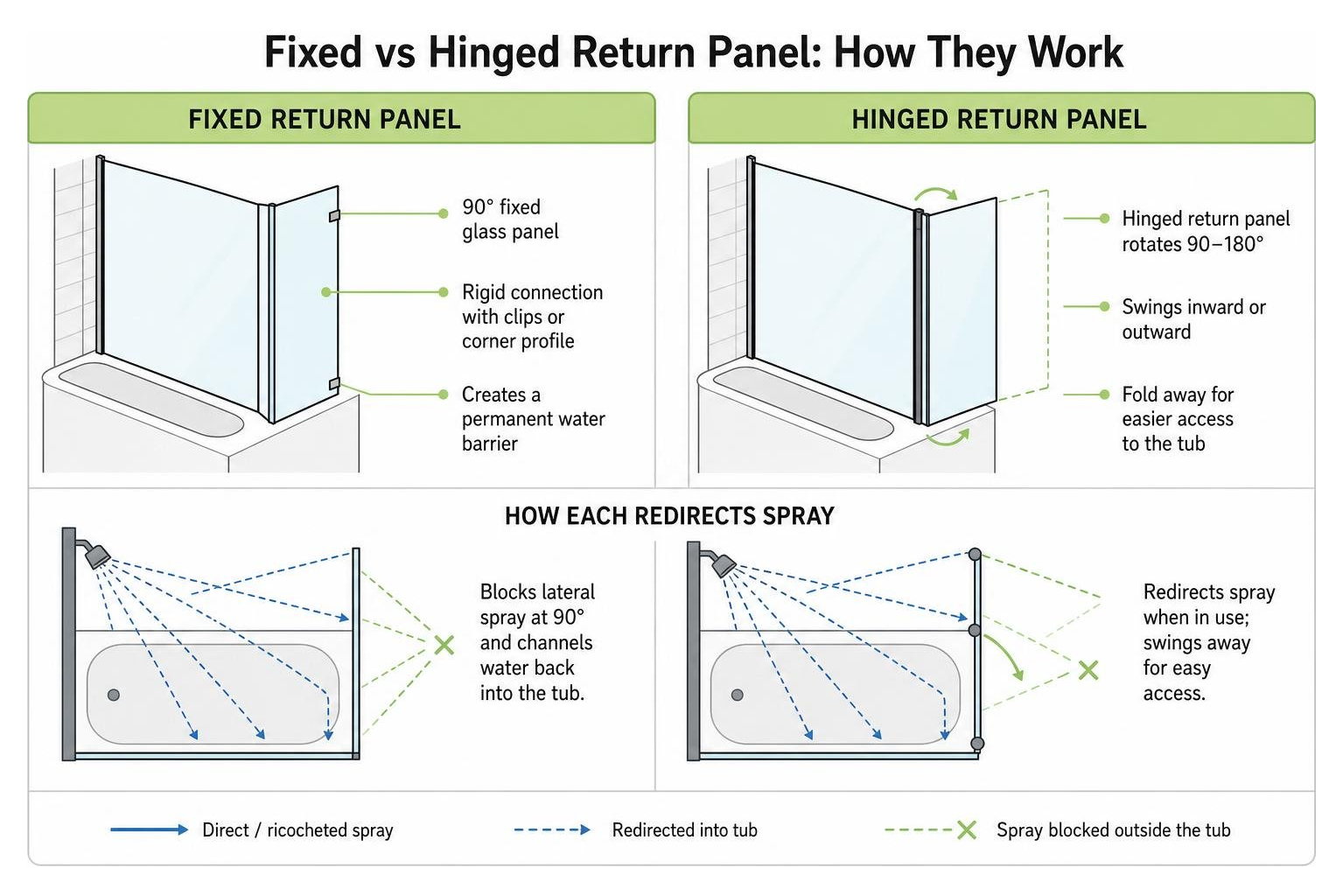
- Fixed Return Panels: These panels attach rigidly to the main screen using stationary glass clips or a corner profile. Because they do not move, they offer high structural stability and create a permanent water barrier. They are particularly popular on dedicated L-shaped shower baths.
- Hinged Return Panels (Flipper Screens): Equipped with a continuous hinge or concealed pivot hardware, a flipper screen can rotate 90 to 180 degrees inward or outward. This allows you to swing the deflector panel inward to reach tub controls without getting soaked, or fold it back out of the way when stepping into the bath.
Single Over-Bath Panels vs. a Bath Shower Screen with Return
A standard single straight screen only shields the length of the tub directly adjacent to the wall. Water spraying toward the open end of the tub easily rolls off the rim. Adding a return panel encloses the splash zone on two planes, protecting sensitive vanity units and floorboards from chronic moisture damage.
| Feature | Single Straight Screen | Screen with Fixed Return | Screen with Hinged Return |
|---|---|---|---|
| Water Containment | Moderate; allows side spray escape | Excellent; full 2-sided barrier | High; flexible splash deflection |
| Access Convenience | Open entry | Fixed entry point | Hinged panel swings clear |
| Tub Compatibility | Straight, standard tubs | L-shaped and wide straight tubs | Straight and curved baths |
| Visual Footprint | Minimalist line | Defined shower corner | Sleek, adjustable profile |
When deciding on the right layout for your space, learning how to choose the perfect glass tub enclosure can help you match your bathing habits with the right glass style.
Key Benefits: Water Containment and Enhanced Usability
Upgrading to a bath shower screen with return transforms a routine shower-bath hybrid into a dedicated showering zone.
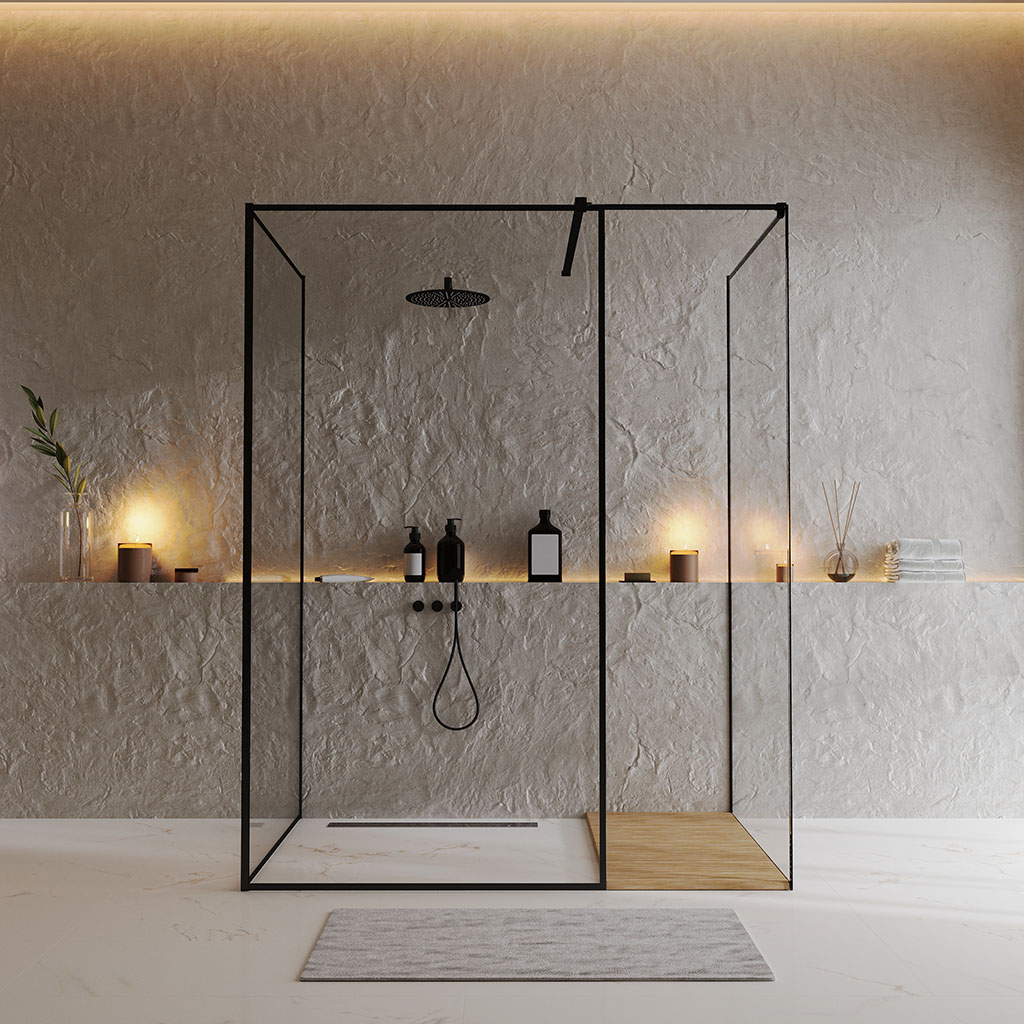
Superior Splash Protection for Power Showers
High-pressure showerheads and aerated power showers produce a high volume of turbulent spray. A single flat pane often struggles to contain this increased water velocity. The angled return acts as a deflector wall, stopping escaping mist and droplets right at the critical escape corner.
Quality designs feature continuous bottom gaskets and precision-fitted wall profiles to prevent pooling along the tub ledge. For bathrooms with specialized layouts, adding dedicated bath shower screen extension panels provides an extra layer of splash defense tailored to high-output shower systems.
Space Optimization and Open Bathroom Feel
Clear glass enclosures allow sightlines to pass uninterrupted across the room, making compact bathrooms feel significantly larger and brighter.
Even in tight quarters where every millimeter counts, choosing a compact 500mm glass shower screen or an over-bath return setup delivers the functionality of a walk-in shower enclosure without sacrificing the tub. Many return screens also feature integrated horizontal towel rails on the exterior glass, keeping your bath sheets dry, warm, and within arm’s reach.
Bathtub Shape Compatibility and Sizing Factors
Bath screens with return panels are engineered to complement a wide range of modern tub profiles.
Straight, L-Shaped, and P-Shaped Bathtub Configurations
- Straight Baths: Standard rectangular tubs benefit from a square-edged screen with a fixed or hinged 300mm return to catch lateral spray along the straight rim.
- L-Shaped Shower Baths: Designed specifically with an expanded, squared showering end, L-shaped baths pair naturally with a 90-degree fixed return panel that follows the exact contour of the tub’s outer ledge.
- P-Shaped and Curved Baths: These tubs feature a rounded, ergonomic bulge at the showering end. They require curved bath screens paired with articulated or curved return sections that contour to the bath’s unique radius.
Reversible Handing and Layout Versatility
Most return screens feature universal handing, meaning the hardware and glass panels are completely reversible. During installation, the screen can be configured for either a left-hand or right-hand wall mount. This versatility ensures you can easily position the glass to clear vanity basins, toilet suites, and wall-mounted towel radiators without obstructing entry.
Glass Specifications, Hardware Finishes, and Aesthetic Styles
The durability and appearance of your screen depend directly on the materials you select. Consulting comprehensive glass shower enclosure comparisons can help clarify how different specifications perform over decades of daily use.
Choosing the Right Glass Thickness for a Bath Shower Screen with Return
Bath screens typically use toughened safety glass (tempered glass) to comply with rigorous safety standards:
- 6mm Safety Glass: The most common standard for hinged over-bath screens. It balances strength, lightweight operation, and smooth hinge movement.
- 8mm Premium Glass: Provides greater structural rigidity, reducing screen flex and giving the installation a solid, luxurious feel.
- 10mm Frameless Glass: Ideal for high-end bespoke enclosures. If you are exploring 10mm frameless shower screen options, keep in mind that the increased weight requires heavy-duty wall anchors and sturdy structural backing.
High-grade screens often include an easy-clean factory nano-coating that repels water and prevents limescale, soap scum, and hard mineral buildup.
Hardware Finishes and Decorative Glass Trends
Hardware and glass treatments allow you to personalize your enclosure:
- Polished Chrome: A timeless, reflective finish that complements traditional and contemporary chrome brassware.
- Matte Black: Crisp, architectural framing that grounds industrial, monochrome, and modern designs.
- Brushed Brass: Warm metallic hardware that pairs well with organic textures and earthy tiles.
- Decorative Glass: Fluted (reeded) glass offers tactile elegance and visual privacy, while silk-screened grid patterns or subtle smoked glass create striking focal points.
Measuring and Installation Best Practices
Precision is essential when fitting an over-bath screen. Even minor discrepancies in bath level or wall plumb can lead to water pooling or seal failure.
Accurate Measurement Steps for Bathtub Screens
Before ordering your screen, verify these critical checkpoints:
- Check Wall Plumb: Use a long spirit level to check if your tiled wall leans inward or outward. Choose a wall profile that offers built-in out-of-true adjustment (typically 15mm to 20mm).
- Confirm Bath Rim Levelness: Verify that the bathtub deck sits level along both its length and width.
- Measure Rim Width: Ensure the flat landing area of the tub rim is wide enough to seat the glass channel and bottom drip seal without hanging over the edge.
- Account for Obstructions: Check the full swing radius of hinged panels to confirm they clear faucets, shower valves, and nearby sanitaryware.
Maintenance, Seal Replacement, and Glass Care
Keeping your glass screen pristine requires simple, consistent habits:
- Use a soft silicone squeegee after each shower to wipe away standing droplets.
- Clean glass surfaces using non-abrasive, pH-neutral cleaners and a microfiber cloth to protect the water-repellent coating.
- Inspect the bottom vinyl sweep and vertical magnetic seals periodically. Replacing worn seals every few years maintains an impenetrable water barrier.
Frequently Asked Questions About Over-Bath Screens
Does a bath screen with a return panel prevent all leaks?
While an L-shaped return panel dramatically reduces escaping spray compared to standard straight screens, it is designed to redirect indirect spray and splashing. It is not an airtight seal against high-pressure water streams sprayed directly at the glass joints. Directing your showerhead toward the tiled wall rather than directly at the screen joint ensures reliable water containment.
Can a return panel screen be fitted to any standard bath?
Most screens can be fitted to standard rectangular baths, provided the bath rim has a flat, level surface at least 40mm to 50mm wide. Tubs with steep internal slopes, pronounced roll tops, or uneven decorative rims may not allow bottom seals to seat properly.
Is a fixed return panel better than a hinged flipper screen?
It depends on your bathroom layout. A fixed return panel provides exceptional structural stability and a permanent barrier, making it ideal for dedicated shower baths. A hinged flipper panel offers greater accessibility, allowing you to fold the deflector inward to turn on the taps or bathe small children without leaning over rigid glass.
Conclusion
Upgrading to an over-bath shower screen with a return panel delivers the splash-stopping security of a dedicated enclosure while maintaining an open, airy bathroom environment. By blocking lateral spray, protecting your flooring, and providing a clean architectural look, it offers substantial long-term value for modern homes. When you are ready to elevate your space with custom, precision-crafted installations, explore our premium collection of made-to-measure glass shower panels to find the perfect fit for your bathroom.