
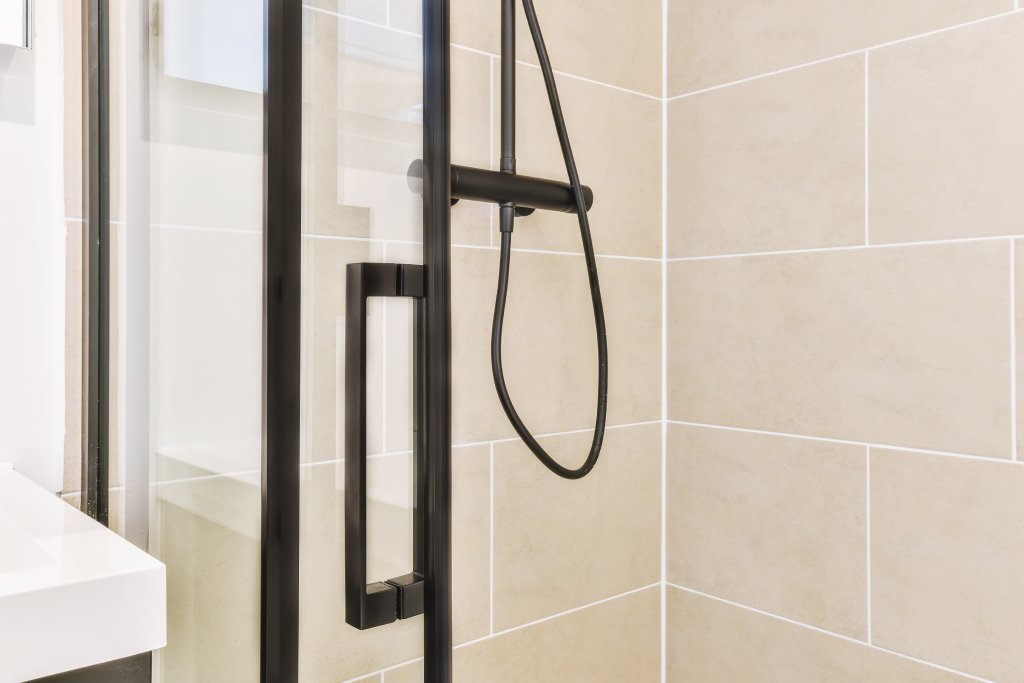
Choose the Right Bath Tub Sliding Shower Doors for Your Space
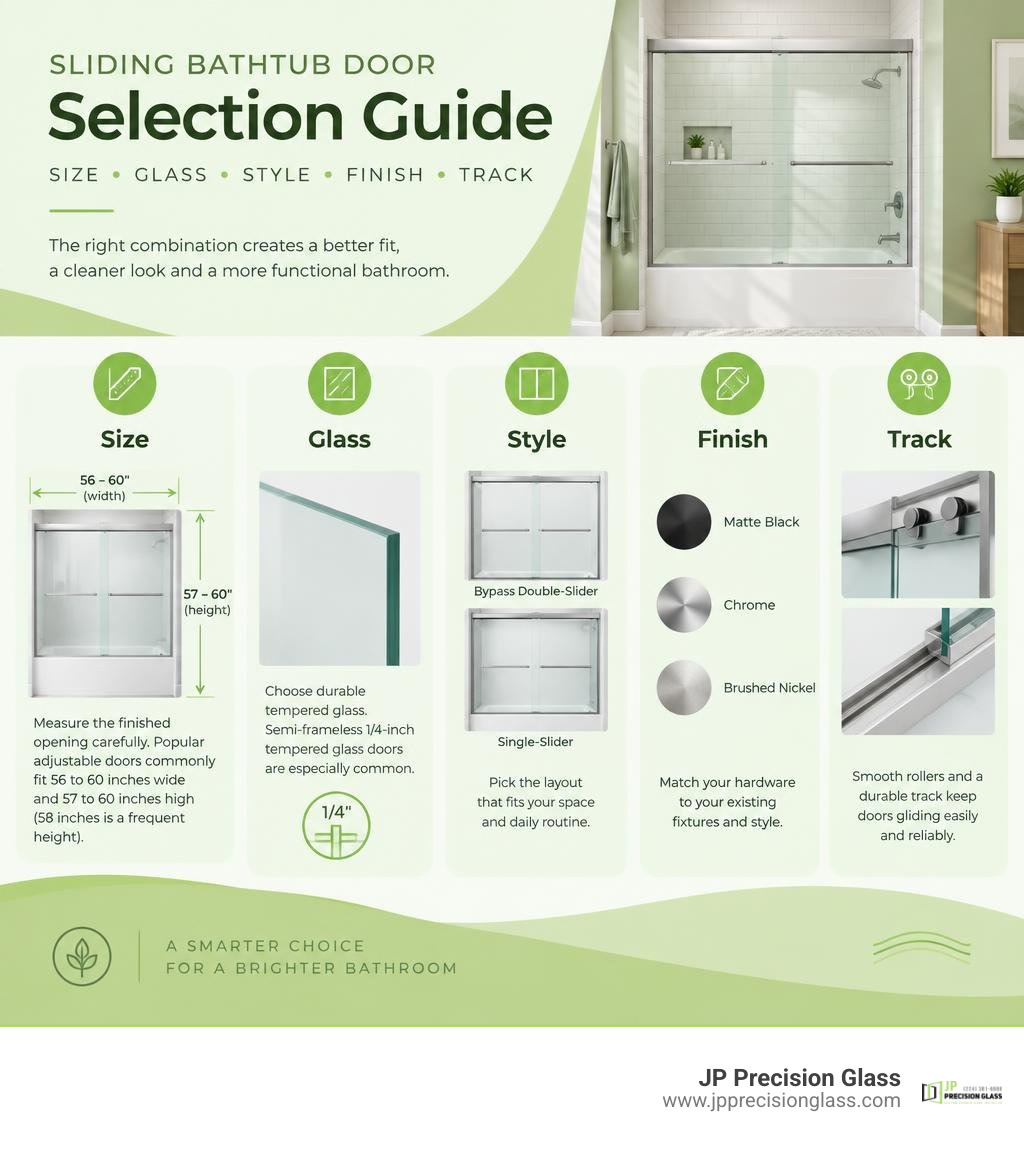
Bath tub sliding shower doors save floor space because the panels glide along a track instead of swinging into the bathroom. For most standard tubs, start by measuring the finished opening carefully: popular adjustable doors commonly fit 56 to 60 inches wide and stand about 57 to 60 inches high, with 58 inches a frequent height.
The best fit depends on three simple choices: a semi-frameless or frameless look, a bypass double-slider or single-slider layout, and durable tempered glass with smooth rollers. Semi-frameless 1/4-inch tempered glass doors are especially common, while matte black, chrome, and brushed nickel hardware make it easier to match a remodel’s fixtures.
For a sleek, space-conscious update, sliding glass tub enclosures can create a cleaner, more open bathroom without changing the tub itself. The sections ahead explain how to compare door styles, confirm your measurements, and keep the glass clear after installation.
Bath tub sliding shower doors helpful reading:
For broader context on how these enclosures compare with other bathroom glass options, see this overview of shower doors.
Key Types of Bath Tub Sliding Shower Doors
Finding the right system begins with understanding how different styles balance structural support, ease of maintenance, and visual flow.
Frameless vs Semi-Frameless Configurations
When evaluating modern enclosures, the primary structural decision comes down to frameless versus semi-frameless construction. Fully framed doors—where thick metal encases every edge of every panel—have largely been replaced by sleeker, more open designs.
A semi-frameless sliding door utilizes minimal perimeter framing, usually around the outer wall jambs and top track, while leaving the primary edges of the sliding panels exposed or polished. This style offers excellent water containment and structural rigidity while maintaining an airy, modern look.
A frameless sliding door eliminates almost all metal boundaries, relying on heavy, structural glass suspended from a sturdy overhead bar or header. Discovering the benefits of frameless glass shower doors often reveals how completely clear panels make compact bathrooms feel significantly larger by removing visual interruptions across the tub.
| Feature | Frameless Sliding Tub Doors | Semi-Frameless Sliding Tub Doors |
|---|---|---|
| Glass Thickness | Typically 5/16″ (8mm) to 3/8″ (10mm) | Typically 1/4″ (6mm) to 5/16″ (8mm) |
| Metal Profile | Minimal overhead track, no side frames | Subtle side jambs, top track, low bottom track |
| Aesthetic Appeal | Premium, ultra-modern, luxury look | Contemporary, clean, versatile |
| Cleaning Effort | Easiest; minimal metal channels to wipe | Easy; minimal buildup around perimeter |
| Structural Support | Heavy-duty top header bar & rollers | Supported by wall jambs and top frame |
Bypass Double Sliding vs Single Sliding Doors
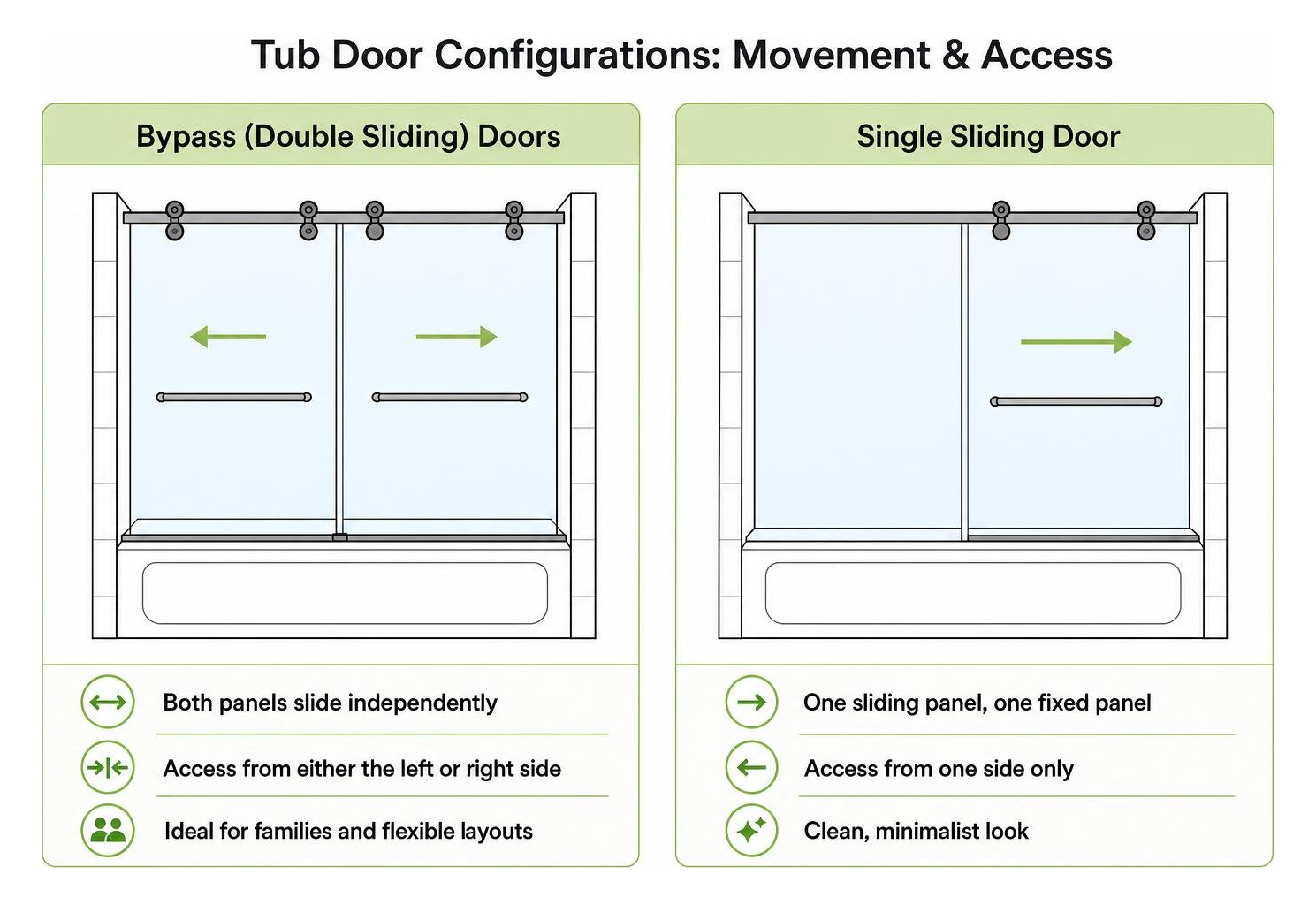
Another crucial factor is how the panels move:
- Bypass (Double Sliding) Doors: Both panels slide independently along dual tracks. This configuration allows you to enter the tub from either the left or the right side. It offers unmatched convenience for accessing shower controls before stepping in, bathing young children, or cleaning the tub basin from either end.
- Single Sliding Doors: This layout features one fixed glass panel and one active sliding door. While it offers a very clean, minimalist aesthetic, entry is restricted to one side.
For family bathrooms or layouts where vanity cabinets or toilets sit close to one side of the tub, dual-entry bypass designs offer maximum functional flexibility.
Essential Features, Glass Thickness, and Hardware Finishes
Quality hardware and safety-rated glass make all the difference in everyday use and long-term durability.

Glass Thickness and Safety Features
- 1/4-Inch (6mm) Glass: The most popular thickness for semi-frameless systems. It offers reliable strength while keeping the overall door lightweight and easy to slide.
- 5/16-Inch (8mm) to 3/8-Inch (10mm) Glass: Standard for frameless configurations. Heavier glass provides superior structural heft, smooth gliding stability, and a solid, luxury feel.
- Factory Nano-Coatings: Hydrophobic surface treatments repel water, minerals, and soap residue, significantly cutting down on hard water spots.
- Explosion-Proof Safety Film: High-grade tempered glass is designed to crumble into small, dull pebbles rather than sharp shards if broken. Some premium doors add an ultra-clear laminated safety film to keep the pane intact if struck forcefully.
Finishes and Mechanical Hardware
Matching your hardware finish to your existing fixtures ties the whole room together:
- Matte Black: The current design standard for bold, modern, and industrial aesthetic updates.
- Brushed Nickel: Timeless and forgiving against water spots and fingerprints.
- Polished Chrome: Highly reflective and classic, perfect for bright, traditional spaces.
- Oil-Rubbed Bronze: Ideal for transitional, rustic, or warm bathroom palettes.
Ensure your door uses stainless steel ball-bearing rollers. High-quality rollers ensure the doors slide silently and resist the friction and track-jumping common in lower-grade nylon wheels.
How to Measure and Install Bathtub Sliding Doors
Precise preparation ensures your installation remains water-tight and glides smoothly.
Sizing Bath Tub Sliding Shower Doors for Standard Tubs
Before ordering, accurate measurements are essential. Choosing the right glass tub enclosure requires taking three horizontal measurements:
- Along the top of the tub threshold.
- At the midpoint of the opening height.
- At the top height where the upper track or header bar will mount (typically 58 to 60 inches up).
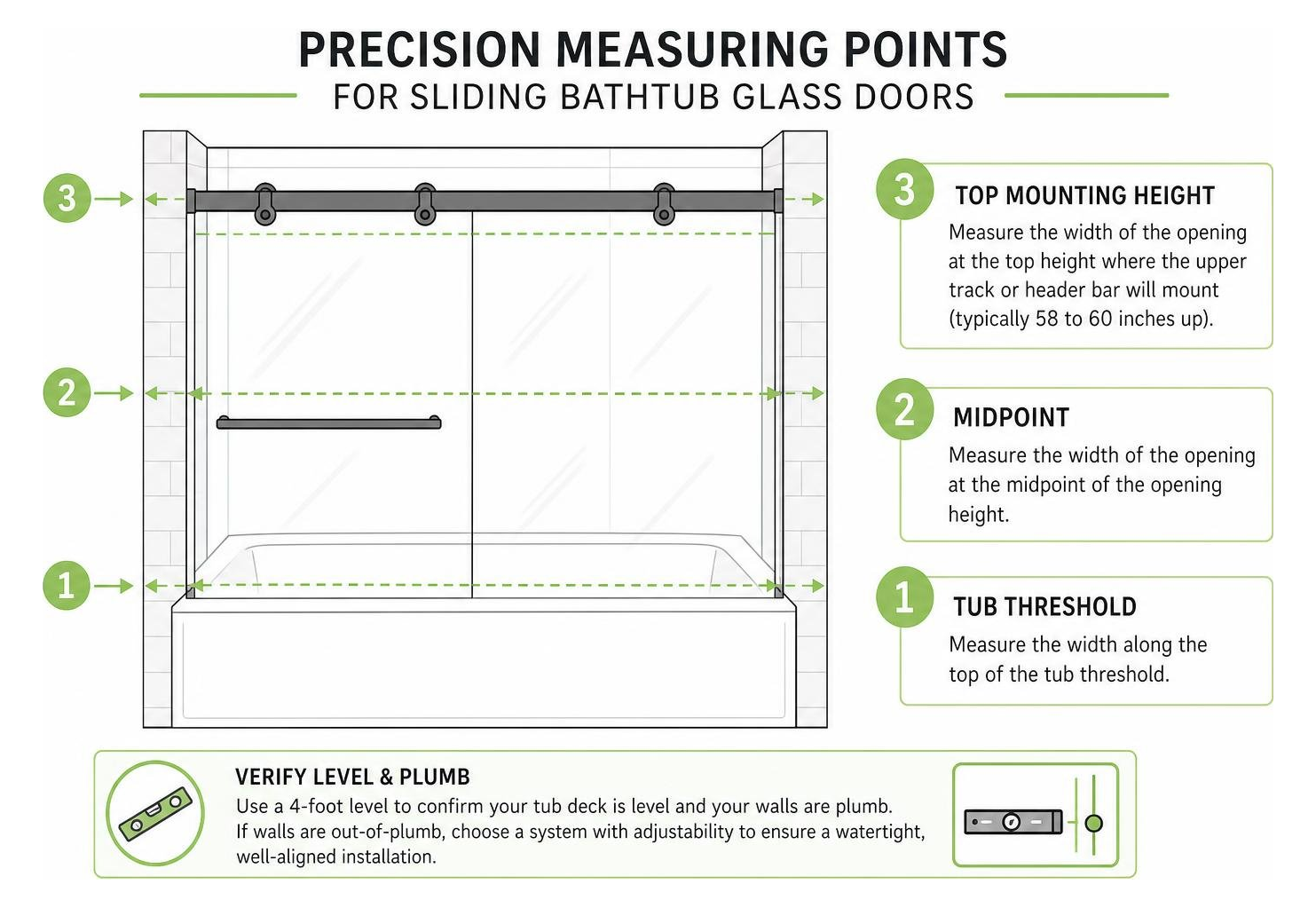
Always use a 4-foot level to verify whether your walls are plumb and your tub deck is level. If your walls lean inward or outward, look for systems that offer out-of-plumb adjustability within the wall jambs or rollers to prevent water leakage and door alignment issues.
Installation Steps and Professional Mounting
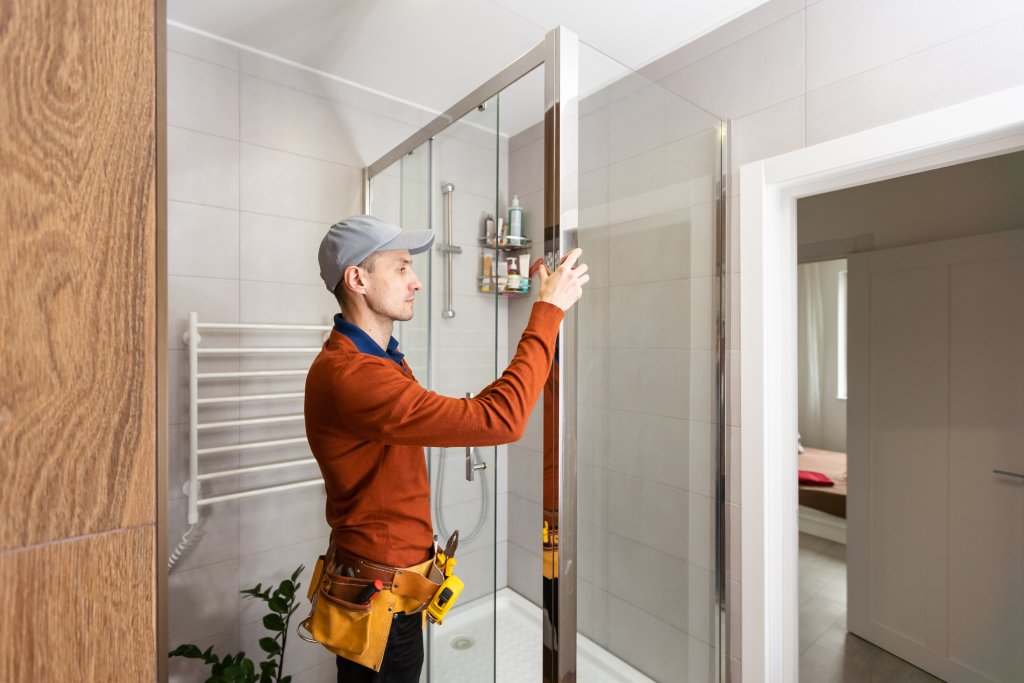
The basic installation workflow follows several critical phases:
- Track and Jamb Placement: Cut the bottom threshold guide and top rail to exact width, securing wall jambs level against the tile or acrylic surround.
- Hanging the Panels: Lift the tempered panels into position and mount the roller assemblies onto the upper track.
- Hardware & Guide Adjustment: Attach bottom guides, towel bars, and splash guards, adjusting roller eccentric cams so the panels sit parallel to the walls.
- Waterproofing: Apply high-grade, mold-resistant 100% silicone sealant along the outer edges of the frame and threshold. Allow 24 hours to cure fully before running water.
While handy homeowners can tackle standard semi-frameless kits, heavy frameless systems require handling thick, heavy glass. Our team provides professional custom shower door installation to ensure perfect alignment, watertight seals, and flawless long-term performance.
Care, Cleaning, and Maintenance Tips
How to Clean and Maintain Bath Tub Sliding Shower Doors
Keeping your sliding doors pristine requires simple daily habits and periodic care:
- Daily Squeegee Routine: Spend 30 seconds wiping down the inner glass panels after each shower to prevent mineral deposits and soap scum from bonding.
- Non-Abrasive Cleaners: Clean the glass using a 50/50 mixture of distilled water and white vinegar or a pH-neutral glass cleaner. Avoid scouring pads or bleach-based chemicals that can degrade metal finishes and protective glass coatings.
- Track Debris Clearing: Regularly wipe out the bottom track channel with a microfiber cloth to prevent hair and soap buildup from obstructing the bottom guides.
- Hardware Lubrication: Apply a light spray of silicone lubricant to the roller bearings once or twice a year for effortless, quiet gliding. You can read more about practical care in our guide on how to install and maintain sliding glass shower doors.
Frequently Asked Questions About Sliding Tub Doors
Can sliding bathtub doors be installed on any standard tub?
Sliding doors can be mounted on most alcove tubs featuring cast iron, acrylic, or fiberglass construction, provided the tub has a flat threshold ledge of at least 2 to 3 inches. The surrounding walls must also be sturdy enough to support the mounting anchors and glass weight.
Which glass thickness provides the best safety for tub doors?
All quality sliding tub doors utilize certified tempered safety glass. For semi-frameless models, 1/4-inch (6mm) glass provides an ideal balance of strength and light operation. For frameless installations, 5/16-inch (8mm) or 3/8-inch (10mm) glass provides superior structural stability.
How do you fix a sliding shower door that sticks or jumps track?
Sticking or wobbling is usually caused by misaligned roller wheels, accumulated debris in the lower guide track, or loose mounting hardware. If cleaning and adjusting the roller screws doesn’t resolve the issue, professional shower door repair can replace worn ball bearings and realign the system quickly.
Conclusion
Upgrading your bathtub with a modern glass sliding door system instantly elevates your bathroom’s style, improves light flow, and eliminates clinging shower curtains for good. Whether you prefer the clean lines of a semi-frameless bypass slider or the open elegance of heavy frameless glass, choosing quality materials ensures years of smooth, reliable use.
At JP Precision Glass, we specialize in precision, made-to-size custom glass solutions tailored to your space. Explore our complete selection of sliding shower doors to start planning your bathroom upgrade today.