
Best Shower Door Glass Cleaner Options for Clear, Spot-Free Glass
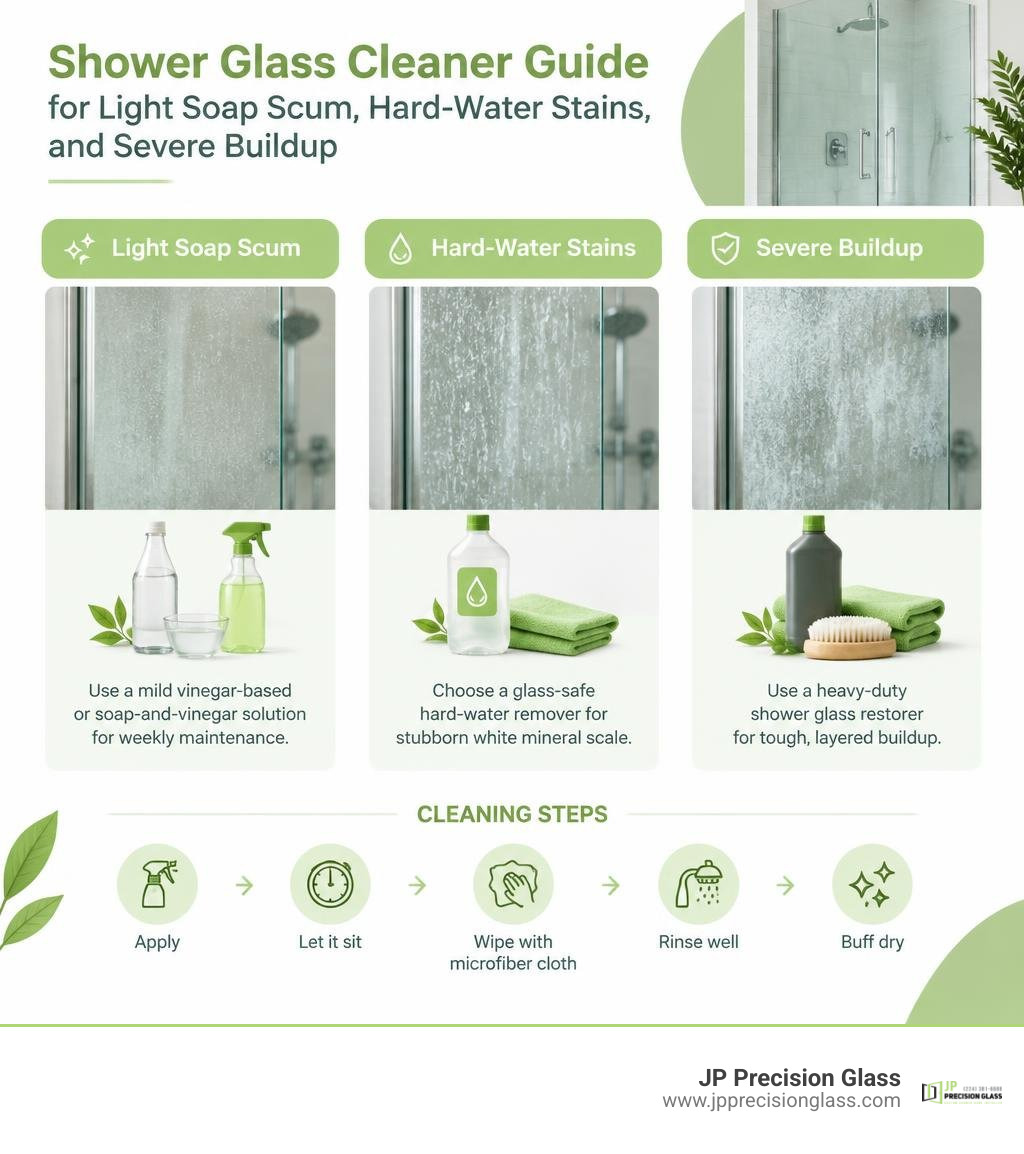
The best shower door glass cleaner depends on the buildup: use a mild vinegar-based or soap-and-vinegar solution for weekly maintenance, and choose a glass-safe hard-water remover for stubborn white mineral scale. Apply the cleaner, let it sit briefly, wipe with a non-scratch microfiber cloth, rinse well, and buff dry for a clear, streak-free finish.
Foggy shower glass is usually not fog at all. It is a layer of soap scum, body oils, and hard-water minerals left behind as water dries. The right cleaner can remove surface buildup, but deeply etched glass may not return to full clarity with cleaning alone.
This roundup compares practical DIY formulas, daily sprays, and heavy-duty shower glass restorers so you can match the product to your glass, water conditions, and cleanup needs. It also covers the tools and habits that help a new or remodeled shower enclosure stay clear longer.
Discover more about shower door glass cleaner:
Choosing the Best Shower Door Glass Cleaner for Stubborn Buildup
Tackling a cloudy enclosure requires understanding what is actually on the surface. When tap water evaporates from bathroom glass, it leaves behind dissolved calcium and magnesium minerals. Over time, these mineral deposits cross-link with soap fatty acids and body oils, creating a stubborn, cloudy haze.
Standard ammonia-based window sprays dissolve light smudges and grease, but they cannot dissolve alkaline mineral deposits. Removing hard water scale requires acidic solutions or chelating agents that react chemically with calcium carbonate. At the same time, tackling greasy soap scum requires active surfactants.
| Cleaner Category | Primary Active Chemistry | Best Surface Application | Primary Advantages | Precautions & Limits |
|---|---|---|---|---|
| Acid-Based Restorers | Phosphoric, sulfamic, or citric acids | Heavy mineral scale, limescale, rust deposits | Rapidly dissolves hardened mineral crusts | Corrosive to natural stone, marble, and aluminum |
| Ammonia-Based Sprays | Ammonium hydroxide, alcohol | Fingerprints, light dust, bathroom mirrors | Fast-evaporating, 100% streak-free shine | Ineffective against thick limescale or calcium crust |
| DIY Vinegar & Dish Soap | Acetic acid (5%) combined with surfactants | Weekly soap scum and light water spotting | Inexpensive, non-toxic, highly effective | Slower dwell time needed; unsafe for porous stone |
| Specialized Barrier Cleaners | Mild acids with hydrophobic polymer sealants | Regular maintenance and spot prevention | Cleans while leaving water-repellent sheeting | Must be thoroughly buffed to avoid haziness |
Commercial vs. DIY Shower Door Glass Cleaner Options
When deciding between a store-bought commercial cleaner and a homemade formula, consider the balance between convenience and cost. A simple DIY mixture made from equal parts original Blue Dawn dish soap and distilled white vinegar delivers impressive grease-cutting and descaling power. Heating the mixture slightly in the microwave helps the surfactants and acetic acid bind evenly, creating a thicker gel that clings to vertical glass panels rather than running straight down the drain.
For homeowners maintaining different types of glass shower doors, a lighter spray consisting of one part distilled white vinegar to four parts water works as an effective weekly maintenance solution. Explore tested DIY glass cleaning formulas to discover recipes tailored for both coated and untreated tempered glass panels.
Commercial sprays offer specialized benefits, such as pleasant scents, foaming trigger heads that reduce airborne misting, and built-in sheeting agents. For instance, combination kits with an acidic scale remover paired with a streak-free polishing spray can achieve a crystal-clear reflection.
Specialized Heavy-Duty Restorers for Severe Scaling
When shower glass goes uncleaned for months, standard sprays often run off without breaking down hardened mineral crusts. In severe situations, specialized paste cleaners or concentrated acid-based restorers become necessary.
- Heavy-Duty Descaling Pastes: Products like Rain-X® Shower Door X-treme Clean apply like a polishing paste to chemically dissolve and mechanically lift hard water stains.
- Dual-Action Restorers: Formulations that break down stubborn mineral bonds and leave behind a water-repellent barrier in a single application are also effective for neglected glass.
- Professional Descaling Concentrates: Heavy-duty options are designed to dissolve thick calcium and rust build-up on neglected enclosures.
- Restorative Polishing Compounds: Specialty products combine cleaning agents with carnauba-based polymers to restore surface gloss.
When installing custom shower glass panels, protecting the glass from day one prevents long-term mineral adhesion that requires aggressive deep-cleaning later on.
Step-by-Step Method to Restore Cloudy Shower Glass
Restoring clouded glass requires proper dwell time and gentle mechanical action rather than brute force. Follow this step-by-step process to deep-clean your shower glass safely:
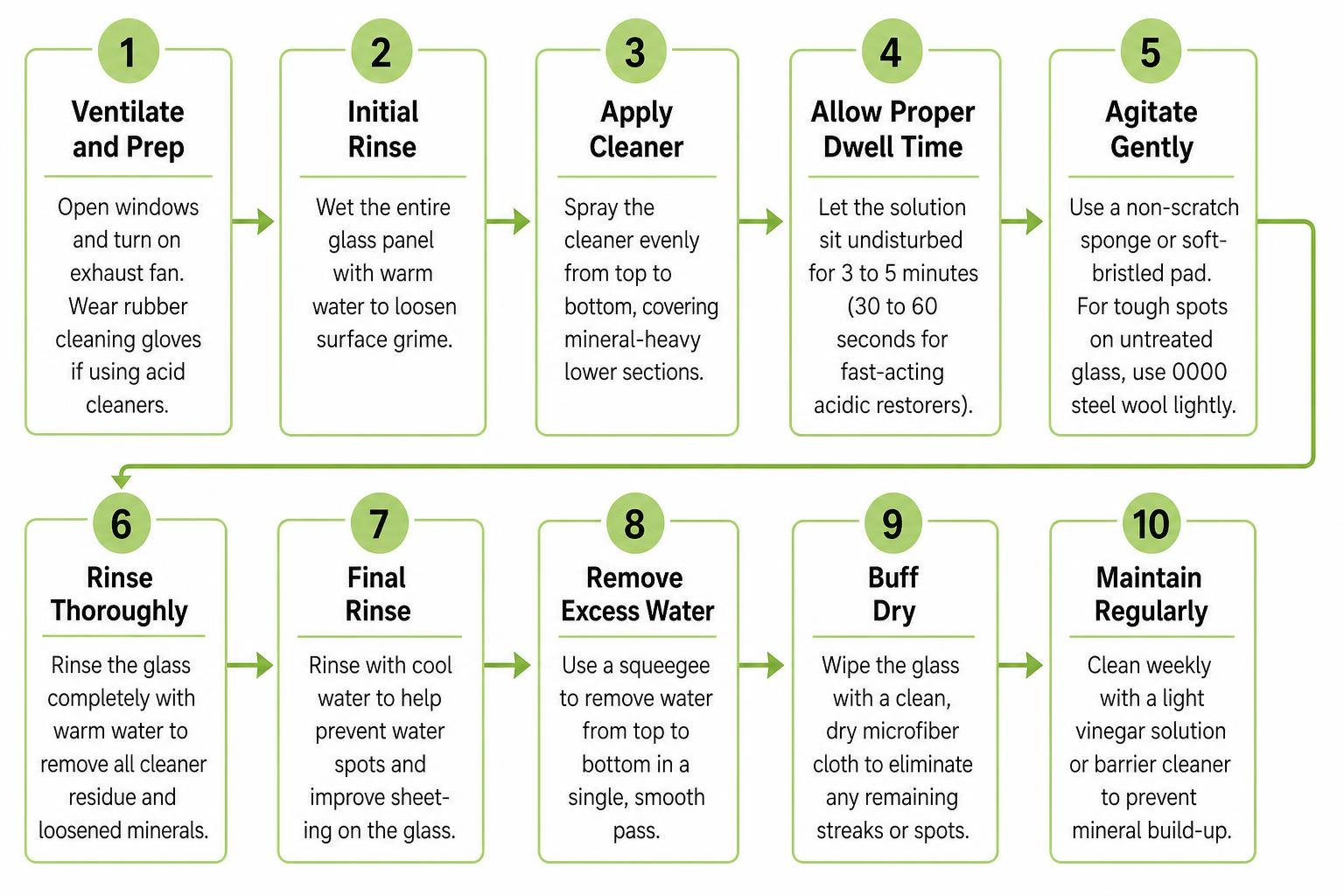
- Ventilate and Prep: Open bathroom windows and turn on the exhaust fan. If using a heavy-duty acid-based product, put on rubber cleaning gloves.
- Initial Rinse: Wet the entire glass panel with warm water using your shower wand or a clean cup to loosen surface grime.
- Apply the Cleaning Solution: Spray your chosen cleaner evenly across the glass from top to bottom, ensuring thorough coverage over mineral-heavy lower sections.
- Allow Proper Dwell Time: Let the solution sit undisturbed for 3 to 5 minutes (or 30 to 60 seconds if using fast-acting acidic restorers). This dwell time allows the acid to break down calcium deposits chemically.
- Agitate Gently: Use a non-scratch microfiber sponge or a soft-bristled scrubbing pad to wipe the surface in overlapping circular motions. For stubborn spots on untreated glass, ultra-fine 0000 steel wool can be used with light pressure.
- Rinse Completely: Flush the entire panel thoroughly with warm water to remove all chemical residue and dissolved minerals.
- Squeegee Downward: Starting from the top corner, pull a clean silicone squeegee straight down in smooth, overlapping strokes, wiping the blade dry after each pass.
- Final Buff: Take a dry, lint-free microfiber cloth and buff the perimeter edges, hinges, and glass face to remove any remaining water droplets.
This process keeps stationary glass clean and helps when maintaining sliding glass shower doors, where tracks and overlapping panels easily trap moisture.
How to Apply a Shower Door Glass Cleaner for Streak-Free Results
The most common reason glass looks streaky after cleaning is leftover chemical residue or improper drying. Many commercial cleaners leave behind surfactants that create a cloudy film if allowed to dry naturally.
Always apply cleaners when the glass is cool to the touch. Avoid letting acidic or detergent-based sprays dry on the surface, as this creates a stubborn, hazy film. The final buffing step with a clean, dry microfiber cloth is essential for removing residual micro-droplets and revealing a crystal-clear shine.
Essential Maintenance Tools and Squeegee Techniques
Having the right cleaning tools on hand makes shower glass maintenance quick and easy:
- Silicone-Blade Squeegees: A flexible silicone blade contours smoothly against glass panels without chattering or scratching hardware.
- Ergonomic Handheld Scrubbers: Non-abrasive handheld scrubbers or cordless electric spin scrubbers provide consistent agitation with minimal manual effort.
- Waffle-Weave Microfiber Towels: These specialized cloths trap moisture and polish glass surfaces without shedding lint.
- Track and Crevice Brushes: Small, angled nylon brushes clear mineral buildup, soap scum, and moisture from bottom door sweeps and metal channels.
How to Protect Glass and Prevent Future Mineral Stains
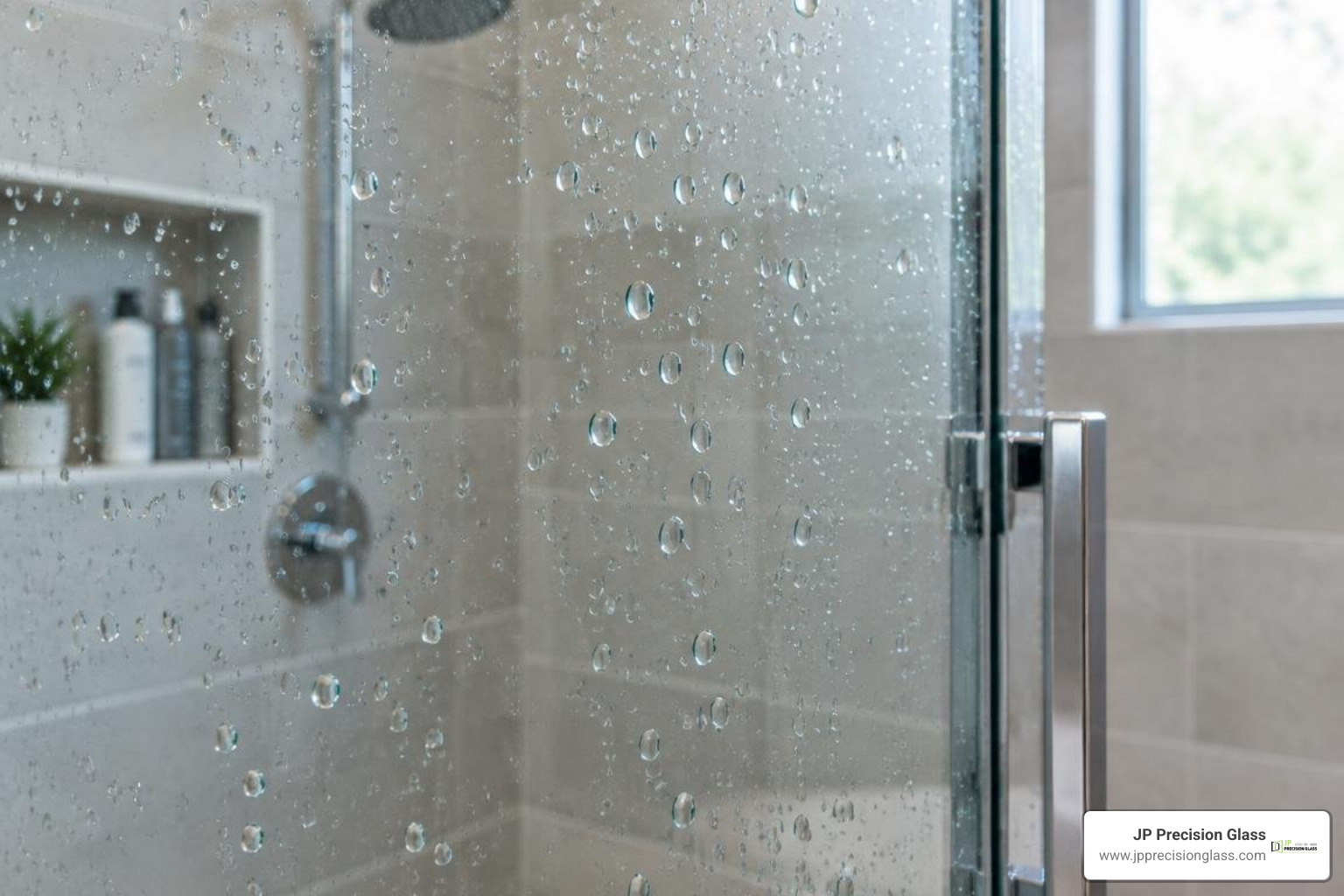
Once your shower glass is clean, applying a protective barrier significantly reduces future buildup. Bare glass is naturally porous at the microscopic level; tiny peaks and valleys trap water droplets, allowing minerals to bond as the moisture evaporates.
Hydrophobic surface sealants fill these microscopic pores, creating a smooth, low-energy barrier. Water forms round beads that roll down the glass rather than flattening into standing sheets, taking soap residue and dissolved minerals with it.
Many homeowners choose factory-applied or aftermarket protective treatments when exploring frameless shower screen protection. Maintaining this protective barrier simply requires a quick daily squeegee wipe and a weekly misting with a mild, pH-balanced spray.
Safety Considerations and Surfaces to Avoid
While acidic solutions work wonders on mineral deposits, they pose serious risks to other bathroom materials:
- Natural Stone Surfaces: Never allow vinegar, citric acid, or commercial descalers to contact marble, travertine, limestone, or unsealed granite. Acids react immediately with the calcium carbonate in natural stone, creating dull, etched spots that require professional repolishing.
- Metal Hardware and Finishes: Matte black, oil-rubbed bronze, and anodized aluminum hardware can discolor or pit if exposed to acidic cleaners. Always rinse overspray off hinges, handles, and framing immediately.
- Proper Enclosure Sealing: Ensure perimeter gaskets and sweeps are in good condition to keep cleaning runoff from seeping into wall cavities or subflooring. Learn more about preventing enclosure leaks to safeguard your bathroom structure.
- Ventilation: Strong cleaners can release irritating fumes in enclosed spaces. Always run the exhaust fan and keep the bathroom door open while cleaning.
Frequently Asked Questions About Shower Glass Care
Can vinegar damage natural stone tiles adjacent to shower doors?
Yes. Vinegar is an acetic acid solution that chemically etches calcite-based natural stones like marble, limestone, and travertine on contact. If your shower features natural stone walls or flooring, avoid vinegar sprays entirely. Instead, use a pH-neutral cleaner specifically formulated for natural stone and squeegee the glass dry after every shower.
What is glass cancer and can cleaners fix it?
“Glass cancer” is a common industry term for permanent glass corrosion. When hard-water minerals sit on untreated glass for long periods, they bond chemically with the silica matrix, creating microscopic pits.
No liquid cleaner or chemical spray can reverse this damage because the glass surface itself is permanently etched. If chemical descaling leaves behind a cloudy or milky pattern that remains visible when the glass is dry, explore our guide to glass door scratch repair to assess whether professional mechanical polishing or panel replacement is necessary.
How often should shower glass doors be cleaned?
A simple, layered cleaning schedule keeps shower glass looking brand new:
- Daily (30 seconds): Squeegee the glass downward after the last shower of the day to eliminate standing water and prevent mineral deposits.
- Weekly (5 minutes): Spray the panels with a mild DIY vinegar-and-water solution or a daily maintenance spray, wipe with a soft microfiber cloth, and buff dry.
- Monthly to Quarterly (15 minutes): Apply a specialized hard-water spot remover or a hydrophobic glass sealant to refresh the water-repellent protective layer.
Conclusion
Keeping your shower glass crystal clear does not require endless scrubbing when you pair the right chemistry with simple daily habits. Using a targeted descaling solution dissolves stubborn mineral haze, while a quick daily squeegee routine prevents hard water deposits from bonding to the surface.
At JP Precision Glass, we design, fabricate, and install custom glass enclosures tailored to your home. Whether you need a sleek frameless shower, a custom sliding system, or an elegant bathtub enclosure, our team delivers high-quality materials and expert installation across the Chicagoland area. Explore our complete selection of premium glass shower doors and enclosures to elevate your bathroom space.