
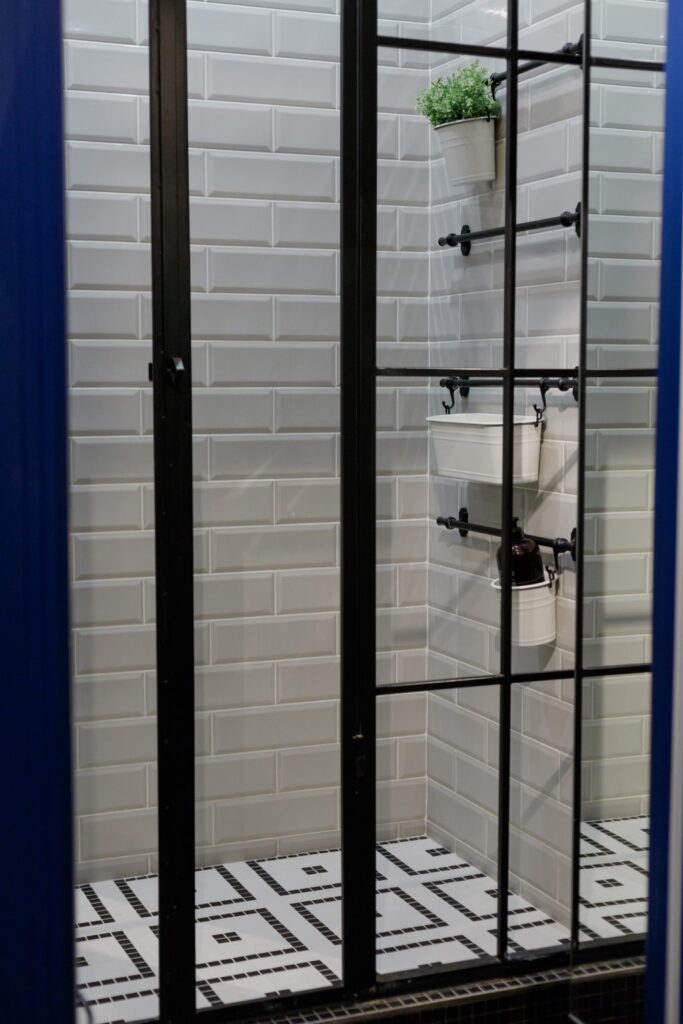
Choosing the Right Glass Enclosure Tub for Your Bathroom
A glass enclosure tub replaces a shower curtain or dated framed doors with tempered glass panels that make a bathroom feel cleaner, brighter, and more custom.
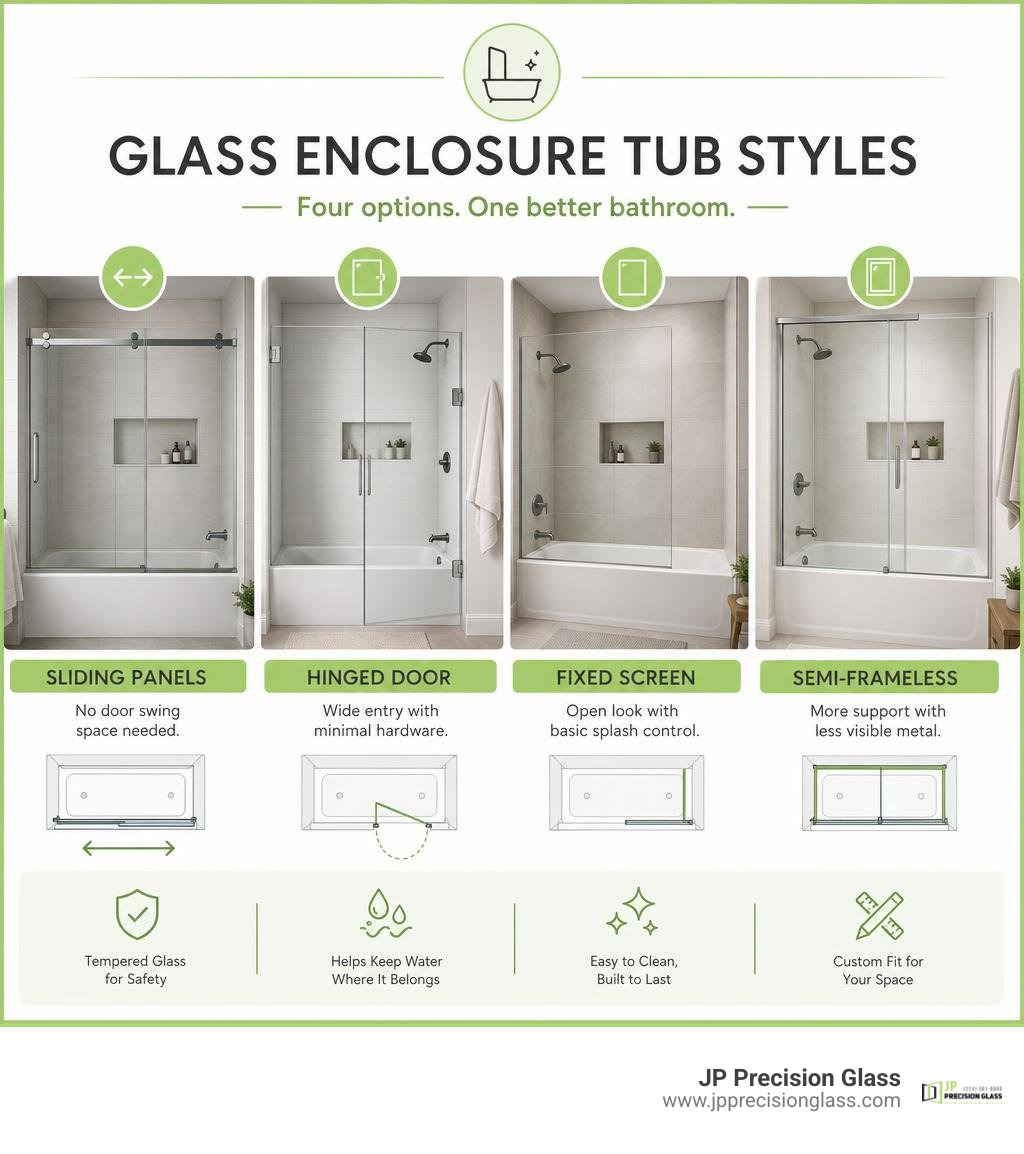
| Option | Best for | Main advantage |
|---|---|---|
| Frameless sliding panels | Small bathrooms and alcove tubs | No door swing space needed |
| Frameless hinged door | Bathrooms with open floor space | Wide entry and minimal hardware |
| Fixed screen | Simple tub-shower setups | Open look with basic splash control |
| Semi-frameless enclosure | A practical middle ground | More support with less visible metal |
The best choice depends on your tub layout, wall support, entry side, and how much water protection you need. Glass thickness, safety features, and hardware finishes also shape both daily use and the final look.
For Chicago homeowners planning a remodel, a custom glass enclosure can upgrade the tub area without changing the entire bathroom. The sections ahead compare the key options so you can choose a design that fits your space and routine.
Must-know glass enclosure tub terms:
Key Benefits of Upgrading to a Glass Enclosure Tub
Upgrading from a traditional fabric shower curtain or an old aluminum-framed door to a custom glass enclosure tub completely changes how your bathroom looks and functions. A standard vinyl or fabric shower curtain easily traps humidity, clings to your body mid-shower, and absorbs soap residue that quickly turns into stubborn mold and mildew. Older framed sliding doors, on the other hand, feature deep aluminum tracks along the tub deck that trap water, grime, and soap scum, making them notoriously difficult to keep clean.
When you install a sleek glass enclosure, you immediately raise the hygiene standards of your bath space. High-end glass surfaces resist moisture retention, making them far less prone to mildew or unpleasant odors. A quick swipe with a squeegee after a bath or shower keeps the glass sparkling clear. To explore the broader structural advantages of clear heavy glass, see our breakdown on the Benefits of Frameless Glass Shower Doors.
Beyond cleanliness, replacing a heavy, opaque shower curtain with clear tempered glass creates an immediate visual expansion. By eliminating the visual barrier created by fabric curtains or bulky metal frames, light flows unimpeded across the room. Small or narrow bathrooms instantly feel larger, airier, and far more modern.
Furthermore, a glass tub upgrade acts as a permanent architectural feature rather than a temporary accessory. Real estate experts and prospective buyers consistently view custom heavy glass tub systems as a clear indicator of a modern home update. It gives your existing tub setup the high-end appeal of a luxury walk-in shower without requiring expensive tile tear-outs or plumbing relocation.
Comparing Tub Glass Enclosure Styles and Configurations
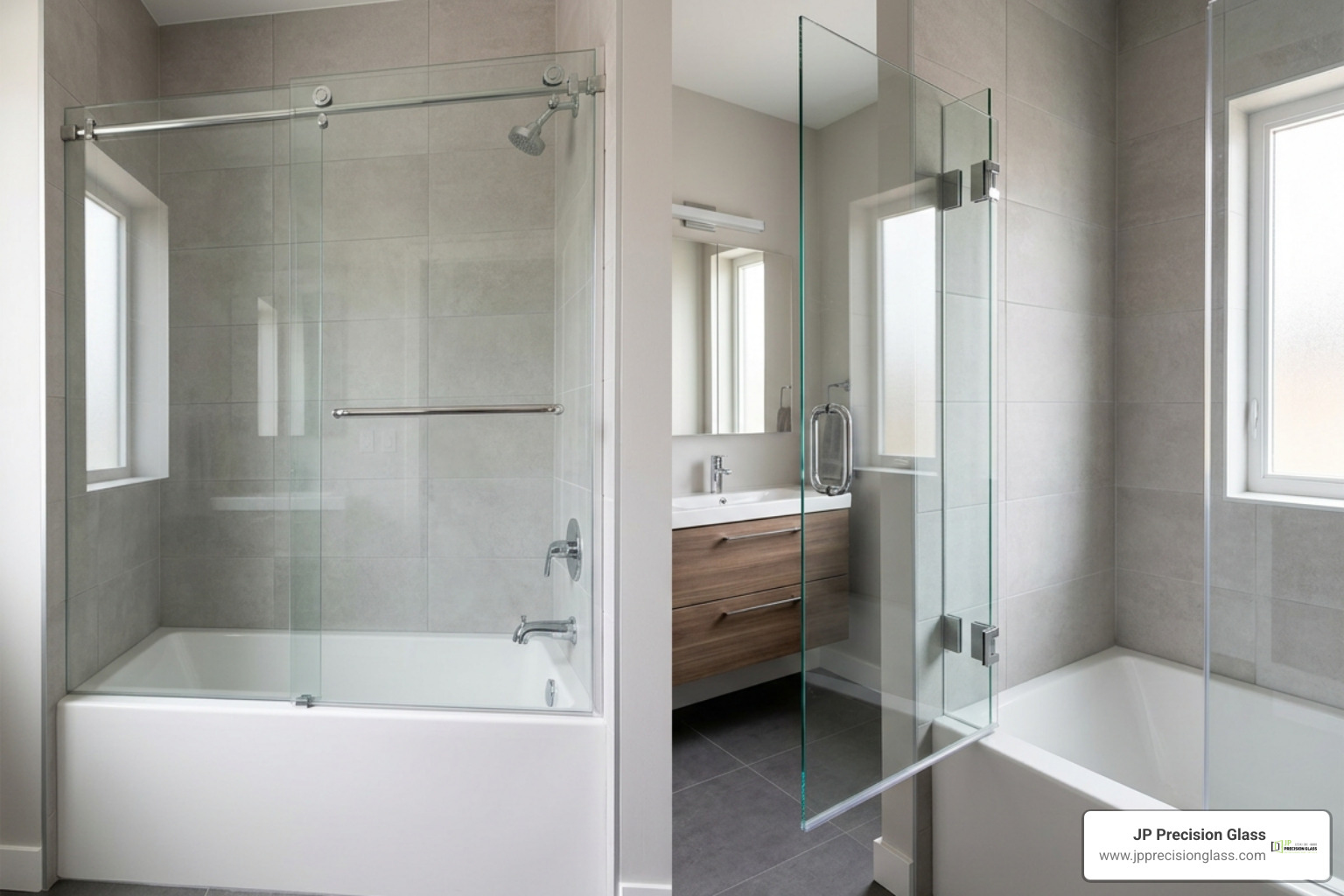
Every bathroom layout presents unique spatial opportunities and constraints. Whether your tub sits inside a tight three-wall alcove or forms a two-sided corner configuration, choosing the correct enclosure style ensures smooth daily operation and effective water containment.
Frameless Sliding Glass Enclosure Tub Options
Sliding panels—often called bypass glass doors—are the most popular choice for standard alcove bathtubs. Because the glass panels slide laterally along a top header rail or roller track, they require zero outward clearance into your bathroom floor space. This makes sliding glass panels ideal for tight bathrooms where a vanity, toilet, or towel bar sits close to the edge of the bathtub.
Modern frameless sliding systems are engineered for silent, effortless operation. They feature exposed industrial top rollers equipped with anti-jump technology. These specialized anti-jump rollers keep the heavy glass panels securely locked into the overhead track, preventing any accidental derailment during fast or heavy sliding.
Additionally, many frameless sliding tub doors feature double bypass action, allowing both panels to slide left or right. This dual access makes it exceptionally easy to turn on the bath faucets from outside the tub or reach inside to wash children and pets. You can also integrate horizontal handle hardware that doubles as a sturdy towel bar directly mounted through the glass. To learn more about modern trackless mechanisms, check out our selection of Sliding Shower Doors.
Frameless Hinged Doors and Fixed Glass Screens
If your bathroom layout offers ample floor clearance in front of the bathtub, a frameless hinged swinging door or a fixed glass screen offers a remarkably clean, minimal look.
- Frameless Hinged Doors: These doors pivot outward (and sometimes inward) on heavy-duty brass wall hinges. They provide a wider walk-in opening than sliding doors, giving your tub area an expansive feel. However, you must ensure that swinging doors clear toilets, vanities, and towel hooks without obstruction.
- Single Fixed Screens and Half Doors: Also known as fixed bathtub shields or splash guards, these stationary glass panels cover approximately half the length of the tub—typically near the showerhead end. They block water spray where it matters most while leaving the rear of the tub open for entry.
Fixed screens eliminate moving mechanical hardware entirely, resulting in an uncluttered appearance. If you are weighing whether a partial barrier suits your bathing routine, read our guide on Splish Splash No Bath Pros and Cons of a Bathtub Glass Half Door.
Frameless vs. Semi-Frameless Design Options
Understanding the structural distinction between frameless and semi-frameless tub enclosures helps narrow down your choices:
| Feature | Frameless Enclosures | Semi-Frameless Enclosures |
|---|---|---|
| Glass Thickness | Heavy 3/8″ (10 mm) or 1/2″ (12 mm) | Medium 5/16″ (8 mm) or 1/4″ (6 mm) |
| Metal Framing | None around glass perimeter; secured with heavy clamps/hinges | Partial perimeter framing, usually top header and wall channels |
| Cleaning Effort | Minimal; no metal channels to catch dirt | Moderate; minor metal seams require cleaning |
| Aesthetic Impact | Sleek, modern, floating glass look | Classic, refined appearance with defined borders |
| Structural Rigidity | Relies entirely on heavy tempered safety glass | Relies on metal frame support for lighter glass |
Frameless designs highlight polished glass edges and subtle wall clamps, creating a seamless transition across the room. Semi-frameless options utilize metal framing along selective edges (such as wall channels or top support rails) to guide lighter glass panels while maintaining an open visual feel.
Selecting Glass Thickness, Safety Features, and Hardware Finishes
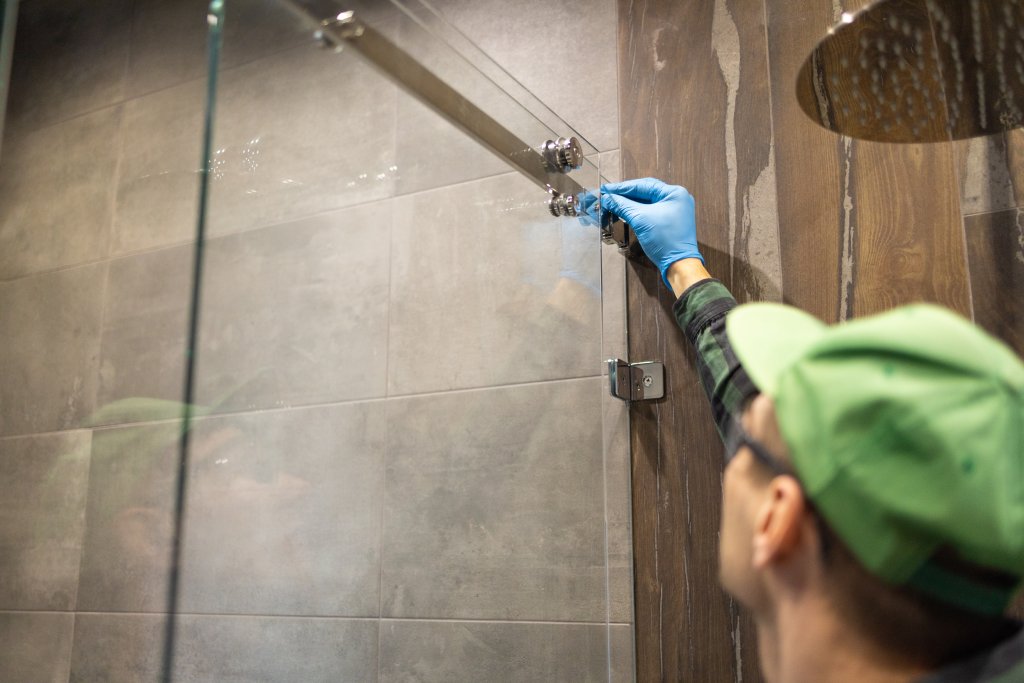
The performance, weight, feel, and visual character of your glass enclosure tub depend directly on the glass specifications and solid hardware components you select.
Glass Thickness and Safety Features for Your Glass Enclosure Tub
Safety is paramount when installing large panels of overhead or sliding architectural glass over a ceramic or acrylic bath deck. All residential tub glass panels must consist of toughened, heat-treated tempered safety glass. Tempered glass is engineered to be roughly four times stronger than standard annealed window glass. In the rare event of severe impact failure, tempered glass disintegrates into small, dull granular pieces rather than sharp, dangerous shards.
When choosing panel thickness, two standard options dominate modern installations:
- 5/16-Inch (8 mm) Glass: Commonly utilized in high-quality semi-frameless and lighter frameless sliding systems, such as standard alcove tub door combos. This thickness strikes an excellent balance between structural rigidity and operational weight, making doors easier to glide without placing extreme stress on wall studs.
- 3/8-Inch (10 mm) Glass: The gold standard for heavy, architectural frameless tub enclosures. Thick 3/8-inch panels feel solid to the touch, eliminate noticeable flex when pushed, and deliver premium sound dampening.
To maximize safety, premium glass tub enclosures often feature advanced shatter retention coatings—such as specialized clear protective film layers applied directly to the glass surface during fabrication. Shatter retention technology ensures that if the glass suffers an impact, the fractured safety granules remain glued to the inner protective film, preventing glass fragments from falling onto the tub deck. Pair this with anti-jump roller clips on sliding systems, and you achieve maximum structural security.
Hardware Finishes and Custom Aesthetics
Your mounting brackets, handles, hinges, top header rails, and door rollers are functional elements that double as decorative jewelry for your bathroom. Matching hardware finishes across your shower enclosure, sink faucets, towel bars, and cabinet handles unifies the entire room’s design motif.

Popular hardware finish options include:
- Polished Chrome: Bright, highly reflective, and classic. Chrome complements virtually any tile color and offers great water resistance, though it requires routine wiping to prevent water spots.
- Brushed Nickel: Warm, soft metallic tones with subtle brushed graining. Excellent at hiding fingerprints and dried water drops, making it low-maintenance for busy households.
- Matte Black: Bold, industrial, and deeply modern. Black hardware creates a striking visual frame around clear glass edges, especially when paired with white subway tile or natural marble.
- Brushed Gold / Brass: Sophisticated, luxurious, and warm. Adds a refined pop of color that stands out against modern neutral tile palettes.
Explore our comprehensive catalog of durable brackets, handles, and seals under Shower Glass Accessories.
Sizing, Alcove Layout Requirements, and Handedness
Selecting or custom-fabricating a glass enclosure tub requires absolute precision. Unlike flexible fabric curtains, heavy tempered glass cannot be trimmed, cut, or adjusted once it undergoes the factory heat-tempering process.
Before ordering, verify these crucial structural requirements:
- Plumbing and Handedness Alignment: “Handedness” refers to the direction of entry relative to your bathtub’s plumbing fixtures. For example, a left-hand door placement means your primary entry opening sits on the left side as you face the tub. Aligning handedness ensures you don’t hit the showerhead spray when opening the door, while also allowing easy access to water control valves from outside the tub deck.
- Level Tub Deck and Plumb Walls: A glass panel must rest flat along the tub rim to seal out water effectively. If your bathtub deck slants slightly or your surrounding walls bow outward or inward (out-of-plumb), custom glass panels must be measured with laser levels and precision-cut with tapers to match your walls exactly.
- Internal Wall Support: Heavy 3/8-inch glass panels and overhead track rails require solid mounting points. Wall clamps and hinge brackets must anchor securely into solid wooden wall studs or reinforced backing behind tile or acrylic surrounds. Standard drywall anchors cannot support the weight of heavy architectural glass.
- Standard Alcove Dimensions: Standard bathtub openings measure 60 inches long, with tub deck depths typically ranging between 30 to 32 inches. Height dimensions for glass tub doors range between 58 and 66 inches above the tub rim. Measuring both top width, bottom width, and vertical height ensures an airtight fit.
For detailed measuring instructions and layout advice, read How to Choose the Perfect Bathroom Tub Glass Enclosures for Your Home.
Installation Process, Timeline, and Maintenance Tips
A seamless glass enclosure upgrade follows a systematic process from initial digital field measurements to the final silicone sealant cure:
- Precision In-Home Measurement: Our glass specialists measure your bathtub deck, wall plumbness, and tile layout using digital levelling tools to create exact production templates.
- Custom Fabrication Period: Custom glass panels are cut, notched for hinges/brackets, edge-polished, and treated with heat tempering. This fabrication stage generally takes 2 to 3 weeks.
- Physical On-Site Installation: On installation day, our installation team removes existing framed doors or curtain rods, cleans the tub rim, anchors mounting hardware into wall studs, hangs glass panels, adjusts anti-jump rollers, and applies high-grade mold-resistant silicone sealant along structural junctions. The physical installation process is swift—typically completed within 2 to 4 hours in a single visit.
- Silicone Cure Time: After installation is complete, the silicone sealant requires a strict 24-hour cure period before exposure to running water. Avoid touching sealant lines or running the shower during this window.
To maintain crystal-clear transparency over time and prevent hard water stains or mineral etching, follow these simple care practices:
- Daily Squeegee Routine: Use a flexible rubber squeegee for 30 seconds after every bath or shower to sweep standing water drops into the tub drain.
- Factory Hydrophobic Coatings: Choose factory-applied protective glass coatings (such as Microtek surface treatments). These invisible polymer treatments seal microscopic pores on the glass surface, causing water to bead up and slide off effortlessly without leaving mineral residue behind.
- Gentle Cleaning Solutions: Clean your glass weekly using non-abrasive microfiber cloths and mild dish soap or diluted white vinegar. Never use harsh abrasive pads, steel wool, or heavy chemical solvents that could scratch metal hardware finishes or strip protective glass coatings.
For more maintenance tips and glass protection strategies, explore our guide on Shower Glass Upgrade.
Frequently Asked Questions About Glass Tub Enclosures
Can a glass enclosure be installed on any type of bathtub?
In almost all residential scenarios, yes! Custom glass enclosures can be engineered for standard three-wall alcove tubs, two-sided corner tubs, and built-in drop-in bathtubs. The core requirements are a flat, level tub rim (deck) for bottom seals and solid, plumb vertical walls with adequate internal stud backing to securely anchor mounting clamps or header tracks.
Freestanding clawfoot tubs or deep oval soaking tubs without surrounding walls generally require specialized ceiling-hung rod systems rather than wall-mounted glass enclosures, though surrounding glass half-walls can occasionally be custom-built around fixed soaking platforms.
How long does the professional installation process take?
The physical installation phase on the day of your appointment takes only 2 to 4 hours, which includes removing your old shower curtain or metal-framed door system. However, the complete project timeline includes the initial digital measurement visit and a 2 to 3-week custom fabrication window where your glass panels are tailored, polished, notched, and heat-tempered. Once installed, allow 24 hours for the clear mold-resistant silicone sealant to cure completely before turning on the shower.
What warranties are typically provided with glass tub enclosures?
High-quality glass tub enclosures are backed by comprehensive coverage. Most reputable manufacturers provide a 10-year limited product warranty covering glass clarity, structural hardware defects, and mechanical component integrity, along with dedicated 5-year coverage on specialized shatter retention protective films and anti-corrosion hardware finishes. Working with a dedicated professional installer ensures both product hardware and labor installation quality are fully protected.
Conclusion
Choosing the right glass enclosure tub turns an ordinary bathtub setup into a clean, bright, and modern feature. By assessing your bathroom layout, choosing between frameless sliding panels or swinging hinged screens, selecting heavy 3/8-inch safety glass, and specifying hardware finishes that complement your fixtures, you create a space that meets your daily needs.
At JP Precision Glass, we specialize in custom-engineered, made-to-measure glass tub enclosures across the Greater Chicago area. Whether you need a space-saving frameless bypass slider or a fixed splash shield for a modern alcove tub, our team handles every step with precision—from digital measurement to clean installation. Explore our full suite of custom solutions at Shower Doors Chicago to start planning your bathtub transformation today.