
Why Fixed Bathroom Shower Screens Make Small Bathrooms Look Bigger
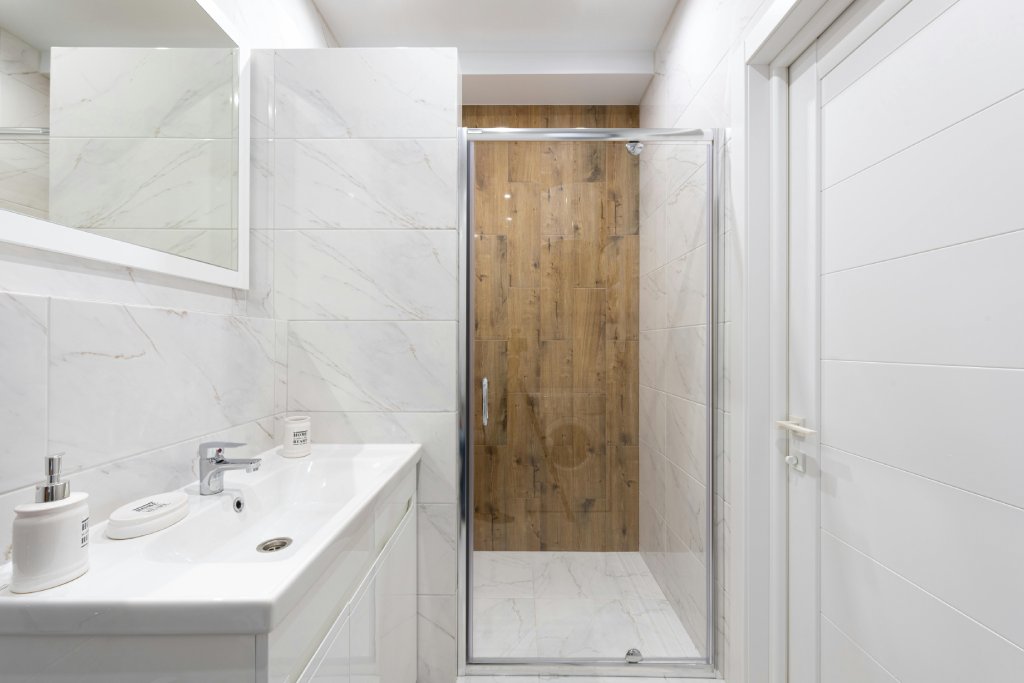
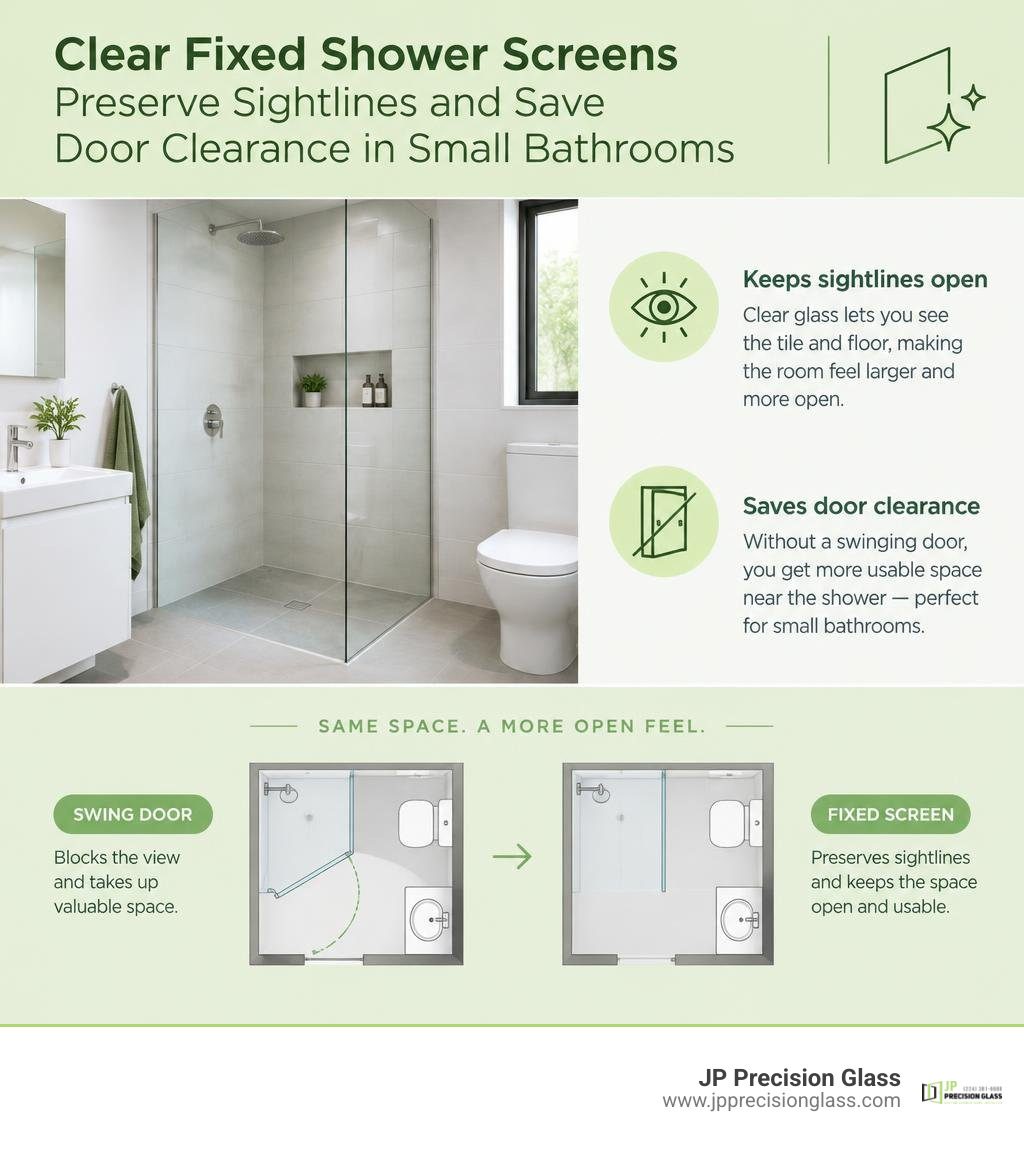
For a small bathroom, choose a clear, fixed glass shower screen if you want the room to feel more open. It keeps the shower separate without blocking the view of the tile and floor. Because it has no door to swing open, it also leaves more usable space near the shower.
The best fit depends on your layout. Measure the shower opening and check where water will land before choosing a panel width. A made-to-size screen can help keep sightlines open while covering the area that needs splash protection. Well-designed bathroom shower screens also reduce the visual clutter that makes compact rooms feel cramped.
Bathroom shower screens word roundup:
The Visual Science: How Bathroom Shower Screens Expand Small Spaces
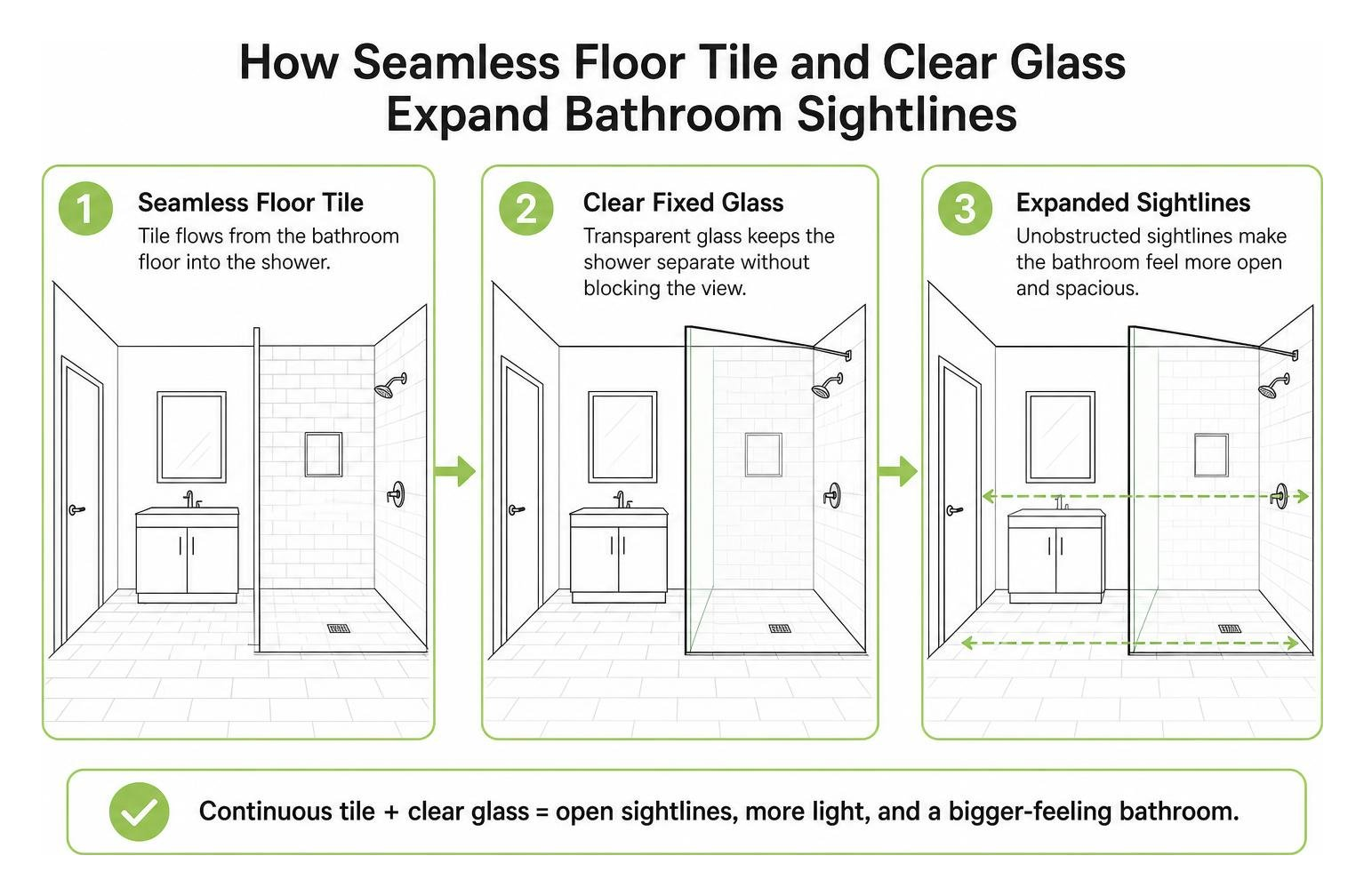
When stepping into a compact bathroom, your eyes naturally assess boundaries. Traditional opaque partitions or heavily framed stalls create distinct visual stops, chopping a small room into even smaller compartments. Installing transparent glass elements leverages architectural psychology: by creating continuous sightlines from the entryway to the back shower wall, the brain perceives the entire square footage as one unified area.
One of the most noticeable advantages of glass shower walls is their ability to bounce natural and artificial light into dim corners. Instead of casting shadows across the shower floor, clear glass allows light to diffuse freely across the whole interior. Scientific research into architectural perception highlights this effect; as detailed in Frontiers | Exploring sense of spaciousness in interior settings: Screen-based assessments, unobstructed boundaries and balanced luminance dramatically increase the subjective feeling of openness in confined living quarters.
When you allow tile patterns to flow uninterrupted from the main floor straight into a curbless walk-in stall, you create an open-concept wet room design. This unified flooring eliminates harsh transitions, tricking the eye into seeing expansive floor area where there was once a cluttered, segmented layout.
Key Advantages of Fixed Bathroom Shower Screens Over Moving Doors
Moving shower doors demand physical real estate. A standard swinging door requires anywhere from 24 to 36 inches of clear outward clearance, which often collides with toilets, vanities, or towel warmers. Fixed screens solve this dilemma by remaining completely stationary.
- Zero Swing Clearances: Because the panel never pivots outward, you can place vanity units or fixtures right beside the shower area without worrying about glass collisions.
- Hinge-Free Structural Stability: Moving parts wear out over time. Fixed screens use solid wall brackets or slim profile channels, eliminating sagging hinges and mechanical wear.
- Minimal Hardware Footprint: Fewer metal clamps, handles, and tracks mean less visual clutter and fewer crevices where grime can accumulate.
- Layout Efficiency: By optimizing compact walk-in shower panel configurations, homeowners can comfortably fit a walk-in setup into floorplans as modest as three by five feet.
Fixed Walk-In Panels vs. Sliding and Hinged Systems
Choosing between a stationary screen, a sliding door, or a traditional hinged door comes down to your bathroom’s specific geometry and entry preferences.
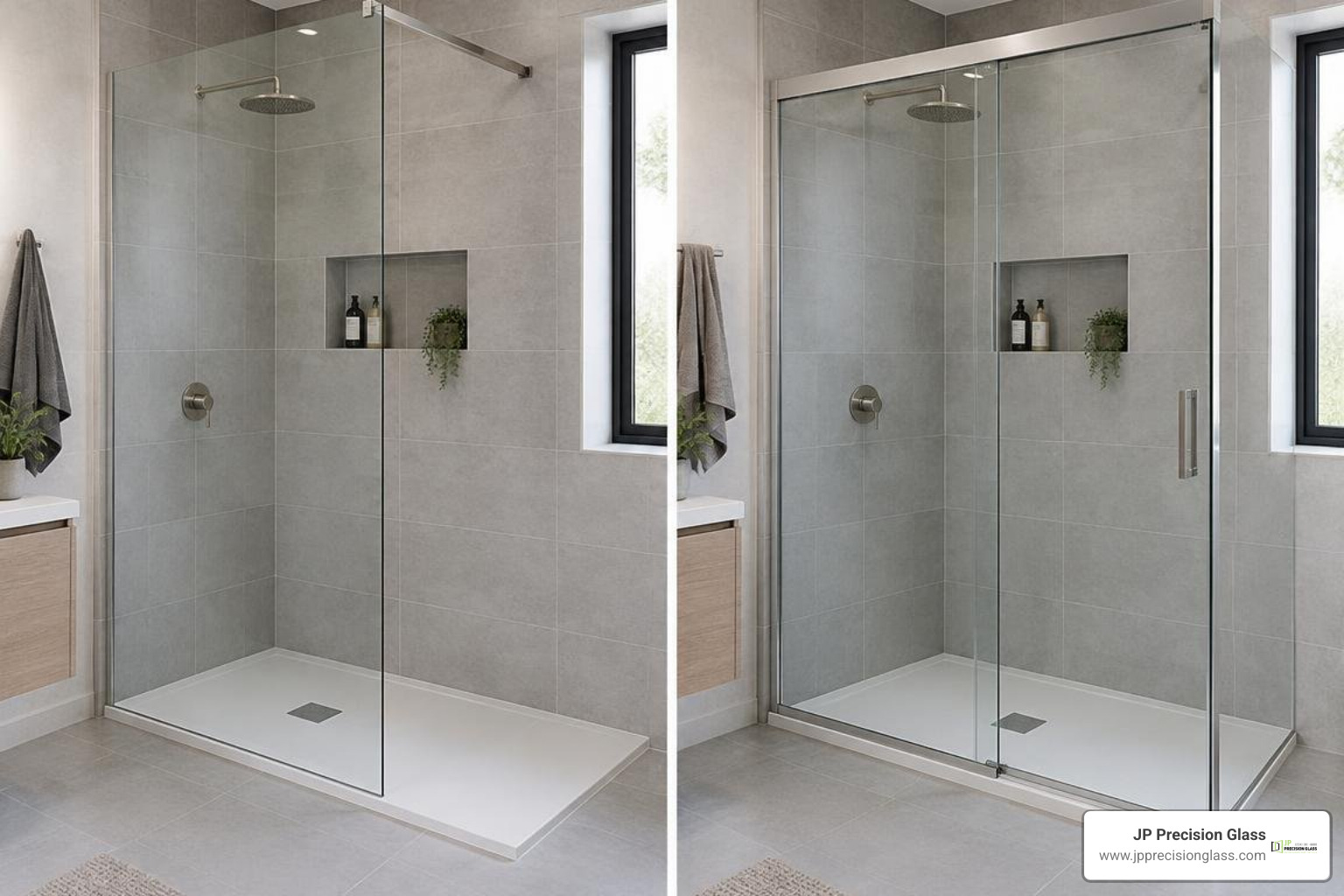
Hinged systems offer wide entry openings but require substantial clearance arcs outside the enclosure. For layouts where space is tight yet full water containment is desired, exploring specialized sliding glass door solutions provides an excellent alternative. Top-hung rollers glide effortlessly along a horizontal header without intruding into the room.
However, fixed walk-in panels provide the ultimate barrier-free entry. A fixed panel typically leaves an open walk-in gap between 20 and 30 inches wide, providing effortless walk-in convenience without tracks to step over or doors to swing open.
Comparing Frameless, Semi-Frameless, and Framed Configurations
The structural framing style you select directly influences both visual weight and daily maintenance. Here is how the primary enclosure styles compare:
| Feature | Frameless Screens | Semi-Frameless Screens | Fully Framed Screens |
|---|---|---|---|
| Aesthetic Appeal | Modern, seamless, and high-end | Balanced, contemporary profile | Traditional, defined outline |
| Visual Bulk | Minimal; maximum light transmission | Moderate; thin perimeter lines | High; breaks up sightlines |
| Ease of Cleaning | Superior; no metal channels or gaskets | Moderate; few frame edges to wipe | Requires detailed track cleaning |
| Glass Thickness | Heavy glass (8mm to 10mm) | Medium glass (6mm to 8mm) | Standard glass (4mm to 6mm) |
| Hardware Presence | Discrete clamps or slim U-channels | Slim metal perimeter with open edges | Full aluminum frame surrounding panels |
Frameless Screens and Structural Minimalism
Frameless screens represent the peak of modern bathroom minimalism. By eliminating heavy perimeter frames, these panels let your designer tilework, accent niches, and luxury fixtures take center stage. Discovering the full range of frameless glass shower door benefits shows that their appeal goes far beyond modern looks; they are remarkably easy to squeegee clean because there are no metal lips to trap moisture, soap scum, or mildew.
To achieve this clean look safely, we secure thick architectural glass directly to the wall and floor using solid brass mounting clips or recessed low-profile channels. The result is a floating, crystalline partition that makes even narrow bathrooms feel open and airy.
Semi-Frameless and Framed Configurations
Semi-frameless and framed options use structural aluminum profiles to support lighter glass. While fully framed designs create distinct lines across the room, semi-frameless styles strike a middle ground by framing only the outer perimeter while keeping door edges clear. In wall-to-wall layouts, modern framed systems—such as those featuring crisp matte black profiles—can introduce a bold, industrial aesthetic reminiscent of classic steel-framed windows.
Glass Types, Thicknesses, and Privacy Enhancements
Safety and rigidity are paramount when selecting glass for shower applications. Shower screens must always use certified safety glazing that resists thermal stress and physical impacts.
- Tempered Safety Glass: Heat-treated to be up to four to five times stronger than standard annealed glass. If broken, tempered glass crumbles into small, dull granular pebbles rather than sharp shards.
- Laminated Safety Glass: Consists of two glass sheets bonded by an inner vinyl interlayer (PVB), holding fragments firmly in place if cracked.
For fixed walk-in panels, glass thickness directly dictates stability. While framed designs can use thinner panes, frameless installations rely entirely on the glass’s intrinsic strength. Reviewing 10mm frameless glass specifications demonstrates why heavy 10mm (3/8-inch) or 12mm (1/2-inch) panels are preferred for tall, wide installations. Thicker glass eliminates panel flex and provides a solid, premium feel.
Privacy Glass Innovations: Frosted, Textured, and Fluted Styles
Clear glass maximizes sightlines, but shared family bathrooms often benefit from subtle privacy features. Modern manufacturing techniques allow you to obscure direct views without cutting off daylight.
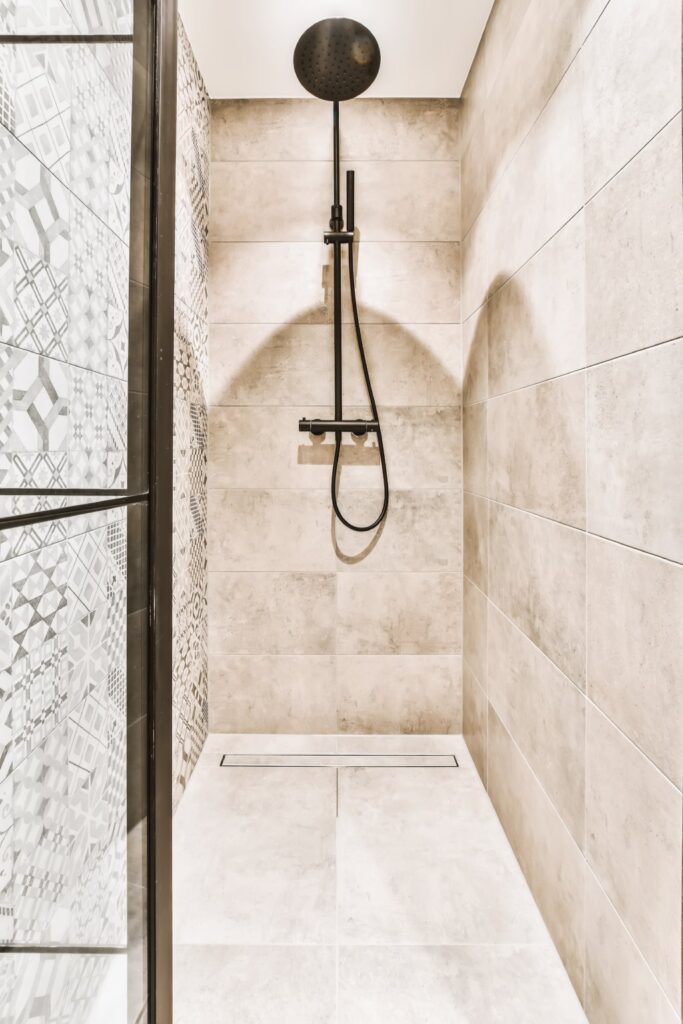
Sandblasting or acid-etching creates velvety frosted bands across the center of the panel while keeping the top and bottom clear, maintaining vertical light flow. Meanwhile, reeded and fluted glass has become a major architectural trend. These vertical convex ribs bend and diffuse light, elegantly masking silhouettes while casting dynamic shadows across bathroom tiles. Selecting tasteful frosted and textured glass options allows you to balance modesty with modern aesthetics.
Maintaining and Cleaning Bathroom Shower Screens for Lasting Clarity
Hard water minerals and soap residue can quickly cloud bare glass surfaces if left unchecked. Keeping your shower enclosure crystal clear requires simple, consistent habits and protective surface technology.
Factory-applied or professionally sealed hydrophobic coatings fill microscopic peaks and valleys on the glass surface. This causes water to bead up and roll away, carrying soap film along with it and preventing limescale bonding.
For daily care, keep a rubber-blade squeegee inside the stall and wipe down the panel after your final rinse. For weekly cleaning, use mild dish soap and warm water or non-abrasive, pH-neutral spray solutions. Avoid harsh bleach, ammonia, and abrasive scouring pads, which can scratch protective coatings and strip finishes from matte black, brushed brass, or polished chrome hardware.
Measuring, Hardware Coordination, and Professional Installation
Achieving a clean, leak-resistant glass enclosure requires meticulous field measurements. Bathrooms are rarely perfectly square; walls can bow, and tiled shower pans slope for drainage.
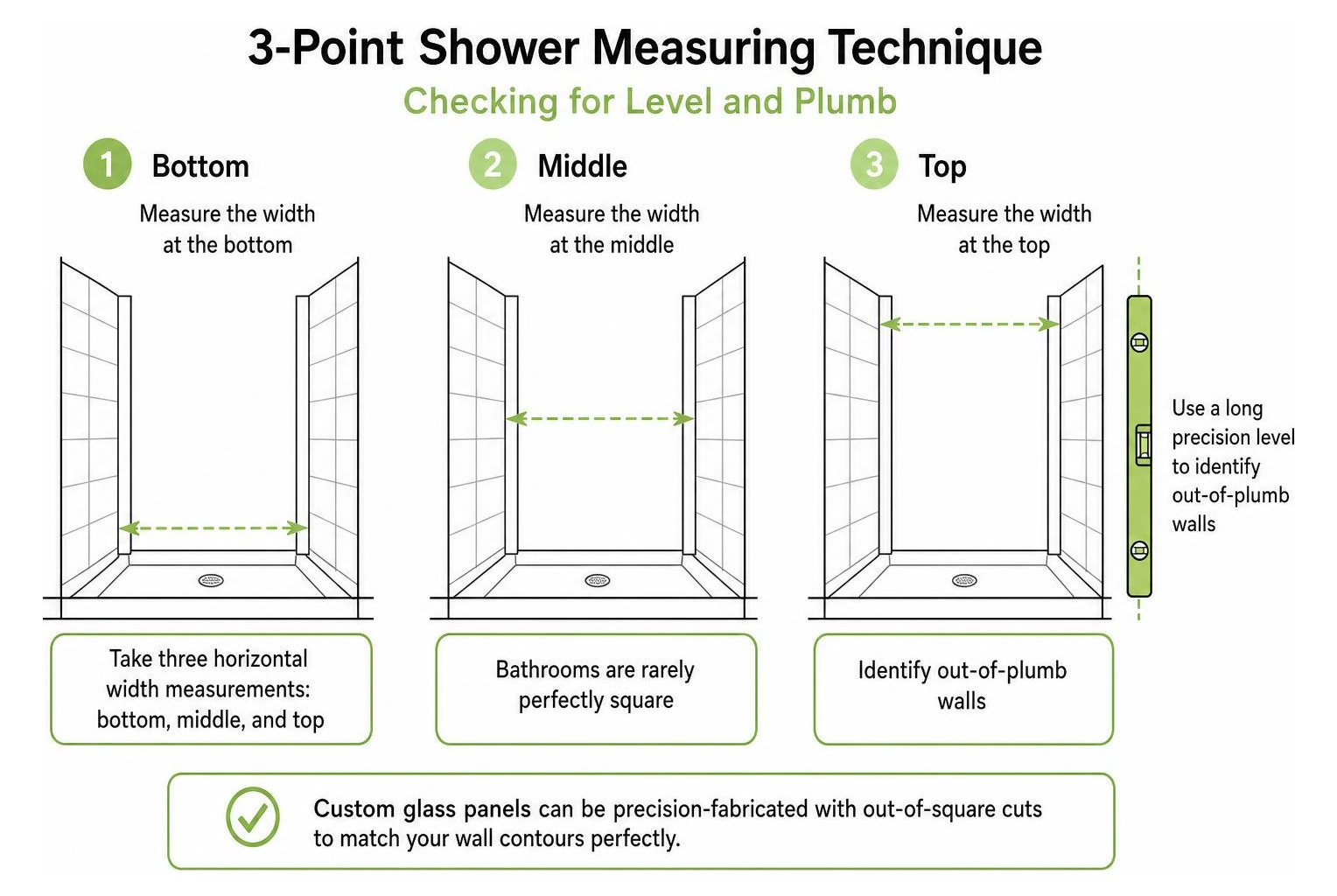
When preparing your space, understanding the process of measuring and budgeting for modern shower glass prevents costly installation surprises. Always take three horizontal width measurements (bottom, middle, and top of the opening) and use a long precision level to identify out-of-plumb walls. Custom glass panels can be precision-fabricated with out-of-square cuts to match your wall contours perfectly.
To create a cohesive interior, coordinate the finish of your glass mounting clips, support bars, and channels with your existing vanity faucets, shower valves, and mirror frames.
Why Professional Glazier Installation Matters
Handling heavy custom glass panels requires specialized tools, precise leveling, and expert craftsmanship. A single 10mm glass panel measuring 36 by 78 inches weighs upwards of 80 pounds, making it unwieldy and vulnerable to edge damage during positioning.
Relying on professional frameless shower installation ensures that structural anchors hit solid wall blocking, channels are aligned with laser levels, and high-grade structural silicone cures into an invisible, watertight seal. Professional installation also protects your investment with comprehensive workmanship warranties.
Frequently Asked Questions About Glass Shower Enclosures
What is the minimum glass thickness required for a fixed frameless shower screen?
For standalone, frameless fixed screens, an absolute minimum thickness of 8mm (5/16-inch) tempered glass is required to prevent excessive panel flex. For screens wider than 36 inches or taller than 78 inches, 10mm (3/8-inch) or 12mm (1/2-inch) heavy glass is strongly recommended to ensure structural rigidity and eliminate panel deflection when bumped.
How do fixed shower screens prevent water from splashing across a small bathroom?
Fixed screens rely on precise length-to-depth ratios and calculated water deflection angles. A fixed screen should ideally extend at least 34 to 40 inches along the shower base to shield the primary bounce zone of the showerhead. Combining adequate panel length with a properly sloped floor (typically 1/4-inch drop per linear foot toward the drain) and directing the showerhead away from the opening keeps water contained without needing a door.
Can a fixed shower screen be installed over a standard bathtub?
Yes. Fixed over-bath screens (often called half-glass shields) attach directly to the tub rim and the adjacent wall. They provide a modern upgrade for tub-shower combinations. Homeowners can also opt for a dual-function system featuring a fixed panel paired with a small hinged flipper splash guard that pivots inward when bathing children or cleaning the tub.
Conclusion
Maximizing a compact bathroom does not require tearing down walls or adding square footage. By replacing opaque barriers and bulky framed stalls with a fixed glass shower screen, you instantly eliminate visual clutter, flood dark corners with light, and create the illusion of expansive, continuous space.
At JP Precision Glass, we specialize in designing, custom fabricating, and installing premium glass shower doors and custom enclosures tailored to your unique home layout. As Chicago’s trusted glass specialists, our team ensures every panel is measured, cut, and secured with exact precision.
To explore the ideal configuration for your upcoming remodel, take a look at our comprehensive guide to comparing and buying bath shower doors and start planning your bathroom transformation today.